




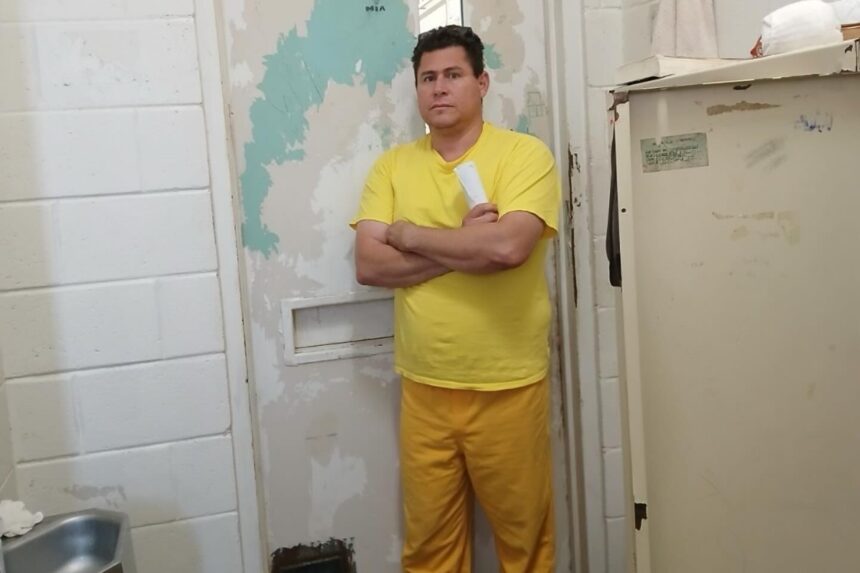
The American Civil Liberties Union (ACLU) filed a habeas corpus petition Thursday to demand the immediate release of Salvadoran journalist Mario Guevara, detained by Immigration and Customs Enforcement (ICE) despite the fact that an immigration judge had already granted him bail.
Habeas corpus is a fundamental legal principle that protects individuals from arbitrary detention. The ACLU, in a 30-page court document, argues that the journalist’s continued detention in an immigration detention center violates the law and infringes on freedom of the press.
Journalist in custody despite court order
On July 1, an immigration judge ruled that Guevara could be released on bond.
However, ICE has refused to comply with that decision on the grounds that the reporter represents a “danger to the community”.
The agency claims that its live broadcasts of law enforcement raids and operations interfere with security functions.
The ACLU strongly rejects this argument, asserting that documenting law enforcement activities is a right protected by the First Amendment of the U.S. Constitution.
Scarlet Kim, senior attorney for the organization’s Speech, Privacy and Technology Project, said:
“Mario Guevara is being detained solely for his journalism, specifically for live-streaming immigration and other law enforcement officials.
“His imprisonment is illegal and sends an alarming message to other journalists, especially non-citizens, that they will face reprisals if they report on the government.”
Arrest and charges dismissed

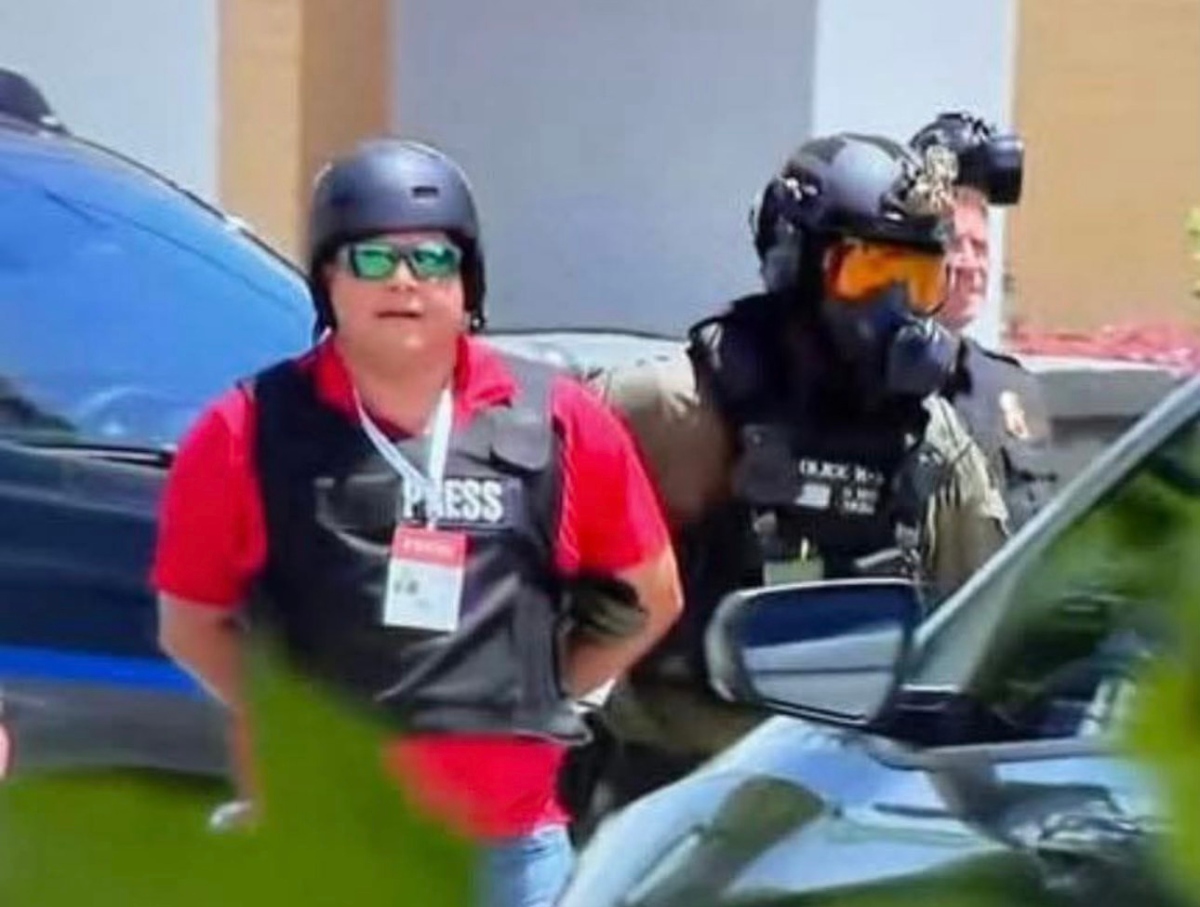
On June 14, Mario Guevara was arrested in Doraville, northeast of Atlanta, Georgia, while covering a No Kings protest.
According to witnesses, he was fully identified as a press when he was arrested and charged with three minor charges.
Days later, he was also prosecuted in neighboring Gwinnett County for reckless driving in a May incident.
However, all charges in both counties were dismissed for lack of evidence.
Despite this, ICE continued its deportation process and kept the journalist in custody.
Since his arrest, the reporter has been moved through at least five different prisons, which his defense considers a form of harassment and attrition.
Mario Guevara denounces being a victim of persecution for his informative work covering raids and immigration operations in the streets.
A case with national implications
Mario Guevara has resided in the United States since 2004 and is the father of three children, two of whom are U.S. citizens.
One of his children is dependent on him for long-term medical care, which makes his prolonged detention even more serious.
For the immigrant community in Atlanta and other states, the case has become a symbol of the vulnerability of Latino journalists, many of them immigrants, in the face of the authorities.
Guevara is currently the only journalist detained in the U.S. for his work as a journalist, which has caused alarm among human rights organizations and the free press.
The ACLU warns that, if not reversed, this case could set a dangerous precedent for press freedom in the country.
The habeas corpus petition for Mario Guevara seeks to have a federal court order the immediate release of the reporter and to recognize his constitutional right to report, including on sensitive issues such as immigration operations.
Meanwhile, immigrant advocacy organizations and fellow journalists have demanded that the U.S. government respect the immigration judge’s decision and immediately release Mario Guevara.
Mario Guevara está detenido únicamente por su periodismo, específicamente por transmitir en vivo a funcionarios de inmigración y otros agentes del orden
Scarlet Kim, abogada de ACLU