





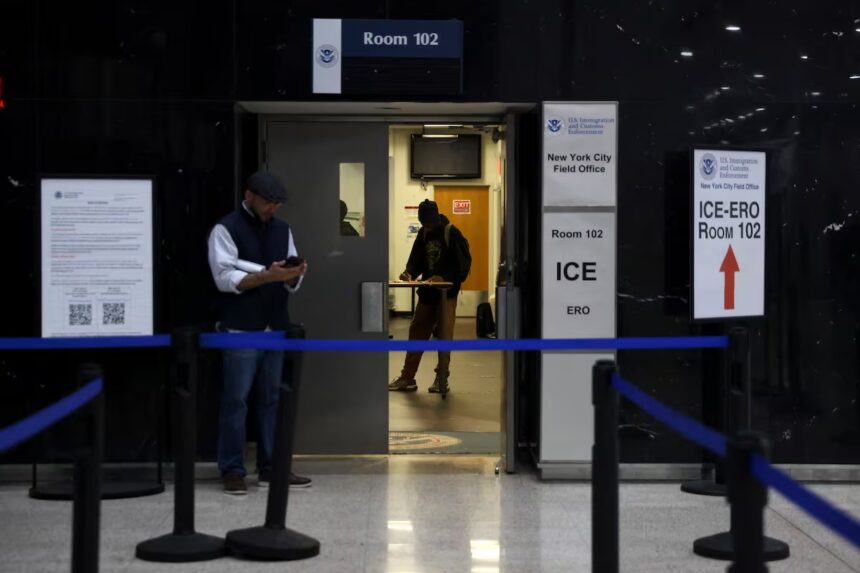
U.S. Immigration and Customs Enforcement (ICE) has expanded its technological capabilities and ICE is now using new surveillance technology to monitor and control immigrants, especially undocumented immigrants.
This expansion has raised concerns in migrant communities due to its scope and lack of transparency. ICE uses new surveillance technology to obtain accurate data on immigrants.
New tracking tools
ICE has acquired advanced devices, such as the Cellebrite, which allow access to locked cell phones to extract complete data, including messages, photos and locations.
In addition, remote infiltration technology is used that can breach devices without the need to physically possess them.
Another important tool is a digital system that integrates data from various sources.
This system analyzes cell phone location information, police records, facial recognition and online activity to quickly identify and track individuals.
Thus, ICE uses new surveillance technology to streamline these tasks.
Social media monitoring
In addition, ICE plans to create a permanent team of analysts dedicated to monitoring social networks 24 hours a day.
This team will monitor platforms such as Facebook, TikTok, Instagram and YouTube.
The information obtained will be used to coordinate detention and deportation actions.
Impact on migrant communities

These technologies increase the risk of detection and detention of immigrants without legal status.
Many people are afraid to go out to work, go to medical services or report abuse because of the risk of being located by these systems.
ICE uses new surveillance technology that contributes to this climate of fear.
In addition, constant surveillance generates a climate of insecurity and distrust in immigrant communities, affecting their quality of life and social interaction.
Legal and ethical concerns
Several experts warn about the lack of control, regulation and transparency in the use of these technologies.
There is a risk of violating privacy rights and the possibility of errors that harm people without sufficient legal cause.
The new ICE surveillance technology represents an advance in immigration control, but also poses serious challenges to the privacy and security of immigrants.
It is essential that those affected are informed about how this surveillance works and take precautions to protect their safety and rights.
This article was originally published in Nueva News.