





There are stories that seem like something out of a horror movie, but that find their place in history because of the unbreakable strength of the human spirit. HERE you can listen to the podcast.
In the most recent episode of “Crímenes del Más Allá,” entitled “Alison Botha and the Miracle of Discombi,” renowned researcher and storyteller Roberto Belmont immerses us in one of the most brutal yet hopeful chronicles of modern criminology: the case of Alison Botha.
Click on the photo to listen to the podcast

The night of December 18, 1994, in Port Elizabeth, South Africa, forever changed the life of Alison, a 27-year-old woman who was just returning home from shopping.
Expertly hosted by Roberto Belmont, whose career has been characterized by a deep respect for the victims and a meticulous analysis of the facts, the podcast takes us to the back seat of Alison’s car, where two men, Frans du Toit and Theuns Kruger, ambushed her to begin a journey into horror.
The destination was Discombi, a desolate area where civilization is lost among the dry terrain and total darkness.
There, after being the victim of systematic sexual violence, Alison was attacked with a viciousness that defies explanation.
The limit of human endurance
Belmont narrates with chilling accuracy the moment of the final attack.
The assailants, seeing that Alison was still breathing after 15 stab wounds to the abdomen, decided to end her life in the most atrocious way: they tried to decapitate her.
“The attackers, convinced they had silenced her forever, abandoned her in the underbrush with her neck barely attached by a thin thread of skin and spine,” Belmont recounts.
However, what happened next is what Belmont defines as an “animal instinct for survival”.
In an act that doctors still consider a miracle, Alison regained consciousness and, far from giving up, made surgical decisions about her own body:
With one hand: She held her own head, clinging to her hair so that the weight would not eventually dislodge it and she could breathe through the exposed windpipe.
With the other hand: He picked up his own intestines that had protruded through the wounds in his abdomen and pushed them back so he could crawl.
The path to light and justice
The agony lasted more than an hour. Alison crawled inch by inch over the gravel until she reached the asphalt of the road, where a driver found her.
The medical reconstruction was complete, but the emotional reconstruction was just beginning.
Roberto Belmont highlights not only Alison’s bravery, but also the work of the detectives who, moved by the case, tracked down Du Toit and Kruger until they were brought to justice.
In a trial that paralyzed South Africa, Alison Botha did what her attackers never imagined: she took the stand, looked them straight in the eye and narrated her ordeal with a serenity that ended up sentencing them to life imprisonment.
A legacy of forgiveness and life
Today, nearly three decades after that miracle at Discombi, Alison is remembered not for what was taken from her, but for what she built.
Author of the book I Have Life, she has dedicated herself to lecturing around the world, teaching that forgiveness is not for the aggressor, but an act of liberation for the victim.
As Belmont rightly points out at the close of the episode, Alison’s story is a reminder that even when darkness seems total, the human spirit has the ability to cling to life tooth and nail.
Listen to the complete analysis of “El milagro de Discombi” in Crímenes del Más Allá.
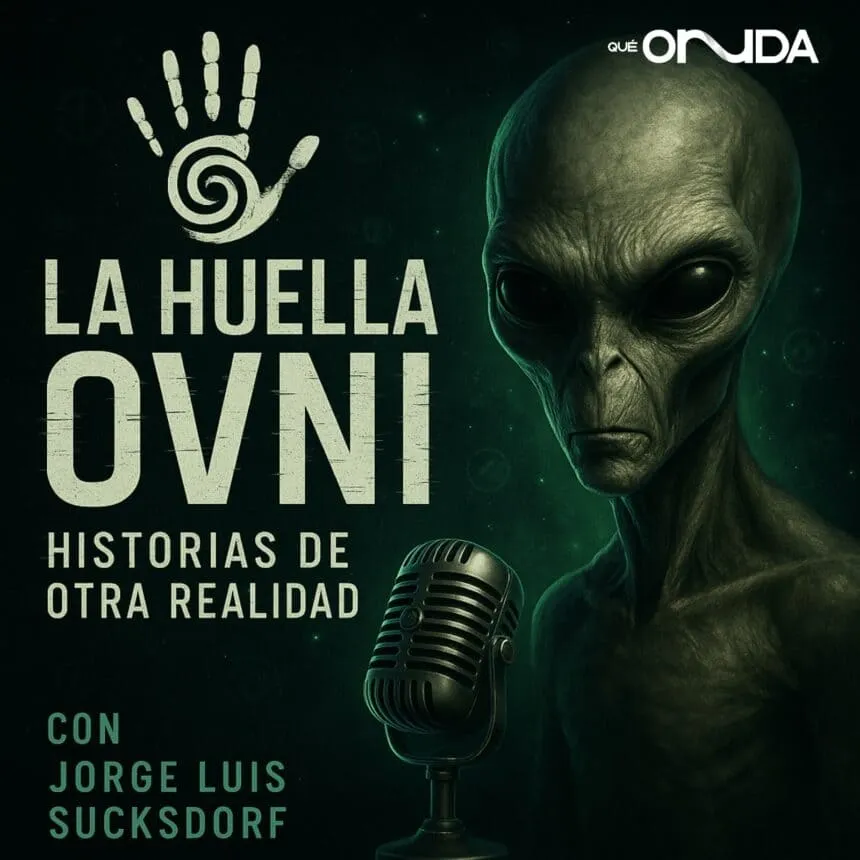
Available now on all audio platforms, where you can also listen to other titles promoted by QuéOnnda and Nueva Network, such as Observador Paranormal and El Sexto Sentido.
Filed as: Crímenes del Más Allá Alison Botha