




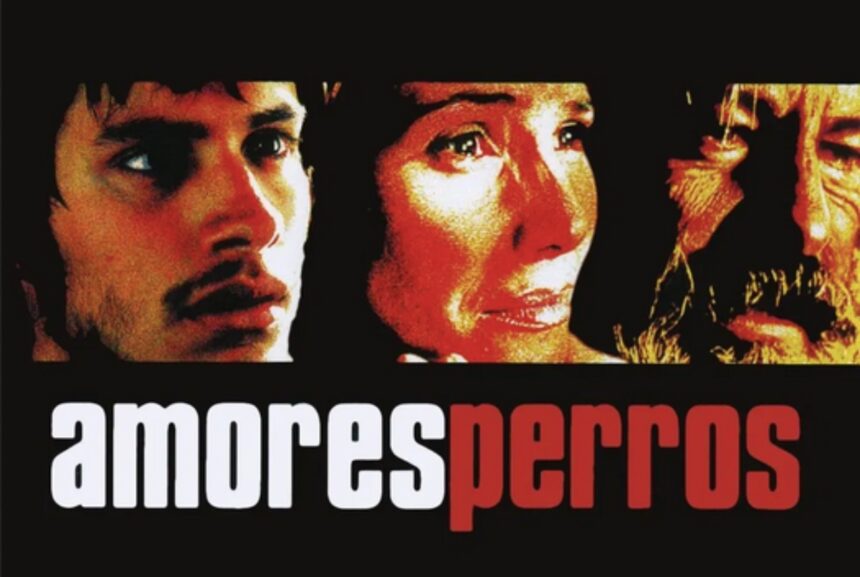
Twenty-five years ago Mexico experienced its greatest democratic transition, a process in which the Institutional Revolutionary Party (PRI) lost power; a few days earlier, in that breath of progress, ‘Amores Perros’ (2000) was released, a film in which actor Gael García Bernal made his feature film debut and achieved his most “unimaginable dreams”.
“I can’t understand my life without ‘Amores Perros’; it changed me completely. I could never have imagined it, it was a very beautiful dream (…) It is a film that spoke to the whole world and with which Latin America deposited a very strong identification”, García Bernal explained to EFE on the occasion of the 25th anniversary of the emblematic film directed by Alejandro González Iñarritu.
At the turn of the century, thousands of Mexican artists were exercising “freedom of expression and citizenship” for the first time with a certain innocence.
This stage was the precursor of numerous feature films that would later win Oscar or Golden Globe awards -as in the case of García Bernal-, and would receive recognition at European festivals, such as Cannes, from filmmakers like Alfonso Cuarón or Guillermo del Toro.
In the film, scripted by writer Guillermo Arriaga, the lives of three people intertwine when two young people suffer a car accident while fleeing to a better future, a dream that the protagonists of the story share despite their class differences.
García Bernal looks back on the past and is positive about the country’s current situation, although he recognizes that he is “very critical of the pending issues” that Mexico still has.
“Back then there were many things that were happening and today we are reaping the triumphs of that. We also take a very critical look at the pending ones, and while we recognize the wrong paths, there are many things that have changed for the better,” he argues.
Some of those changes, he adds, meant going from having “maybe six films” a year to releasing some 150 films. A “fantastic, cultural and vital turning point” that today is manifested, among other things, in the fact that Mexico City has become “one of the best cities in the world” for the cultural industry.
Amores Perros: Why does this film achieve such a powerful sensation?

Although he celebrates the arrival of new viewers who will be able to watch the film from their homes thanks to digital platforms, the 46-year-old actor confesses that he misses the time when a film generated “a lot of expectation” and occupied an “incredibly powerful and strong” cultural place.
“It is a fantastic vital act; experiencing it in a movie theater is fundamental for the community and the social. I had the chance to experience, in this temple with almost church proportions, what the film generated in many parts of the world: to see how people came out of it completely pierced,” he says.
In addition to the reactions in movie theaters, García Bernal recalls how at the age of 21 he used to read in Internet forums; those spaces that emerged at the beginning of the century and connected many citizens beyond the seats.
“At that time, the concept of Internet pages for movies was new. There was a special page for ‘Amores Perros’ and in the comments the messages people sent back then were impressive,” he recalls.
Despite the passing of the years, the actor, who has a solid track record as a producer along with his ally and friend Diego Luna, affirms that the film continues to raise a question among the audience: “What’s next for humanity?
This questioning moves him and leads him to ask: “Why does this film achieve such a crazy, fantastic and energetically powerful feeling?”.
Amores Perros’ will be re-released this Monday with a special screening at one of Mexico’s most emblematic monuments, the Palacio de Bellas Artes, before the gaze of citizens who reconnect and remember 25 years later the film that put Mexican cinema on the map this century, reported Agencia EFE.
Find out more at ‘QueOnnda.com’.