



It’s been a while since everything surrounding Taylor Swift stopped being simply massive and became almost unheard of. Every release, relationship or public decision generates an immediate global reaction. But the most recent episode involving her seems closer to a digital espionage plot than to a simple pop culture news: a coordinated attack on networks that sought to link her -in a manipulated and false way- with Nazi symbolism and extreme right-wing positions.
According to a report by behavioral intelligence platform Gudea, cited by The Guardian, a massive online campaign aimed at associating Swift and her album The Life of a Showgirl with Nazi ideology was detected about two months ago. Most disturbingly, this offensive was allegedly driven from accounts pretending to be left-wing radicals, creating a scenario of ideological confusion to damage her reputation and potentially make her a target of the cancellation culture.
Gudea’s analysis reviewed more than 24,000 publications and 18,000 accounts on 14 different platforms, in the period from October 4 to 18, coinciding with the release of the album. During that period, messages were detected accusing the singer of:
Using a design on a necklace in its merchandising that supposedly imitated the insignia of the Nazi SS.
Include hidden references to Nazism in the lyrics of their songs.
Manipulating words in their lyrics, such as the term “savage” in the song “Eldest Daughter”, to reinterpret them as racist expressions.
The campaign originated on forums such as 4chan and, from there, made the leap to larger social networks, where it was mixed with conspiracy theories and polarized discourse. Although the accusations were unfounded, the report indicates that the strategy was effective in terms of impact: only 3.77% of the accounts analyzed generated 28% of the discussions about Swift in that period, and at the peak of the attack (between October 6 and 7) they influenced up to 35% of the conversations.
In addition to false accusations of “Nazi symbolism,” narratives were pushed that:
She was linked to the MAGA movement and to the extreme right wing in the United States.
They criticized her relationship with soccer player Travis Kelce, calling it overly “traditional” or “conservative.”
The authors of the report point out that the false narrative about the use of Nazi symbols did not remain in marginal corners of the Internet: it managed to permeate even common users, to the point that some compared Swift to Kanye West, a figure who has been controversial for his anti-Semitic comments. The case illustrates how a lie, if sown strategically, can become a widespread discourse, even when the majority does not fully believe the original version.
The same attackers against Taylor Swift
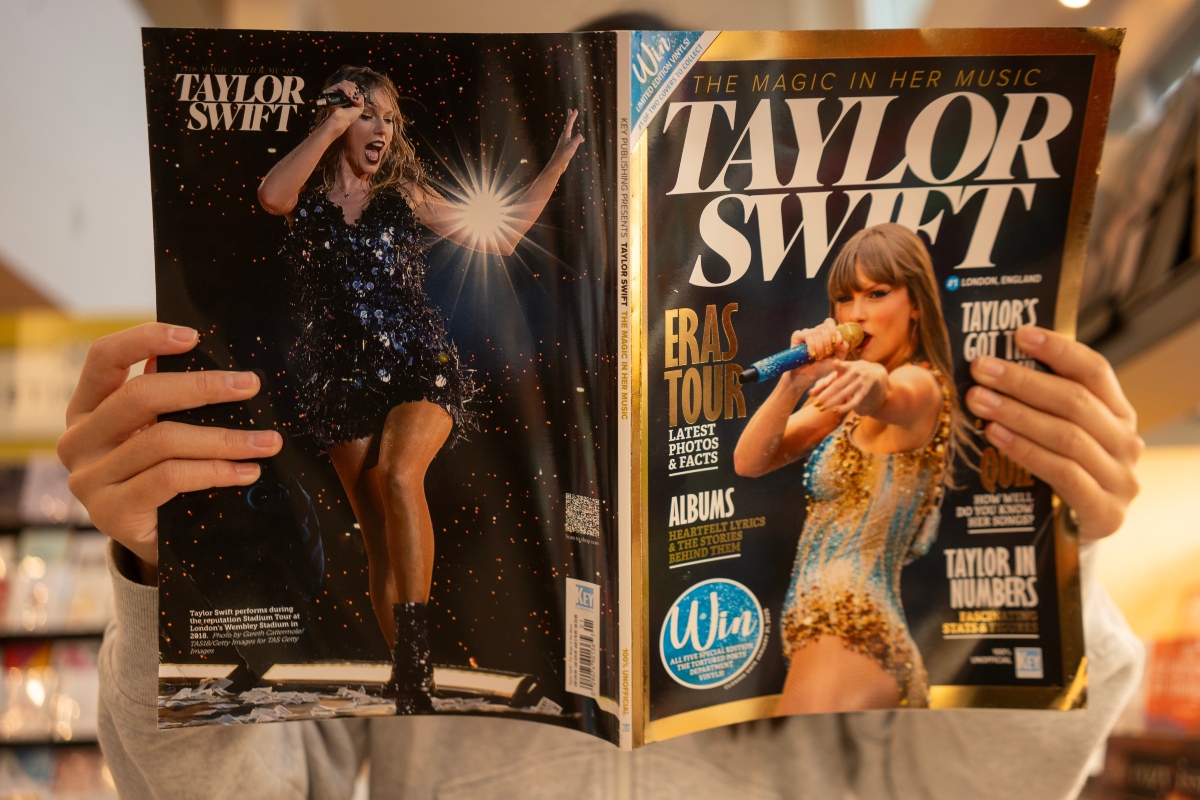
Another disturbing finding of the report is that many of the accounts that pushed the false narrative against Taylor Swift had already participated in a previous campaign against her friend Blake Lively. In that context, the actress was publicly singled out for her link to actor and director Justin Baldoni, involved in a sexual harassment lawsuit.
This coincidence suggests that these are not isolated episodes, but rather an organized network of disinformation activated against different public figures, often connected to each other.
The identity of those responsible for the attack is not yet known. The question remains as to who would have the interest, resources and obsession to finance and coordinate such a sophisticated campaign.
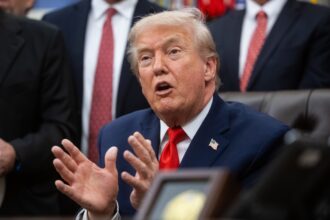
The text highlights that figures linked to the MAGA movement showed support for Baldoni, while Donald Trump has publicly expressed his rejection of Taylor Swift, especially after she called for a vote for Kamala Harris.
Although there is no evidence linking them directly to this digital offensive, the political and media context makes the reading of the case even more complex.
For Keith Presley, founder and CEO of Gudea, the attack served its purpose even without getting the majority to believe the accusations: just by sowing doubt and provoking massive discussion, it had an effect.
He noted that such inflammatory narratives are rewarded by social media algorithms and amplified by influencers seeking clicks and reach, demonstrating that today, a global star’s reputation can be threatened not only by his or her actions, but by perfectly crafted disinformation campaigns.
Find out more at ‘QueOnnda.com’.