




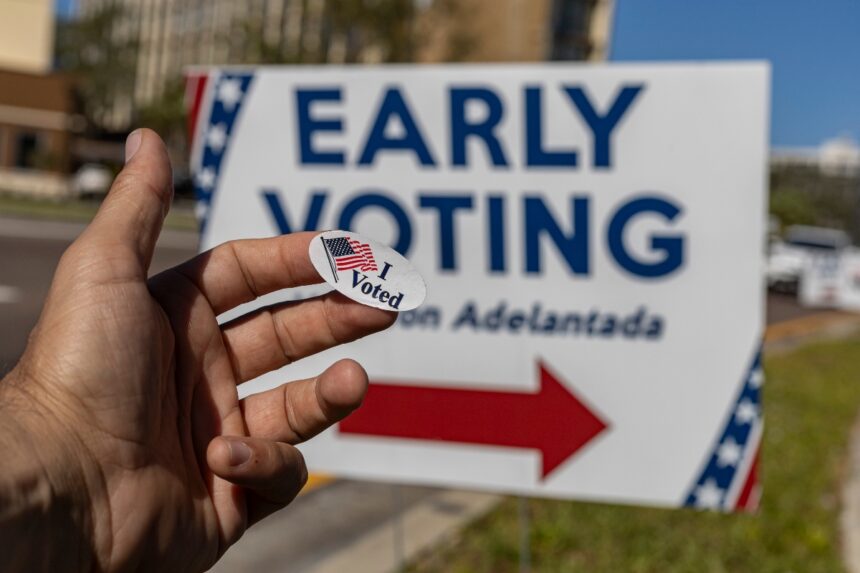
For decades, Florida was the epicenter of every election in the United States. The state where a few hundred votes decided the fate of the nation. However, going into these 2026 midterm elections, the landscape has changed dramatically.
What was once a “purple battlefield” is now a deep red, leaving Democratic strategists scratching their heads and Republicans consolidating near-absolute power.
The historic turnaround: Miami-Dade is no longer blue
The most shattering fact for those who still believe that Florida is a battleground state is what happened in Miami-Dade County.
Historically the Democratic vote engine in the state, this Latino stronghold went red after the 2024 election and, based on trends this early in 2026, the gap continues to grow.
The Cuban American community, which represents the largest Latino group in Florida, has shown record support for the Republican agenda, with recent polls putting their support at 68%.
For the QuéOnnda reader, this is not just a question of ideology versus communism; it is a question of economic perception.
The Hispanic voter in Florida today associates stability and prosperity with the current state model, leaving the opposition with less and less room to maneuver.
Latino vote in Florida 2026
Although there is no presidential election, Florida faces one of its most important battles this year: the Governorship.
With the leadership turnover after the DeSantis era, the state must decide whether to continue with the “Florida Free State” model or if there is room for a shift to the center.
However, for the Orlando or Tampa resident, politics is not about candidates, it’s about cost of living.
Florida has become an expensive state.
Despite the announcement of historic cuts of up to 8.7% in homeowners insurance premiums this January 2026, access to a roof over the head remains the biggest concern for 55% of Latinos in the state.
The Puerto Rican voter in Central Florida, which is the second largest Hispanic group, is feeling this economic hit the most.
Unlike Cubans in the south, this bloc is more volatile and may be the only hope of competitiveness for those seeking change in the state Congress.
Is it still a Battleground?
The honest answer in 2026 is: It depends on who you ask.
If you look at voter registrations, Republicans have outnumbered Democrats by almost a million people.
But if you look at the underlying problems – insurance, inflation and utility crises – Florida remains a state with deep cracks.
For our audience, the utility of this note is clear: Florida is no longer the state that “goes with the flow” nationally.
It has created its own political dynamics.
In these 2026 midterms, the challenge for the Latino community is to take nothing for granted.
Whether to confirm the red course or to try to slow it down, Hispanic power in Florida is, today, the most influential and watched in the entire country.
Filed under: Latino Vote Florida 2026