






Salvadoran migrant Kilmar Ábrego García, who was wrongfully deported to El Salvador and subsequently returned to the United States, will continue to be detained in Tennessee while a federal court evaluates the legal and procedural risks of his possible transfer to the custody of Immigration and Customs Enforcement(ICE).
Abrego is facing prosecution in the Middle District of Tennessee, accused by the federal government of allegedly transporting undocumented migrants from Texas to Maryland and other states. Judge Barbara Holmes, who is handling the case, had ordered his release last week after determining that he is not a danger to the community or a flight risk.
Court fears “hasty” deportation
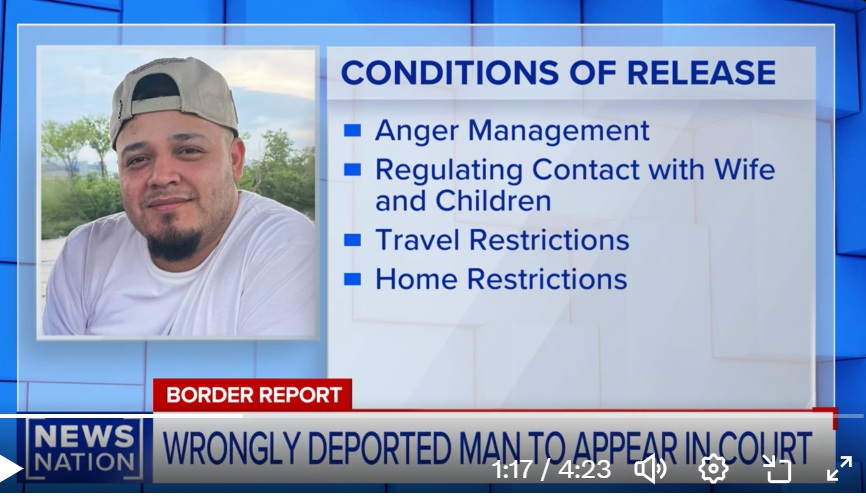
Although ordered released, Judge Holmes warned that Kilmar Ábrego could be immediately turned over to ICE.
This could result in an expedited deportation without the conclusion of their judicial process.
During the June 25 hearing in Nashville, Holmes decided to keep him in custody until it is resolved whether ICE can interfere with criminal due process.
The Department of Justice argued that the Department of Homeland Security (DHS) is autonomous.
In addition, he cannot guarantee where Kilmar Ábrego will be once he is transferred.
In contrast, the migrant’s legal team argued that there is coordination between agencies.
And that turning him over to ICE would be a violation of the right to a defense.
The judge gave both parties until noon on Thursday 26 to submit their written arguments.
Family impact and migratory context

During the hearing, Kilmar Ábrego, dressed in a red prison uniform and black cap, was accompanied in the courtroom by his wife, Jennifer González, family members and activists.
González shared with the media that her husband has missed important moments with their children:
“He missed birthdays, graduations and today, our wedding anniversary.”
Kilmar Ábrego had lived in Maryland for more than 10 years and fled El Salvador after receiving threats from the Barrio 18 gang, according to documents presented by his defense.
He was one of more than 200 migrants deported to El Salvador under President Trump’s mass deportation policy, and held without trial in CECOT, a maximum security prison.
Relevance of the case in the U.S.

This case has generated criticism from human rights groups and opponents of the Trump administration.
They point to this as an example of abuses within the expedited deportation system.
He missed birthdays, graduations, and today, our wedding anniversary
Although the government attempted to link Kilmar Ábrego to MS-13, he has never been charged with violent crimes in the United States.
The Tennessee prosecution could set a precedent on the balance between criminal justice and immigration enforcement.
Especially in cases of deportation without prior judicial verification.
For more information, visit QuéOnnda.com.