




Pedro Pascal, Chilean actor known for his roles in “The Last of Us” and “The Mandalorian,” became one of the most talked-about faces of the weekend when he was caught dancing cumbia during the No Kings Protest (or “Sin Reyes”) in Los Angeles, California. During the protest, which took place on October 18, 2025, Pascal was spotted among the protesters, smiling, snapping his fingers and swaying his shoulders to the beat of a song: La Cumbia De La Migra.
The “No Kings” protest took place in the midst of demonstrations against authoritarianism and immigration policies under the administration of Donald Trump, a movement that sought to make visible the rejection of “kings” or rulers who impose absolute power over the people. On that day, music, dances and Hispanic flags had a strong protagonism.
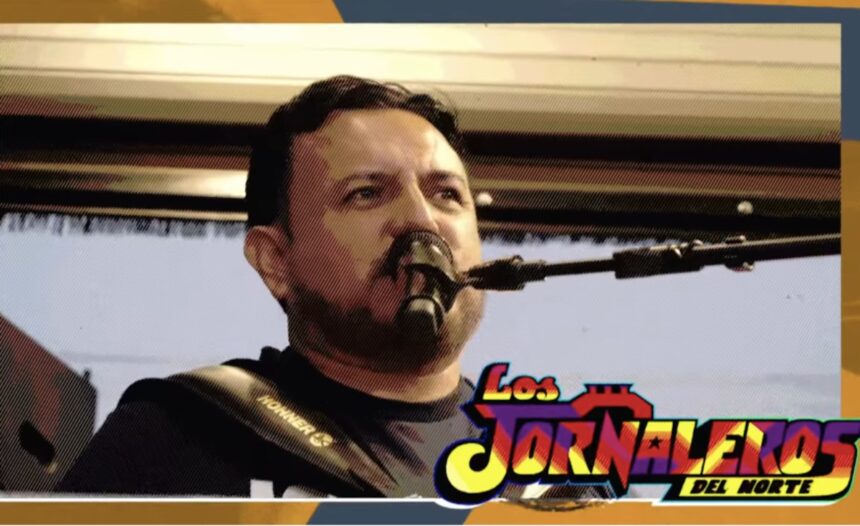
The piece that prompted the viral moment is “La Cumbia De La Migra”, performed by the group Los Jornaleros del Norte. This band, composed of migrant workers in Los Angeles, has been mixing cumbia with messages of social resistance for the Latino community for more than two decades.
The song contains explicit lyrics against immigration control: “Esa migra desgraciada que se vaya a la chingada” (“That migra desgraciado que se vaya a la chingada”), say the verses that captured the attention of thousands.
“La Cumbia De La Migra” has become a spontaneous anthem of migrant protest in the United States, used in marches, online platforms and as a symbol of the Latin American working community.
Los Jornaleros del Norte are linked to the National Day Laborer Organizing Network (NDLON), a network that defends the rights of migrant and low-wage workers in the U.S., which gives their music even more social weight.
La Cumbia de la Migra’: Music as Cultural Resistance
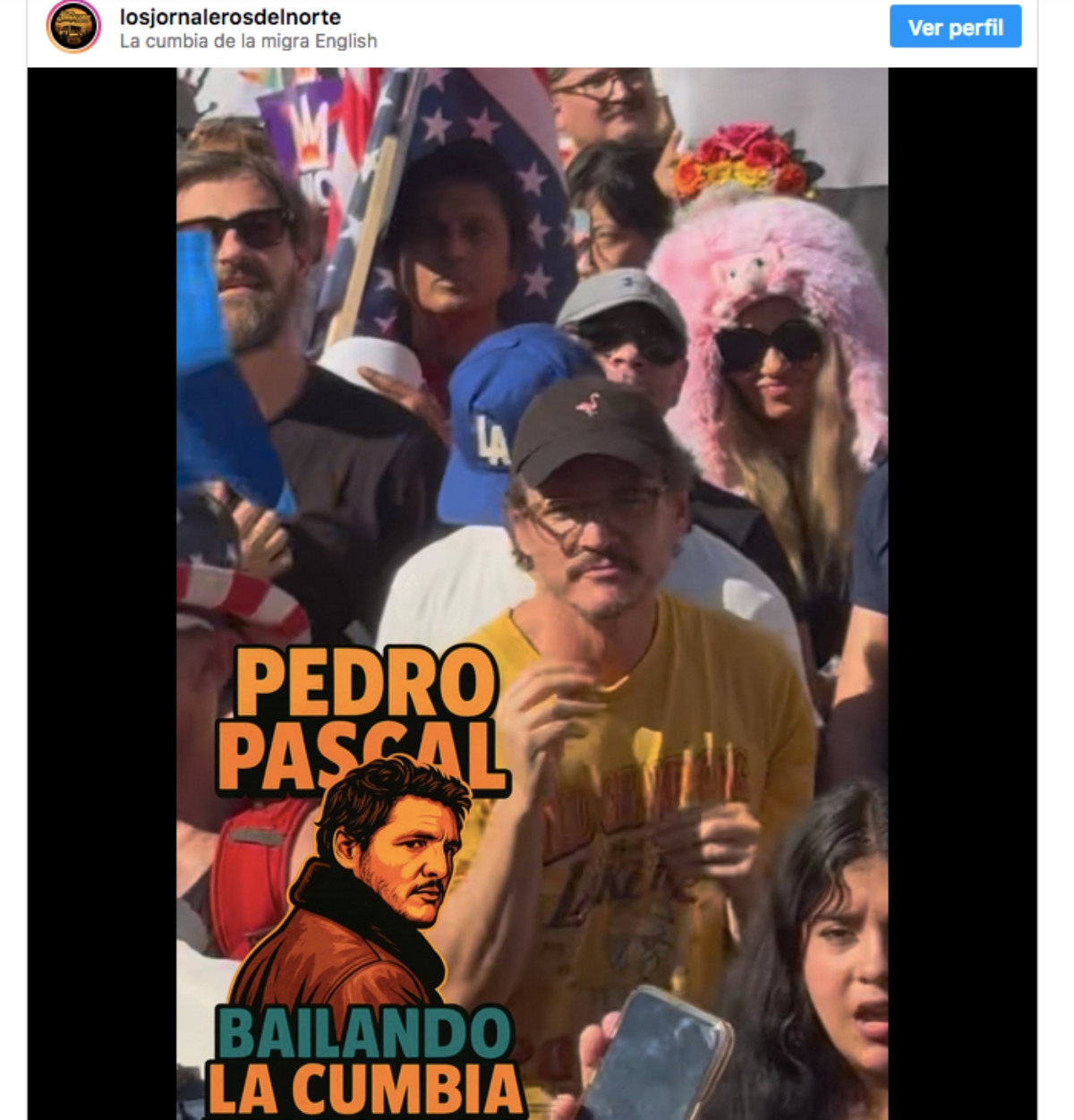
The use of “La Cumbia De La Migra” in the “No Kings” protest exemplifies how music can serve as a vehicle for denunciation and community. In Los Angeles, the day was marked not only by political demands, but also by cultural celebration: dances in front of Freeway 110, flags of Mexico, El Salvador, Guatemala and the United States, and a mostly peaceful atmosphere with moments of unity.
Beyond this specific case, the song is part of a long tradition of Latin music that addresses the migrant struggle: classics such as “Los Mandados” by Vicente Fernández, “Canción 187” by Juan Gabriel or “La Migra” by Tijuana No! have narrated the experience, fear and hope of millions of immigrants.
The fact that a Hollywood star like Pedro Pascal joins a march and dances to the rhythm of a protest cumbia like “La Cumbia De La Migra” elevates the symbolism of the action: it unites a global audience with a local cause, gives media visibility to the migrant struggle and underscores how popular culture and social mobilization can intertwine.
The song does not eliminate raids or stop government policies, but it does humanize the experience of those who live under the constant risk of deportation. It represents a cry of community that resonates in the fields, factories, schools and streets that build the U.S. Through the rhythm and lyrics, it vindicates the invisible workers and reaffirms that music is also a tool of resistance.
Here you can listen to ‘La Cumbia de la Migra’.
Find out more at ‘QueOnnda.com’.