




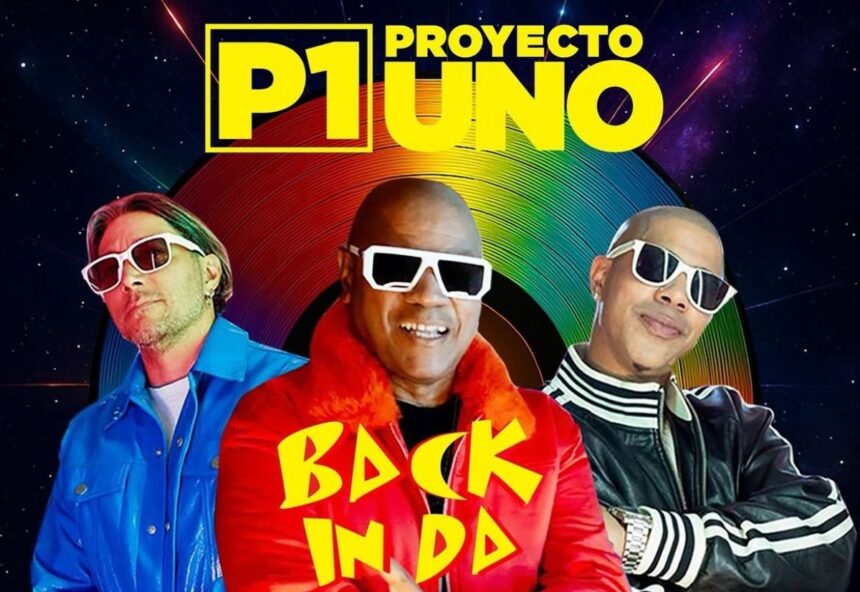
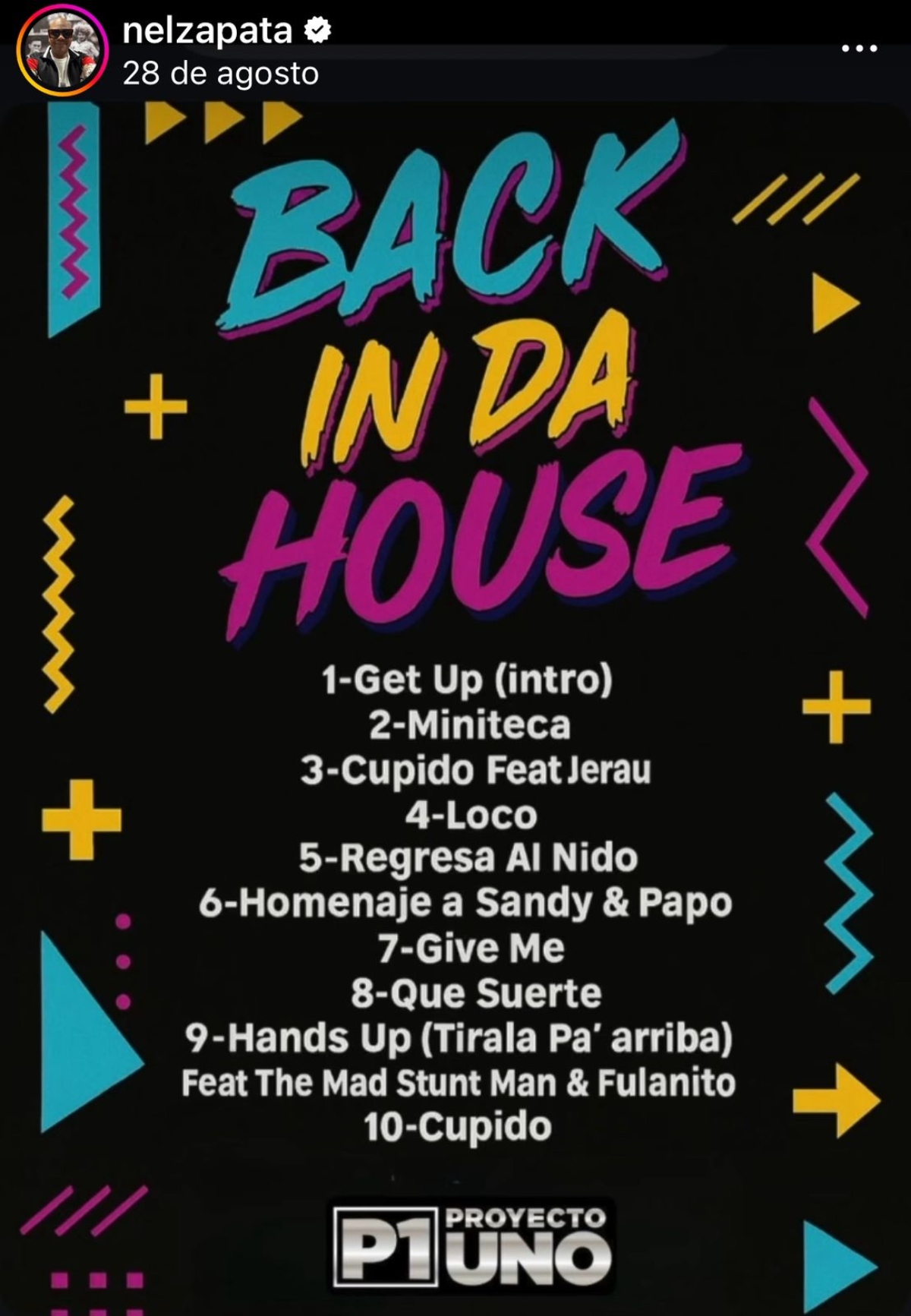
Dominican-American singer and producer Nelson Zapata, founder of the group Proyecto Uno, said in an interview with EFE that his recent album ‘Back in da House’ comes as a “positive wave of fun”, “especially in these difficult times we are living through worldwide”.
At a time when artists are under increasing pressure to produce music continuously, Proyecto Uno decided not to set a deadline for their work: they didn’t care “if the Grammy date passes”, because “when it’s ready, from the bottom of my heart, then they will have the album,” said the artist.
As the title indicates, the album is a journey home, back to the group’s origins: “We wanted to return to the essence of the album ‘In da House’,” said Zapata about the album they released in 1993.
Although the group returns to its roots, in this new project “we not only rescued the original sounds” such as merengue, hip hop, house or disco, “but we continue to explore a little more” and incorporated a modern touch: merengue funk.
Just as it happened thirty years ago, when the group became a pioneer by mixing merengue with hip hop, he proudly says that the reception of this new idea has been very good: “I was very excited to see people’s comments”.
“They said they felt like they were in the 90s, but at the same time in the present. They managed to capture that musical feeling,” added the artist, who emphasized that the group wanted to teleport the public to the danceable romance, to a time when “things were better” in the world.
The key is “keeping it real,” says Nelson Zapata of Project One
“One key that I advise all artists is to do what they like, because that’s where variety comes from,” noted Zapata, who reflected on the current feeling that “many artists sound the same.”
“I don’t feel good doing something that I think doesn’t fit us,” said the singer, who believes that Proyecto Uno has managed to stay true to its essence throughout its more than thirty-year career, without getting dragged down by what’s in fashion.
This has allowed them to continue connecting with the public that fell in love with their music in its beginnings, as well as with new generations.
“Keep it real with what you do, keep it sincere. People also capture it when they hear it in a song,” said Zapata, who gave as an example the music of U.S. superstar Bruno Mars, who “pulled an ’80s magnet” and brought retro sounds to his contemporary music, or other immortal and invincible artists like The Rolling Stones or Queen.
‘Regresa al nido’, the album’s first single, “came to me from the chorus while I was taking a bath”, revealed the producer with a laugh about the song with which he wanted to recreate the essence of the classic ’25 horas’, one of the group’s most beloved songs by their fans.
The inspiration came to him in one of those moments of loneliness when his wife and daughter go on a trip: “That’s when I thought of that feeling that a house is not a home when they are missing, as Luther Vandross used to say. I took that metaphor and made it a little bit lighter,” explained Zapata, who decided to reunite the same team with which he worked on ’25 hours’.
The Dominicans recorded the music video for ‘Regresa al nido’ in the studios of Colombian artist Carlos Vives, who ended up joining the party.
The group now has concerts in Latin America and the United States, and Zapata confessed that he has already begun “to write the ideas for another album, which will be like a ‘Back in da House 2′”.
After thirty years of musical career, for Zapata it is “a total blessing, something we didn’t expect” that his hits like ‘El tiburón’ are still being played in all the celebrations today.
“It is an immense joy that this music has become a legacy,” confessed the artist, who added that after so long “we have become an institution, like classics, but in good shape,” reported Agencia EFE.
Find out more at ‘QueOnnda.com’.