




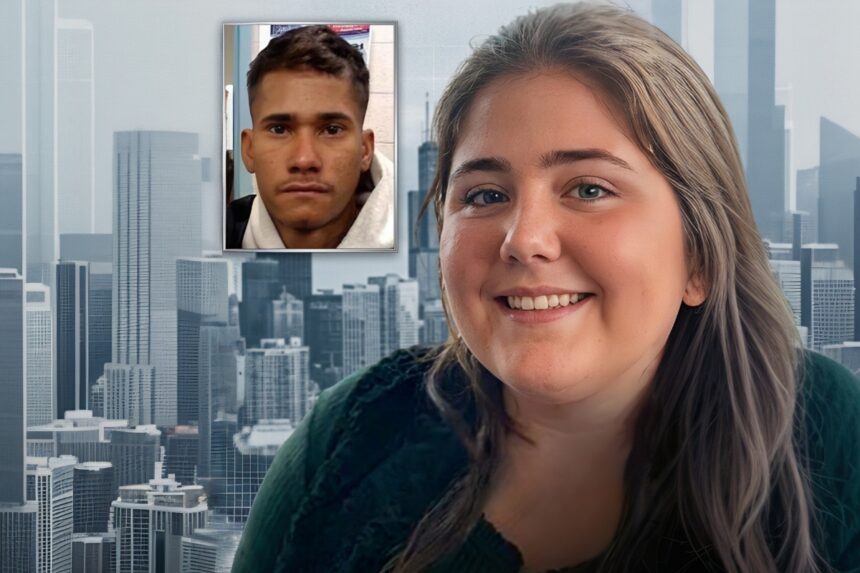
The case that has shocked the Chicago college community has taken a significant turn in recent hours. Jose Medina Medina, the 26-year-old Venezuelan immigrant suspected of the cold-blooded murder of a young student last month, now faces serious new charges at the federal level.
This decision by the U.S. Department of Justice not only complicates the defendant’s legal situation, but also reignites a national debate on security and immigration in the midst of an election eve.
The weight of federal law
DHS Confirms Venezuelan Illegal Jose Medina-Medina, Released Twice Under Biden Policies and Chicago Sanctuary Rules, Charged with Murder of Loyola College Student Sheridan Gormanpic.twitter.com/gJYmLMBrb8
– TaraBull (@TaraBull) March 23, 2026
This Thursday, the U.S. Attorney’s Office for the Northern District of Illinois filed a new indictment against Medina Medina for illegal possession of a firearm.
This federal charge adds to the already heavy list of state charges against him in the death of Sheridan Gorman, a promising 18-year-old Loyola University student.
The seriousness of the case has led the authorities to act decisively.
The magistrate in charge of the case did not hesitate to state during the hearing that the attack perpetrated against Gorman and his group of friends represents the greatest threat imaginable to the community.
As a result, Medina faces state charges of first-degree murder, attempted first-degree murder, three counts of aggravated assault and unlawful possession of a firearm, to which the federal charge is now being added.
Chronology of a tragedy and capture
25-year-old Jose Medina, who is in the country illegally, has been charged in the killing of 18-year-old Sheridan Gorman, a college student who was shot and killed last week in Chicago’s Rogers Park neighborhood just north of the Loyola campus.
The suspect is due in court… pic.twitter.com/D7ye2HMrJg
– CBS News (@CBSNews) March 23, 2026
The events that led to this tragedy occurred in the early hours of the morning of March 19.
According to the state indictment, Sheridan Gorman was at a local beach enjoying herself with friends when she was attacked.
The assailant, described as a man dressed entirely in black and masked, fired at the group, ending the student’s life.
The police investigation was swift and effective.
Thanks to eyewitness testimony, careful analysis of surveillance video from the area and forensic evidence collected, authorities were able to identify José Medina Medina as the alleged perpetrator of the crime.
The suspect was arrested shortly thereafter in an apartment building located in the same neighborhood where Loyola University is located, a fact that generated relief but also outrage among residents and students.
Migratory status and political repercussions
18-year-old Loyola University student Sheridan Gorman was allegedly shot and killed last Thursday morning in the sanctuary city of Chicago by a criminal alien who should have never been here.
Venezuelan national Jose Medina-Medina was apprehended by Border Patrol in May of 2023… pic.twitter.com/HR2wxN7KYS
– U.S. Immigration and Customs Enforcement (@ICEgov) March 23, 2026
The case has taken on an inevitable political dimension following confirmation by the Department of Homeland Security (DHS) that Medina Medina is a Venezuelan immigrant residing in the United States without legal permission.
The report states that he entered the country undocumented in 2023.
In addition, a disturbing fact was revealed: that same year he had already been arrested by the Chicago Police for an alleged robbery, raising questions about the follow-up of his case.
This tragic event has once again served as fuel for President Donald Trump’s administration’s discourse.
The administration has used the case to redouble its criticism of the undocumented community and fuel its mass deportation campaign, turning the pain of one community into a central argument of its immigration policy.
Meanwhile, in Chicago, friends and family mourn Sheridan Gorman, a young life cut short by violence.
Do you think this case should influence U.S. immigration policies or is it unfair to judge an entire community by the actions of an individual?
Filed under: José Medina Medina Case