






With the arrival of the New Year, millions of Hispanic families in the United States repeat a series of rituals that have been passed down from generation to generation. Although many live far from their home countries, traditions such as eating 12 grapes, wearing colorful underwear or leaving with a suitcase at midnight remain an essential part of the celebration and a symbolic way to start the year with hope.
These customs, rooted mainly in Latin American countries and Spain, have found a new home in Hispanic communities across the country, where they adapt to modern life without losing their meaning. Here you have some of New Year Traditions.
The 12 grapes: wishes to the beat of the clock
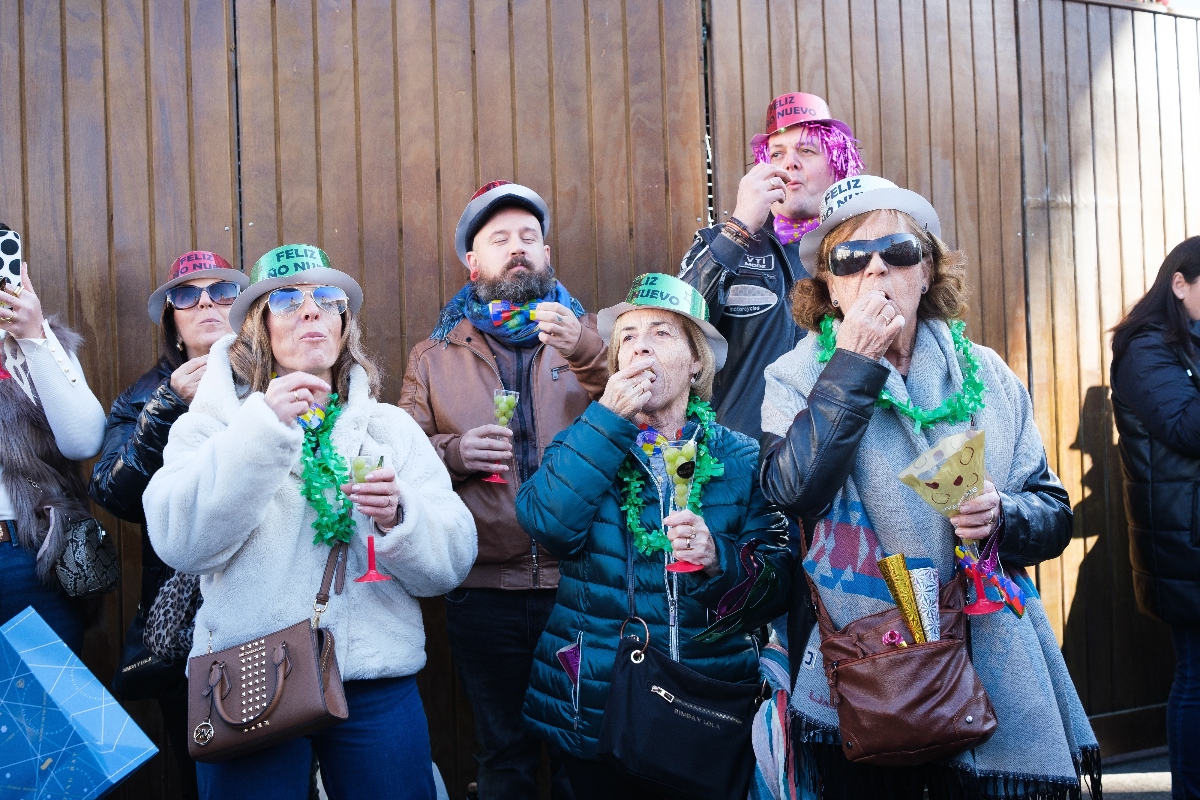
One of the best known traditions is to eat 12 grapes at the stroke of midnight, one for each month of the year.
With each grape a wish is made, usually Buzzy related to health, work, love or economic stability.
This practice, popular in countries such as Mexico, Spain, Peru and Colombia, has become a family moment that brings adults and children together in front of the clock, the television or counting down at home gatherings.
Beyond belief, the ritual represents the intention to start the year with clear goals and optimism.
Colored underwear: symbols of what you want to attract

Another widespread custom is to wear underwear of certain colors on New Year’s Eve.
The meaning varies according to popular belief:
Red, to attract love and passion.
Yellow, associated with prosperity and money.
White, for peace and harmony.
Green, linked to health and hope.
In many families, choosing the color becomes a ritual that adds a touch of humor and complicity to the celebration, while still being a symbolic expression of personal wishes for the new year.
The suitcase: travel as a purpose

Going out on the street with an empty suitcase just after midnight is a tradition that symbolizes the desire to travel during the new year.
Some people walk around the block, others simply take a few steps outside.
Although it does not guarantee travel, the gesture represents openness to new experiences and opportunities.
For many immigrants, this tradition also reflects the value placed on movement, getting to know new places and keeping alive the connection with other countries.
More than superstition, identity and hope
In the United States, these customs are celebrated at family gatherings as well as in small apartments, night jobs or even among friends.
Many people adjust the rituals to their reality, but retain their essence.
For new generations born in the U.S., these traditions function as a cultural bond, a way to learn about their roots and to share them with friends from other backgrounds.
Although some consider them superstitions, for many Hispanic families these traditions represent moments of togetherness, conversation and reflection on what is left behind and what they want to build.
In a country where life is often fast-paced, saying goodbye to the year with symbolically charged rituals remains a powerful way to start anew, honor the past and look to the future with intention.
Thus, among grapes, colors and suitcases, Hispanics in the United States demonstrate that traditions are not lost when crossing borders: they are transformed, adapted and kept alive every time a new year begins.