





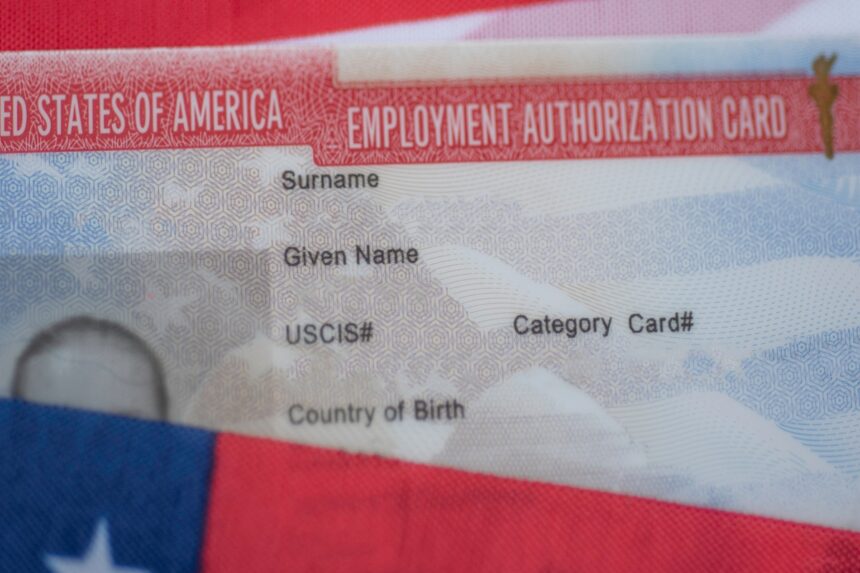
In the United States, working without legal authorization is no small matter: it can lead directly to immediate deportation. The Immigration and Nationality Act(INA) states that any foreign national who violates his or her immigration status through unauthorized employment can be removed, even if he or she entered on a valid visa. For those living and working in the U.S., this means that getting the right document is an urgent necessity and not optional.
The document that allows immigrants to work legally is called the Employment Authorization Document (EAD), also known as a work permit. Many people confuse it with the Green Card, but they are not the same: while the Green Card grants permanent residency, the EAD is temporary and allows those who have a pending procedure to work legally while their case is being resolved.
Real consequences of working without a permit

The risks of not having a work permit are multiple and serious:
Cancellation of pending immigration applications, which can cause you to lose years of waiting and money invested in your case.
Revocation of temporary visas (such as student or specialized work visas) if illegal employment is detected.
Immediate deportation order issued by ICE if you are detained in a raid or investigation.
In addition, having a history of unauthorized employment may close doors to future benefits, such as the ability to adjust status or apply for citizenship.
Who can apply for a permit
Many people confuse it with the Green Card
QuéOnnda.com
The EAD is only available to those who are already in the U.S. and have active processing with the U.S. Citizenship and Immigration Services (USCIS).
Among them:
Green Card applicants through Form I-485.
Persons with pending asylum or refugee applications.
TPS (Temporary Protected Status) beneficiaries.
Spouses or dependents of certain visa holders.
It is important to remember that if you live abroad you cannot apply for an EAD (work permit).
Only when you are in the country and under an immigration process you will be able to apply.
Automatic extension in 2025

To address the backlog of renewals, as of January 2025 USCIS implemented a rule that allows certain immigrants to keep their work authorization in effect for up to 540 additional days.
Provided they have applied for renewal on time.
This measure seeks to prevent workers from being left in legal limbo and losing their jobs while waiting for a response.
Why it is key to be informed
Many immigrants, including those who have been in the country for years, are unaware that not having a work permit can affect not only their present, but also their future.
Even if you have family members who are citizens or an application in process, unauthorized employment can ruin your path to permanent residency.
Immigration experts recommend always verifying your status on the official USCIS website and not accepting jobs without a valid EAD.
When in doubt, seeking certified legal counsel can make the difference between moving toward legalization or facing deportation proceedings.
For more information, visit QuéOnnda.com.