





After returning to his own kilometer zero and reconnecting with the energy of the first times, Spanish singer-songwriter Pablo Alborán celebrates the end, for now, of an extensive and nomadic tour of America, which has allowed him to visit new places, “learn” and, incidentally, “value” what he has at home.
“I wouldn’t be who I am if I hadn’t traveled or been around with my little guitar. People don’t remember, but I spent a year and a half in bars and clubs with an album under my arm that nobody wanted. Later, in Argentina and Mexico, it was very hard for me to get an audience. And it’s good that it costs because, otherwise, it gives the feeling that things are fleeting,” he says in an interview with EFE.
This Tuesday he closed the first part of the tour with his debut in Zacatecas (Mexico), after visiting cities such as Santiago, Buenos Aires, Bogota and Lima and hanging the “sold out” sign at his concerts in Sao Paulo. This was also a premiere, as he had never performed in Brazil in 15 years, a debt he owed to this “loving public” that had been fighting for a long time to see him perform.
“All I’ve done since I released the album ‘KM0’ (2025) is precisely to remember, to be aware of everything I live and go through it, to, when the day ends, be amazed to have been in Brazil and eaten this or that,” he reflects after overcoming a period of health “turbulence” in his family and appreciating things now more than ever.
In that sense, he believes that the worst thing that can happen on stage is to turn experience into a profession and put it on autopilot.
“Then you screw up to the bottom. I once read that we musicians have the responsibility to hold something that appears and disappears on stage and that’s where its value lies, in that it won’t happen again and that each time it must be unrepeatable,” he explains.
Pablo Alborán and his origins in music
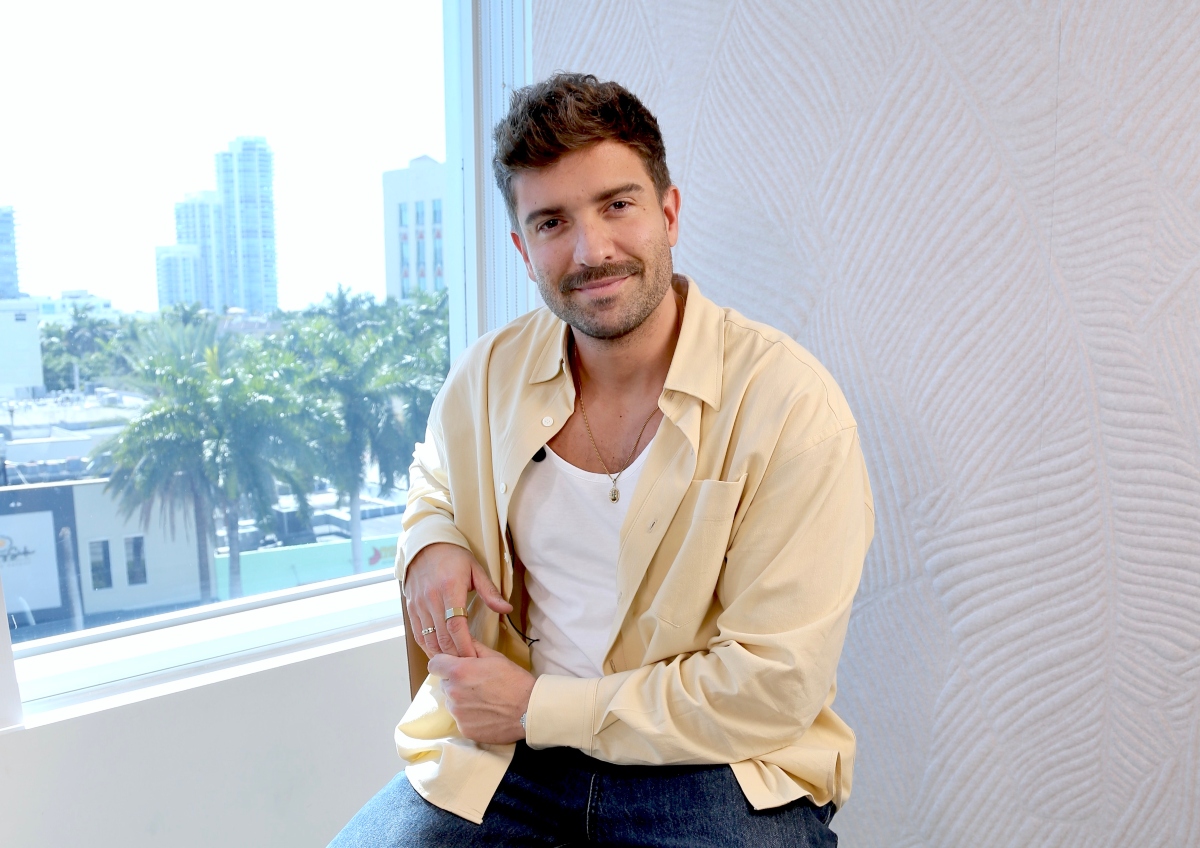
“It’s also good for my personality to get out of its comfort zone and that not everything is perfect and not all the scenarios are ideal,” adds Alborán, for whom touring and visiting other countries allows him to learn. “You have to leave your home and your country to value what you have… or not to value it,” he says.
“Many times we don’t realize how things are outside and we are more demanding” with our own, he says. “But we have rights that don’t exist in other places and we live very well,” he acknowledges before cautiously pointing out that, at least for him, he can’t complain.
He then admits that, as he denounced in the song ‘Clickbait’, we live in times in which “you have to be careful (with what you say), because there are many people with a twisted fang and a desire to generate hatred”.
“It tires me and bores me, because I see it in absolutely everything, in newspapers, in presenters and on networks, but I think that in the street there is not so much hatred,” he adds.
For that reason he also values the experience of live music. “Because it makes you look for something almost spiritual, a connection with people of different ideologies, customs and tastes, suddenly all united by a song, so there’s something there that can’t be undervalued,” he says.
In May he will visit Spain with concerts in indoor venues in Bilbao, Barcelona, Madrid and Valencia, discarding for the moment to make the leap to the stadiums like other artists.
“And then there is the sound, which for me is fundamental, because I go from singing with piano and voice to something more dramatic; I like the nuances and there are places where that is complicated,” he explains, before concluding that he prefers “to consolidate before making that leap,” reported Agencia EFE.
Find out more at ‘QueOnnda.com’.