




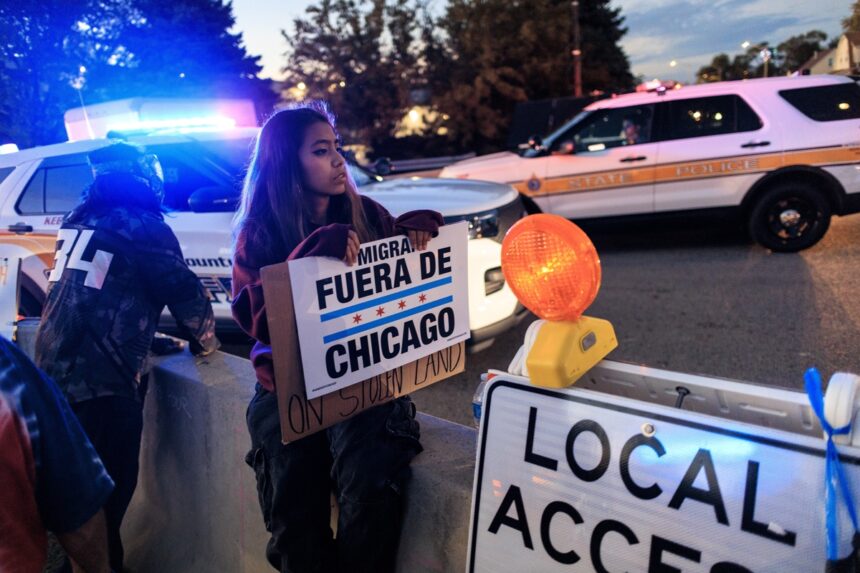
The Supreme Court on Tuesday rejected President Donald Trump’s plan to deploy the Illinois National Guard to Illinois to protect federal agents executing his immigration raid policy.
The Trump administration went to the highest court last October after a federal judge blocked its order to send Illinois soldiers to cities such as Chicago, where protests erupted over operations in the mass deportation campaign.
The White House argued that federal agents in Chicago faced “violent, coordinated and prolonged resistance” that jeopardizes their safety and hinders immigration enforcement.
But in a 6-3 ruling, the Supreme Court justices have rejected the arguments, noting that the law the Trump administration relied on to seek the emergency order only applies when “regular forces” are insufficient to maintain order.
Although the decision is only limited to the Illinois National Guard and the Chicago deployment, it does set a precedent for other legal battles the White House is waging with Democratic states, such as California, over the federalization of state soldiers, in a move that has not happened in the U.S. for 60 years.
It also means a triumph for federal Judge April M. Perry, appointed by President Joe Biden, who blocked Trump’s attempt to send troops in early October, finding that the administration’s statements lacked “sufficient credibility.”
The Seventh Circuit Court of Appeals kept the blockade in place, although it left the mobilized units under federal control, allowing the White House to maintain its request before the Supreme Court.
In their response, Illinois authorities insisted that a military presence is not necessary, asserting that “state and local law enforcement officials have handled isolated protests” in the state without major incident and that “there is “no credible evidence” to justify federal intervention.
The Trump administration had suffered another recent setback in California, where it had to withdraw National Guard soldiers from that state guarding the federal immigration building in Los Angeles, the epicenter of protests last June against immigration raids.
With information from EFE