




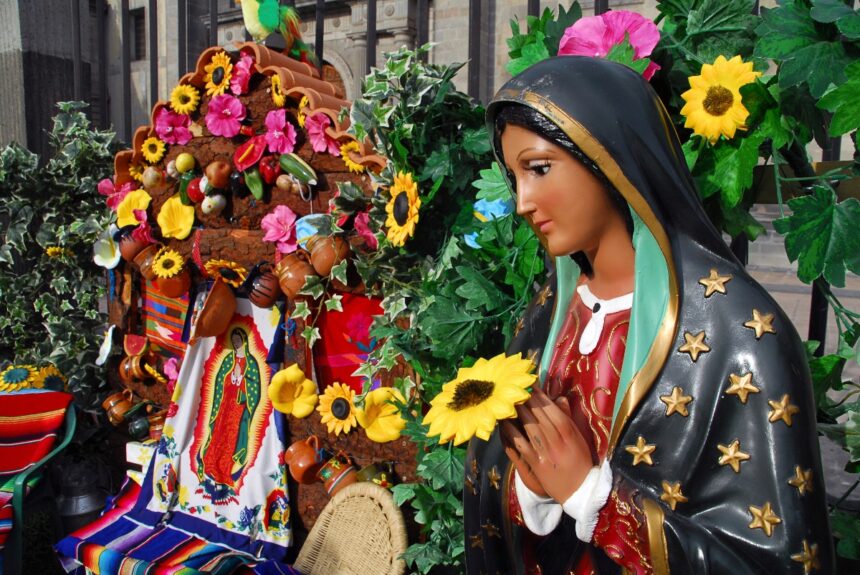
The image of the Virgin of Guadalupe has been studied by historians, scientists, anthropologists and experts in sacred art for almost five centuries. And although millions of devotees venerate her every day, there are details that often go unnoticed even by those who have prayed in front of her all their lives. For the Hispanic community living in the United States – where the Virgin is a symbol of identity and hope – knowing these elements deepens the connection with one of the continent’s most important images.
Here are five real, documented details that almost no one notices, but that completely transform the reading of the tilma.
1. The four-petaled flower on her belly
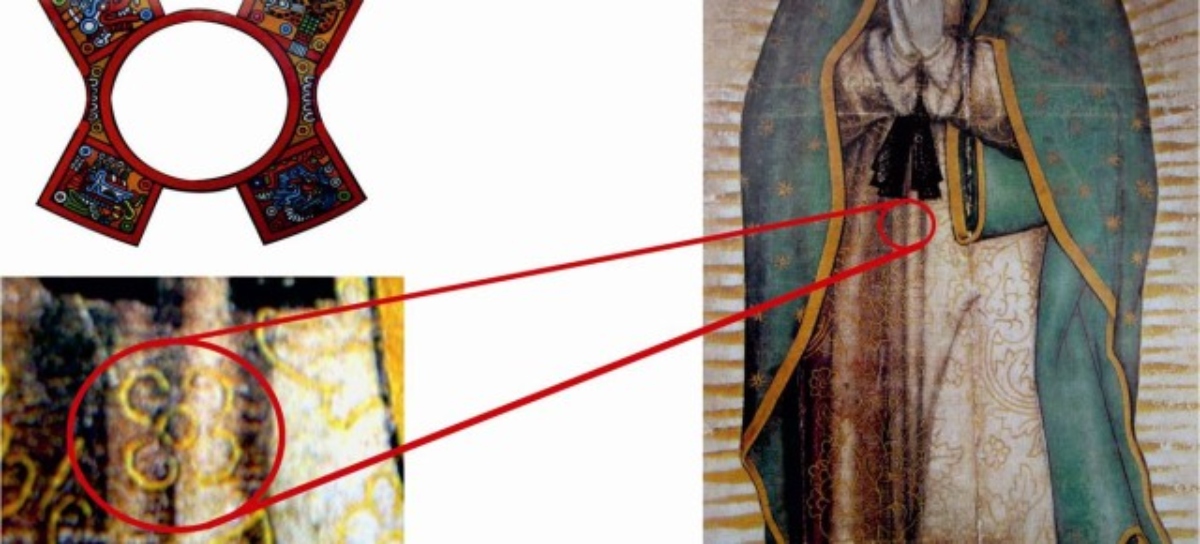
Just above the belly of the Virgin of Guadalupe appears a symbol known as Nahui Ollin, a flower with four petals that represented, for the native peoples of central Mexico, the center of the universe, life and the divine.
In 1531, any indigenous person understood this message: something sacred was inside her.
The missionaries, for their part, interpreted that flower as a sign of the Child Jesus.
It is one of the most powerful symbols of the tilma.
2. The right hand is slightly larger than the left hand.
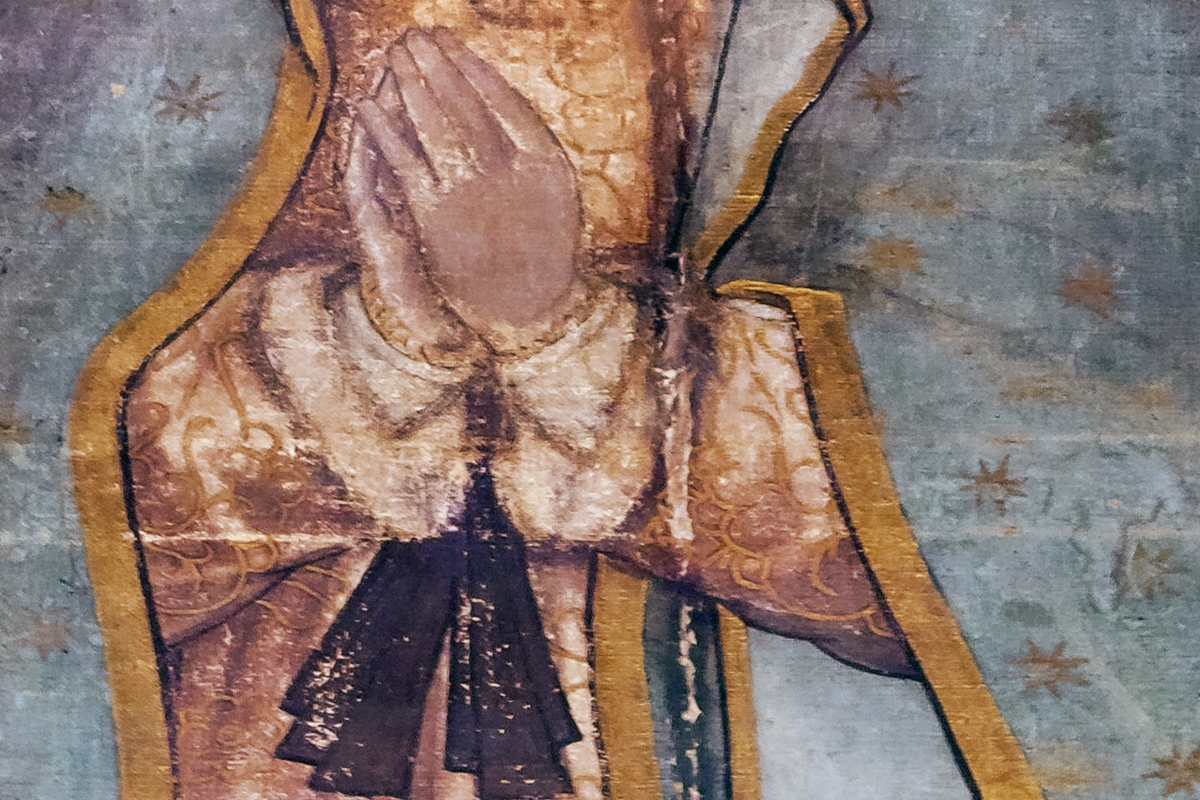
This detail has been pointed out by restorers and researchers of colonial art.
The difference is minimal, but perceptible in photographic analysis: one hand seems to represent an indigenous lineage and the other, a European one.
Many interpretations are unofficial, but what is verifiable is this: the hands are not identical.
And that visual difference underscores the Virgin’s function as a bridge between two worlds: indigenous and Spanish.
3. Its mantle reflects the sky of 1531.
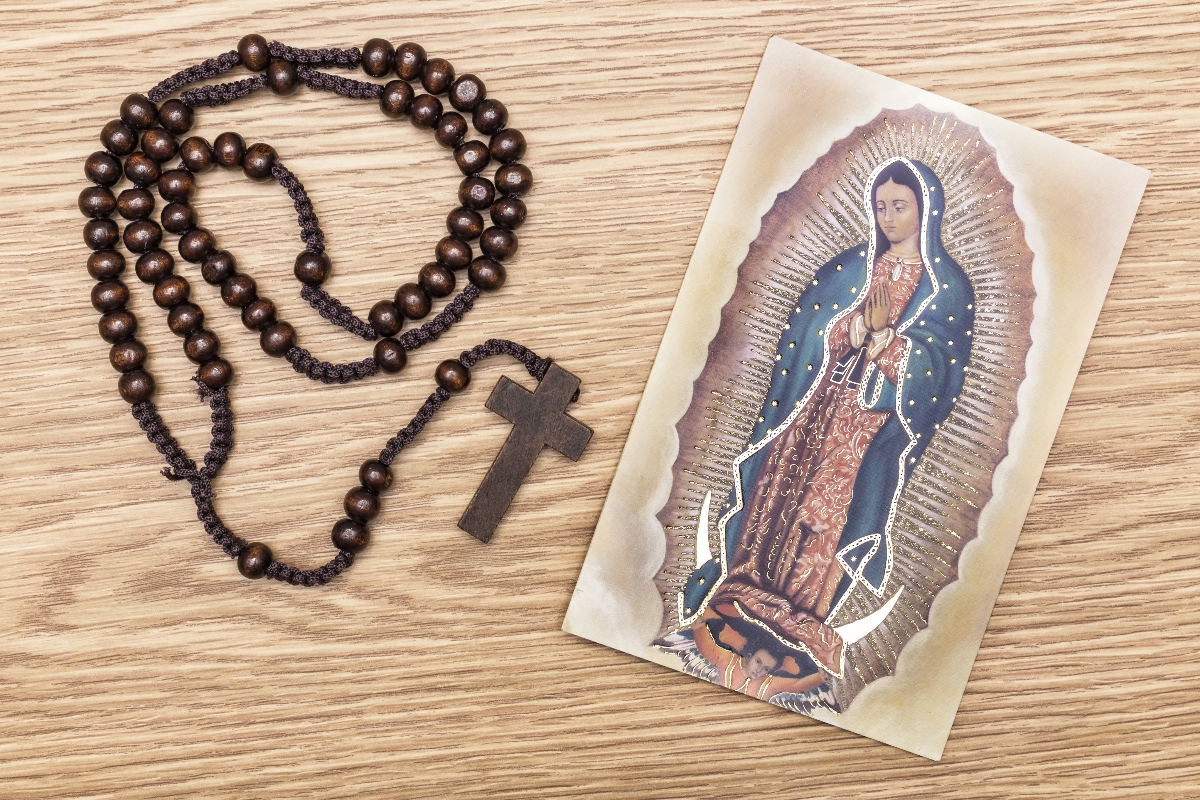
Several astronomical studies, including those of Mexican astronomer Juan José Guerrero, indicate that the 46 stars distributed on the mantle coincide with constellations visible in the night sky over the Valley of Mexico around December 1531.
There is no official statement from the Church about its significance, but the investigations exist and are public.
The discovery has generated enormous scientific and cultural interest.
4. The Virgin does not step on just any moon: it is the moon of the Mexica.
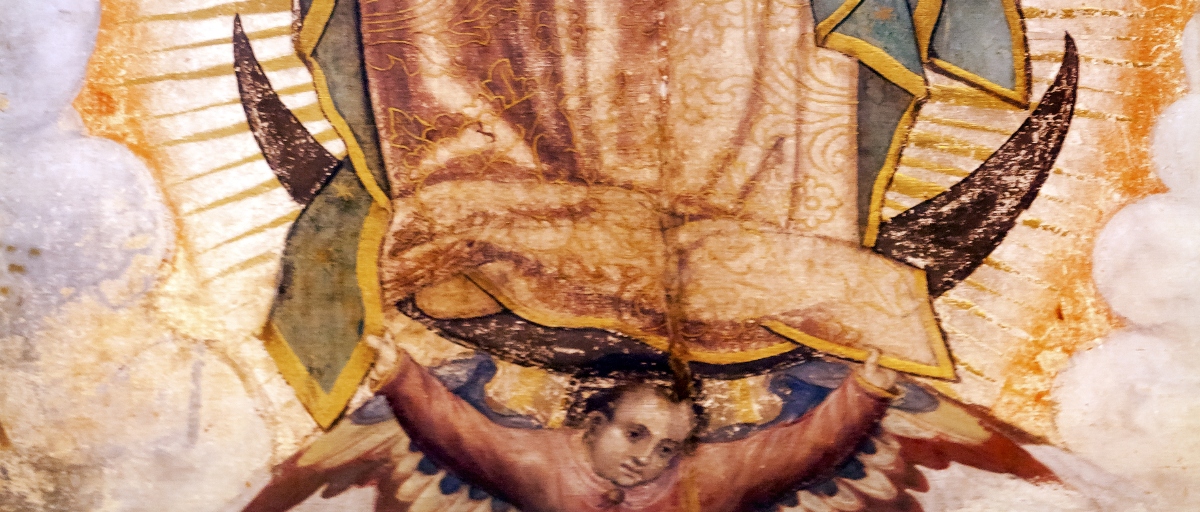
The black moon under his feet is not an ornament.
In the Nahua cosmovision, the moon was associated with important divinities, and seeing it under the feet of the image conveyed a clear message: the figure represented has spiritual authority superior to the gods that the Mexica venerated.
For Europeans, the moon represented purity and the victory of good over darkness.
The image spoke two visual languages at the same time.
5. No visible brushstrokes in most of the image.
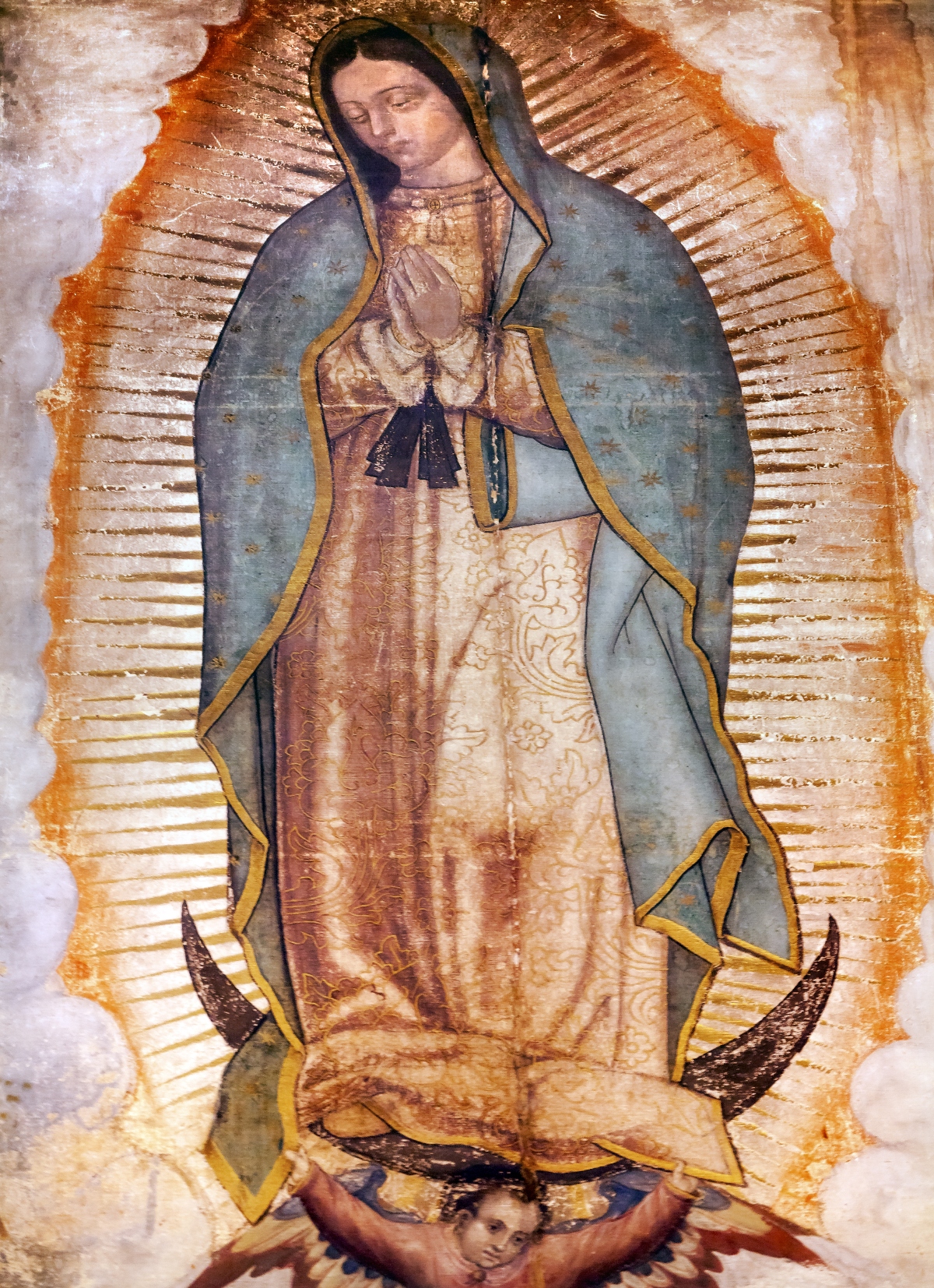
Infrared analysis by experts such as Phillip Callahan in the 1970s confirmed that most of the image is free of priming, brush strokes and common painting techniques.
This does not imply miraculous conclusions – the Church has never declared it so – but it does recognize that the technique of the image does not correspond to pictorial methods known from the 16th century.
Later retouches, such as some details on the face, hands and the lower angel, have been detected by restorers.
These details are real, documented and are part of the ongoing study of the tilma.
For Hispanics in the United States, many of them living between two cultures, the Virgin of Guadalupe remains a symbol that speaks directly to them: a figure that unites worlds, languages, traditions and generations.
The image is not only looked at: it is deciphered, it is felt, it is inherited.