





The tilma of Juan Diego, where the image of the Virgin of Guadalupe is found, is considered one of the most studied religious objects in the world. And no wonder: according to textile conservation experts, scientists, historians and scholars of sacred art, the material of the tilma and its state of preservation cannot be explained completely satisfactorily, even with modern technology.
For millions of Hispanics in the United States who venerate the Virgin of Guadalupe, knowing these facts adds depth and wonder to a devotion that has crossed borders, generations and languages.
What is the tilma really made of?
Most researchers agree that the ayate is made from maguey fibers -a coarse, rustic fabric used by the poor indigenous people of the 16th century.
The normal service life of such a vessel is 20 to 30 years at most, even under controlled conditions.
However, this ayate has remained intact for almost five centuries, exposed for most of its history to humidity, manipulation, candle smoke, massive pilgrimages and, before the 20th century, without any protection against air or pollution.
One of the most widely cited analyses is that of scientist and professor Phillip Callahan, who in the 1970s examined the ayate with infrared light.
Callahan concluded that the plant fiber should have deteriorated much earlier and that he found no evidence of priming, varnishing or traditional painting techniques on most of the image.
Their study stated that most of the ayate appeared to behave like a fiber “without added pigments”.
However, later interventions were detected in some details, such as the hands and the angel, which were retouched during the 17th and 18th centuries.
It has survived several incidents
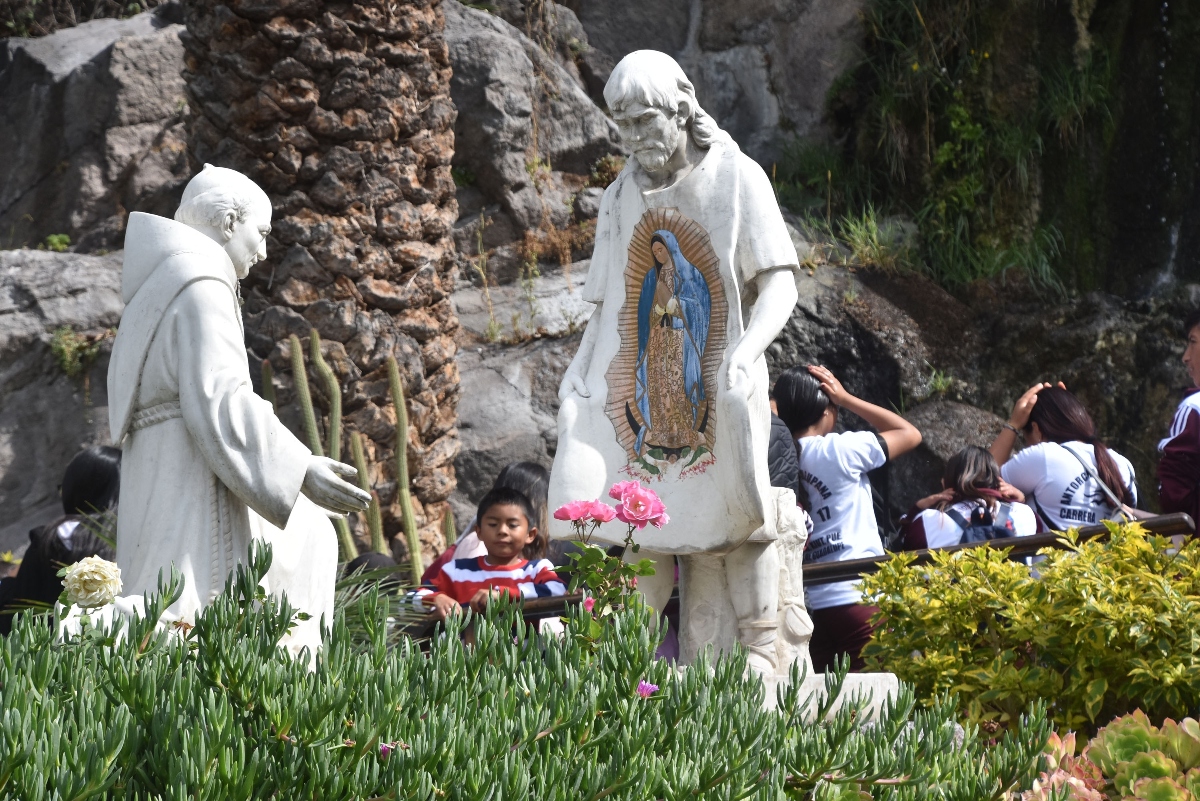
Throughout its history, the tilma has also survived incidents that would have destroyed any other fabric of its kind.
The most famous occurred in 1921, when a man placed a bomb hidden in a bouquet of flowers in front of the altar.
The explosion was so strong that it bent a bronze crucifix, broke windows and damaged the surrounding marble.
However, the tilma did not suffer a single visible damage, something that continues to be cited by believers and researchers alike.
Currently, the tilma is protected behind bulletproof glass, with temperature and humidity control, inside the Basilica of Guadalupe in Mexico City.

These modern systems help to preserve it, but the big question remains: how did it survive the first 450 years intact, when these conservation measures did not exist?
For the Hispanic community in the United States – especially for those facing difficult times due to immigration, economic or family issues– this story reaffirms a deeply rooted idea.
The resistance of the ayate represents the resistance of its people.
The Virgin of Guadalupe is not only a religious symbol, but also a cultural emblem of strength, perseverance and protection.
Nearly 500 years after its appearance, the tilma remains an open mystery.
A relic that, according to science, should not exist in the state it is in; and that according to faith, remains because its message is still alive for millions of devotees around the world.
Filed under: Tilma de la Virgen de Guadalupe