





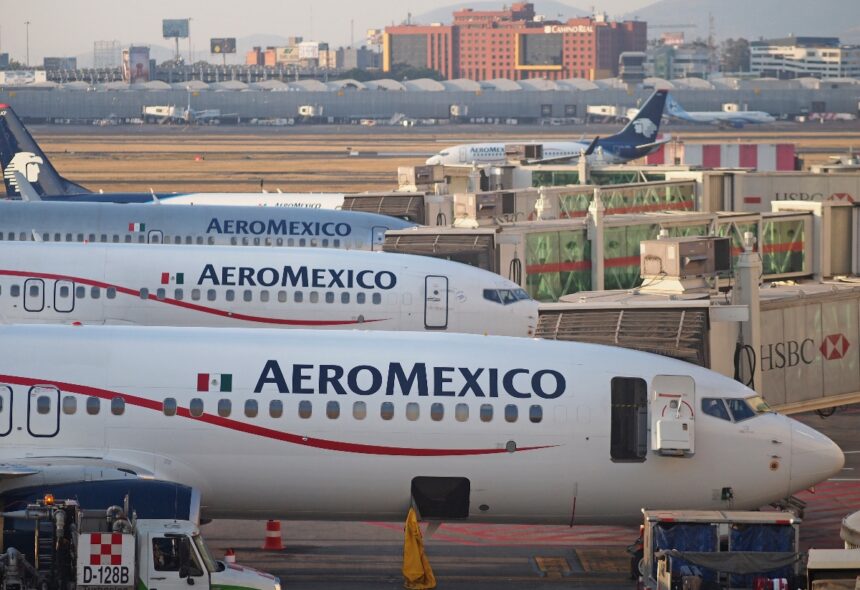
The U.S. Department of Transportation (DOT) announced on Tuesday, October 28, the revocation of the approval of 13 routes operated by Mexican airlines to the United States and the freezing of belly cargo services from Mexico City airport.
This is part of a series of sanctions for non-compliance with the bilateral air transport agreement.
What motivated the measure?
#ÚLTIMAHORA 🚨 EU cuts 13 Mexican airline routes for breaching 2015 agreement; all combined US-AIFA services cancelledhttps://t.co/iqnLiE2vQY pic.twitter.com/l525fQVZSs
– El Financiero (@ElFinanciero_Mx) October 29, 2025
Transportation Secretary Sean Duffy said that the Mexican government had “illegally cancelled and frozen flights of U.S. carriers for three years without consequence,” in violation of the air services treaty between the two countries.
Among the complaints are the withdrawal of slots at Benito Juarez International Airport (MEX) and the obligation imposed on U.S. cargo companies to relocate to Felipe Angeles Airport (NLU), actions that the U.S. considers discriminatory.
What airlines and routes are involved?
The measure affects airlines such as Aeromexico, Volaris and VivaAerobus, whose routes to the U.S. have been cancelled or will not be able to expand until the dispute is resolved.
For example, Aeromexico lost approval for flights between Mexico City and Houston or McAllen; Volaris for flights between Mexico City and Newark; and VivaAerobus for planned routes between Felipe Angeles and cities such as Austin, Dallas or Chicago.
Implications for travelers and Hispanic communities in the U.S.
For those who live in the U.S. and fly regularly to Mexico – or have family members who do – this change may have direct consequences: fewer flight options, possible fare increases, or interruptions in travel plans.
DOT advised that affected passengers should contact their airline for re-accommodation.
It is also a relevant issue for Hispanics who work or travel between the two countries, as air connectivity is a key factor in their family, work or cultural ties.
What’s next in the negotiations?
Although flights already in operation will continue for now, Mexican airlines’ expansion plans will be blocked.
The measure will take effect gradually, and the DOT reserved the possibility of imposing new sanctions if Mexico does not rectify the situation.
Additionally, the DOT ordered Mexican airlines to charge prior authorization for flights to the U.S. and reviewed the status of the alliance between Aeromexico and Delta Air Lines, which must be dissolved by January 1, 2026 for anti-competitive practices, according to the agency.
For the Hispanic community in the United States: if you have tickets to fly to Mexico, or expect to receive visitors from there, check in advance for possible flight changes.
It is also a good idea to keep abreast of official announcements from the DOT, your airline and the Mexican Consulate.
Filed as: USA mexican airlines