

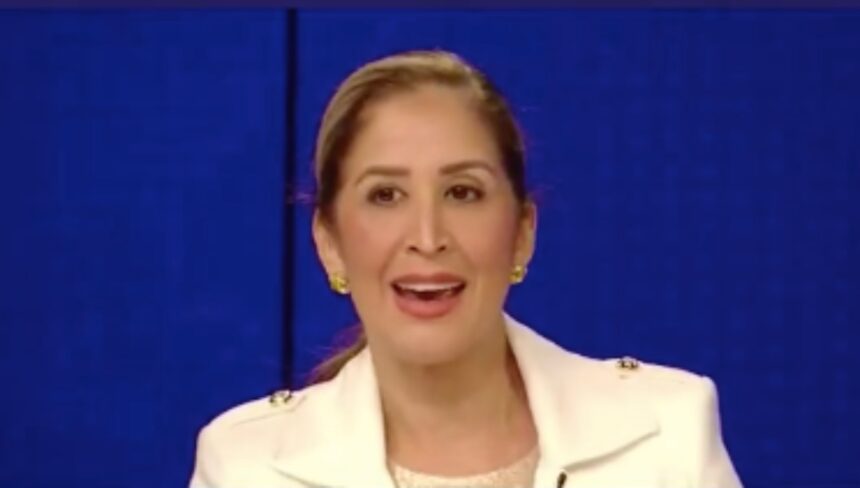
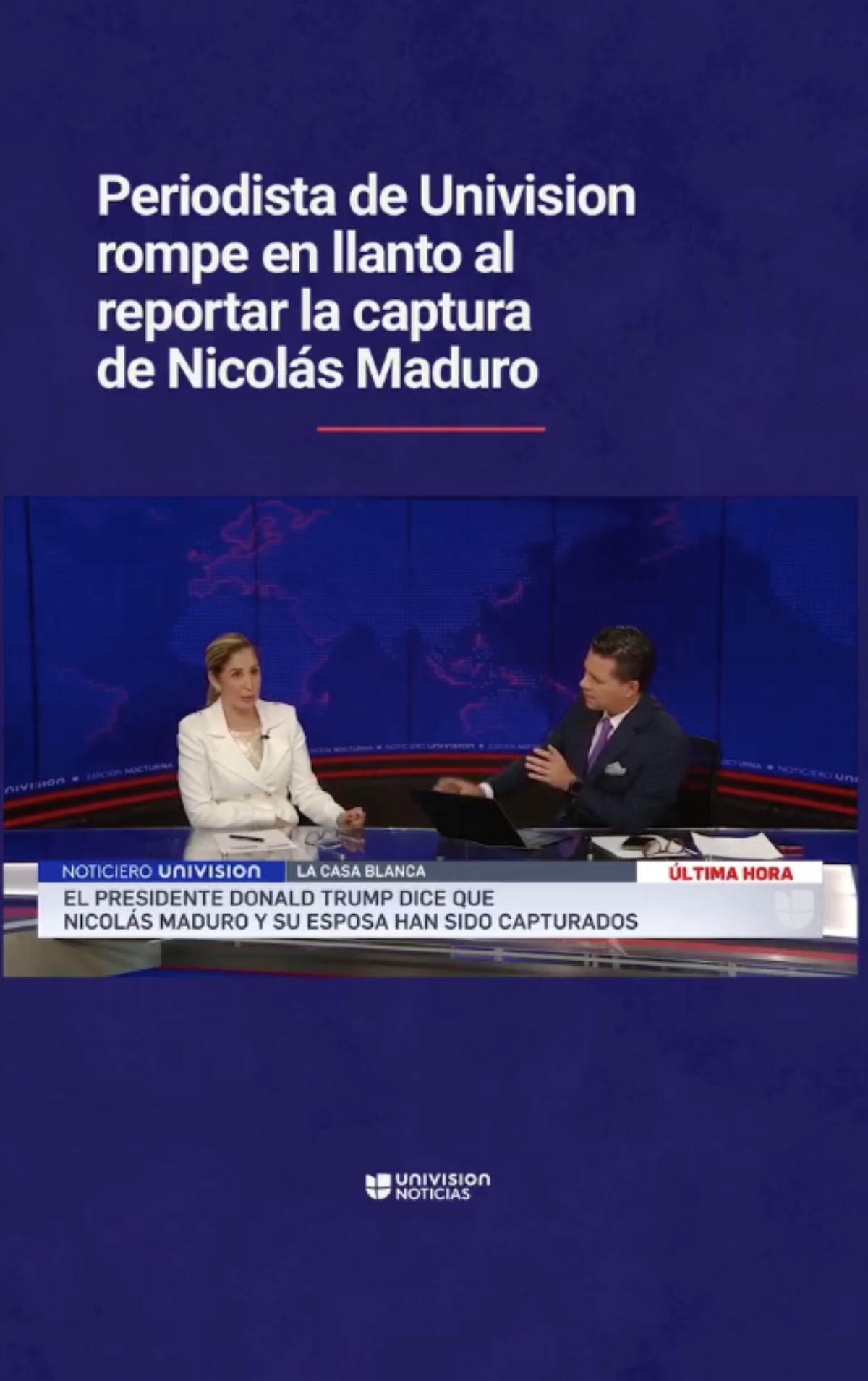
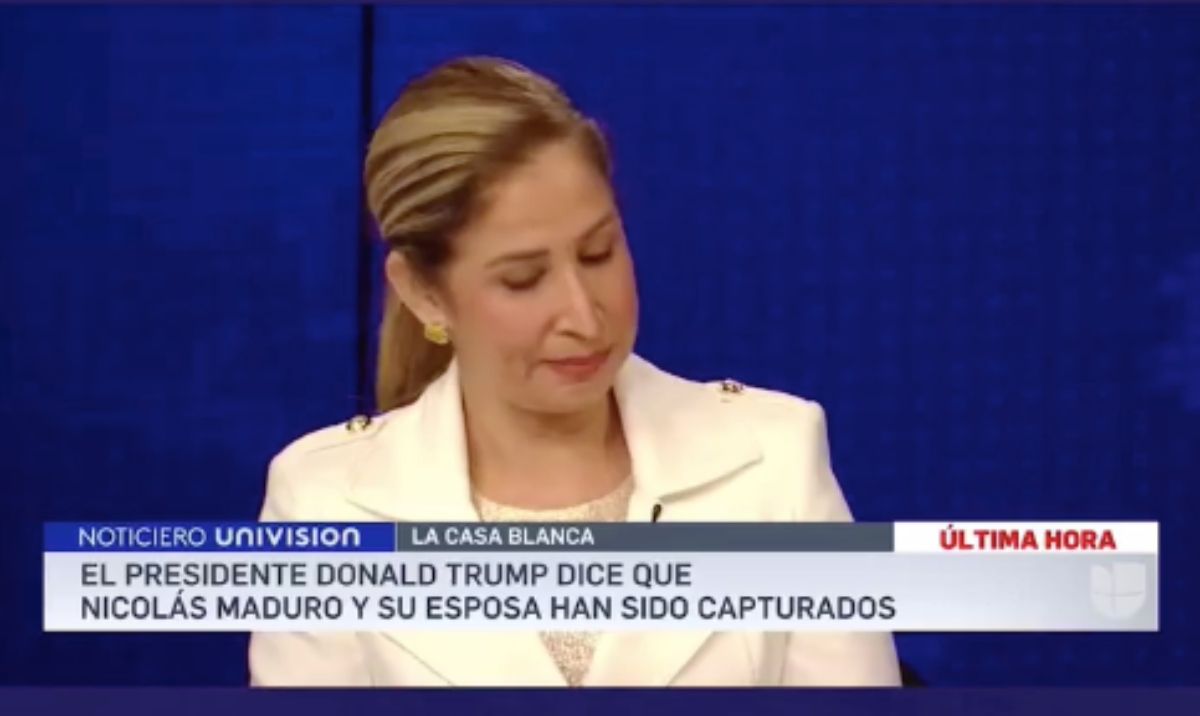
An emotionally charged moment was experienced on Univision’s screen when Venezuelan journalist Elyangélica González burst into tears while reporting on the announcement made by U.S. President Donald Trump, who assured that Nicolás Maduro had been captured after a military operation in Venezuela. The episode occurred during live coverage and was later broadcast by the network itself on its digital platforms.
It is important to emphasize that the information reported was based on Trump’s public statements and that, up to the time of the broadcast, there was no independent confirmation from the Department of Defense, the Department of State, international organizations or the Venezuelan government itself to corroborate the alleged capture of the president. Univision’s coverage focused on reporting the presidential announcement and its immediate impact.
The announcement that triggered the reaction of Elyangélica González
Hours earlier, President Trump published a message on his social network Truth Social in which he stated that the United States had “successfully carried out a large-scale attack against Venezuela” and that Maduro and his wife had been captured and taken out of the country. In his message, Trump also announced that he would hold a press conference to expand on the details.
During the live report, Elyangélica González explained the scope of the announcement and the context of tension and conflicting versions surrounding the events. It was at that moment when the journalist broke down emotionally, visibly affected by the magnitude of the announcement and by what it could imply for her country of origin and for millions of Venezuelans inside and outside Venezuela.
“My body is shaking because of what is happening, I don’t know what to tell you,” González said on air, in a spontaneous reaction that quickly went viral on social networks.
The journalist’s reaction resonated among the Venezuelan community in the United States, one of the largest diasporas in the country. For many, the announcement -even without confirmation- evoked years of political, economic and humanitarian crisis, as well as expectations and fears about a possible abrupt change of scenario in Venezuela.
In the U.S., this type of news also has practical implications for Hispanics: from the debate over asylum, TPS and immigration policies, to possible effects on sanctions, energy and diplomatic relations. Therefore, responsible coverage requires a clear distinction between official claims and verified facts.
Univision, in releasing the video, contextualized that the reaction occurred while reporting a presidential statement and in a developing news environment. In situations of high volatility, newsrooms tend to reinforce cross-checking and constant updating, precisely to avoid premature conclusions.
Elyangélica González herself is known for her trajectory in complex coverage and for her closeness to audiences affected by the Venezuelan crisis. Her reaction highlighted the human dimension of journalism, especially when events touch personal and collective fibers.
What is known and what is not known about Maduro’s capture
At press time, no verifiable evidence had been presented to confirm the capture of Nicolás Maduro. Venezuelan authorities issued contradictory statements and demanded proof, while U.S. agencies did not publish official documents to support the announcement. The situation remained in development.
For the U.S. Hispanic reader, the recommendation is to follow reliable sources, distinguish between political announcements and official confirmations, and avoid disseminating unverified content. QuéOnnda will continue to report with confirmed updates and useful context as official data becomes available.
Here you can see the video of the Univision journalist excited about Maduro’s capture.
Find out more at ‘QueOnnda.com’.