



The Cuban Adjustment Act (CAA) allows Cuban nationals in the United States to apply for permanent residency under specific rules.
In 2025, the U.S. Citizenship and Immigration Services (USCIS) updated the requirements for green card and work permits, generating interest among the 1.3 million Cubans in the country, according to the Pew Research Center. Here are the details of the law and the new guidelines.
What is the Cuban Adjustment Act?
Enacted in 1966, the CAA allows Cubans and their immediate families to apply for a green card after one year and one day of physical presence in the U.S., provided they meet certain requirements.
In 2024, USCIS processed 25,000 applications under this law, according to official data.
The regulation, exclusive for Cubans, responds to historical tensions between the U.S. and Cuba, although President Donald Trump’s administration has tightened its application.
New green card rules
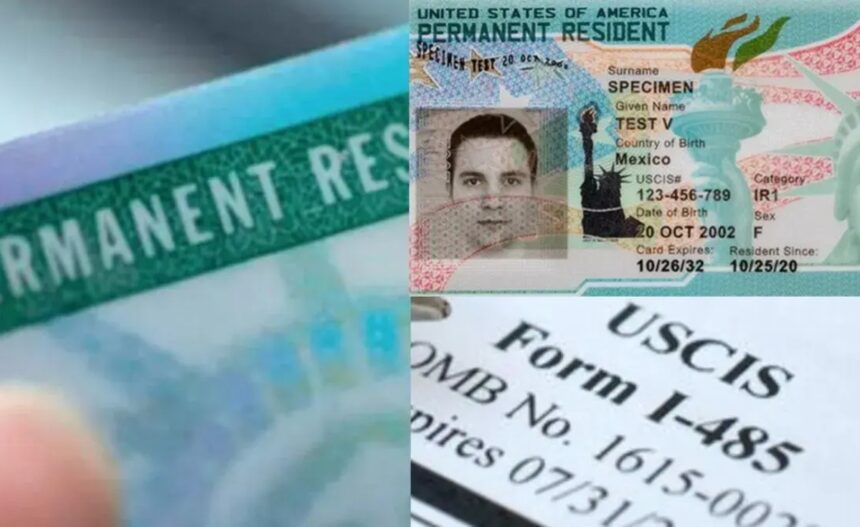
For its part, USCIS announced on September 10, 2025 that green card applicants under the CAA must file Form I-485 to adjust status.
In addition, those seeking a work permit must include Form I-765 (category c9) with the I-485 or while it is pending.
The Employment Authorization Document (EAD) can be valid for up to five years, according to guidance posted on the USCIS website.
Eligibility requirements
Consequently, Cubans must prove their citizenship or that they were born on the island to be eligible.
Acceptable documents include Cuban passports, birth certificates or naturalization certificates.
For those who were born outside of Cuba but are Cuban citizens, USCIS requires proof such as immigration records or consular documents.
However, a consular certificate of birth abroad is not enough, according to the agency.
In 2023, 15% of applications were denied for lack of evidence, according to the Migration Policy Institute.
Work permits and parole
On the other hand, those with parole under Section 212(d)(5) of the Immigration and Nationality Act may apply for a c11 EAD, although its validity will not exceed the authorized period of stay.
In 2024, 18,000 Cubans received humanitarian parole, according to USCIS, allowing them to work while seeking residency.
The new guide seeks to streamline these processes, but requires simultaneous submission of forms to avoid delays.
Impact on the Cuban community
Nevertheless, the updates have generated uncertainty in states such as Florida, where 70% of U.S. Cubans reside.
Organizations such as the Cuban American National Foundation warn that stricter requirements could complicate applications.
In 2025, the average I-485 processing time is 10 months, according to USCIS.
The community fears that Trump’s immigration policies, which include more stringent reviews, will affect legitimate applicants.
Political context
In addition, AAC remains a sensitive topic.
In July 2025, Senator Marco Rubio proposed limiting its scope, arguing that it benefits migrants without humanitarian needs, according to the Miami Herald.
However, the Supreme Court upheld its validity in June, citing its diplomatic importance.
The Trump administration has denied 20% of adjustment of status applications in 2025, up from 12% in 2023, according to the American Immigration Council, reflecting a more restrictive immigration environment.
Resources for applicants
For assistance, contact USCIS at +1-800-375-5283 or the Cuban American National Foundation at +1-305-592-7768.
Interested Cubans should carefully check the required documents and file their forms on time to take advantage of the CAA, especially in a climate where U.S. immigration policies are under constant scrutiny.
This article was originally published in Nueva News