





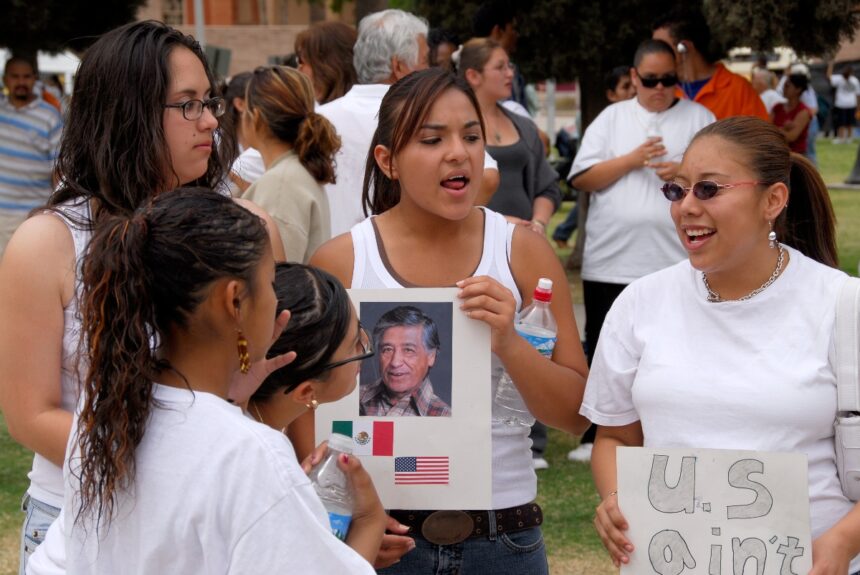
The political strength of the Latino community in the United States is not only measured in numbers, but also in its generational renewal.
In 2025, more than five million young Latinos who turned 18 in the last four years have joined the voter rolls, representing one of the most significant expansions in the U.S. electorate.
U.S.-born youth with immigrant roots
A key characteristic of these new generations is that most were born in the United States to immigrant parents.
This gives them a unique perspective: they understand their families’ challenges, such as access to health care, housing or immigration status.
And at the same time they move naturally in the country’s political system.
These voters tend to be more open to political debate, consume information in English and Spanish.
And they show a strong interest in issues such as social justice, climate change, wage equity and access to higher education.
Priority issues for the Latino youth vote
Demographic studies indicate that younger Hispanic voters see the economy as the most pressing issue, especially given the high cost of rent and housing in urban areas where much of the community lives.
In addition, inflation and access to living wage jobs are central concerns.
College education is also among their priorities, as many young Latinos are the first generation in their families to go to college.
The possibility of receiving scholarships, financial support and access to job training programs are issues that directly influence their vote.
In parallel, civil rights and racial justice continue to be important flags, as much of this generation has grown up in an environment where demonstrations for equality and against discrimination are part of the daily landscape.
A growing electorate with decision-making power
In states such as California, Texas and Florida, young Latinos represent a growing percentage of all voters.
This trend is reshaping the strategy of political parties, which are investing more resources in campaigns aimed at Hispanic youth, with bilingual messages and content adapted to social networks such as TikTok, Instagram and YouTube.
Experts warn that if these young people maintain their civic interest and actively participate at the polls, they could become the decisive bloc in defining the White House and Congress in the next elections in 2026 and beyond.
Although the potential is enormous, challenges remain.
Many young Latinos face misinformation on social media, which can disorient them when voting.
In addition, some feel disconnected from the traditional parties, as they perceive that they do not always represent their interests.
For this reason, community and student organizations are working on civic education campaigns that seek to empower youth and facilitate the registration and voting process.
A key characteristic of these new generations is that most were born in the United States to immigrant parents
QueOnnda.com