





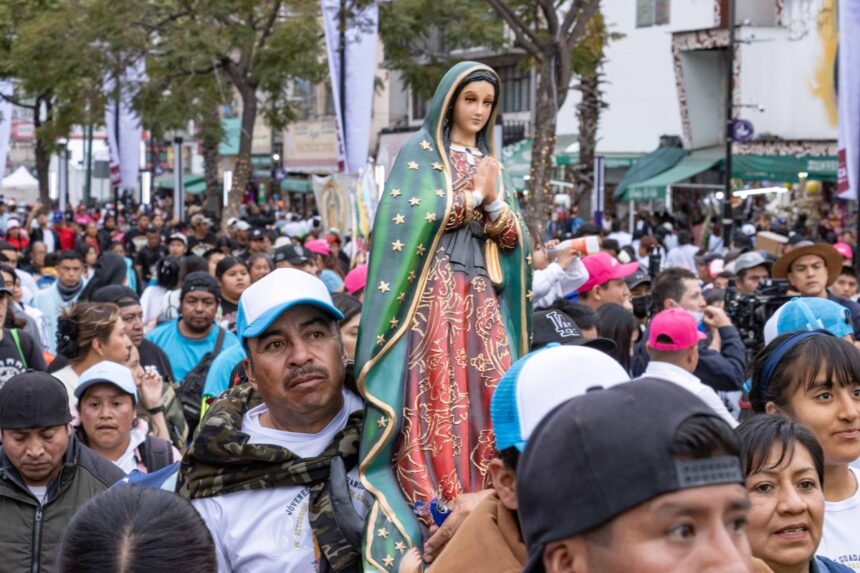
As every December 12, the Virgin of Guadalupe turned her feast day into an explosion of devotion and Mexican identity as millions of faithful came from all over the world to the Basilica of Guadalupe in the capital to honor the patron saint of the Mexican capital, the “Virgen Morena”, with songs, dances and prayers.
Since early morning, the religious precinct and its surroundings were already crowded, in an expression of faith that year after year consolidates this temple as one of the most visited in the world, as well as an obligatory stop on the way of many pilgrims.
Mexico goes all out for the Virgin of Guadalupe
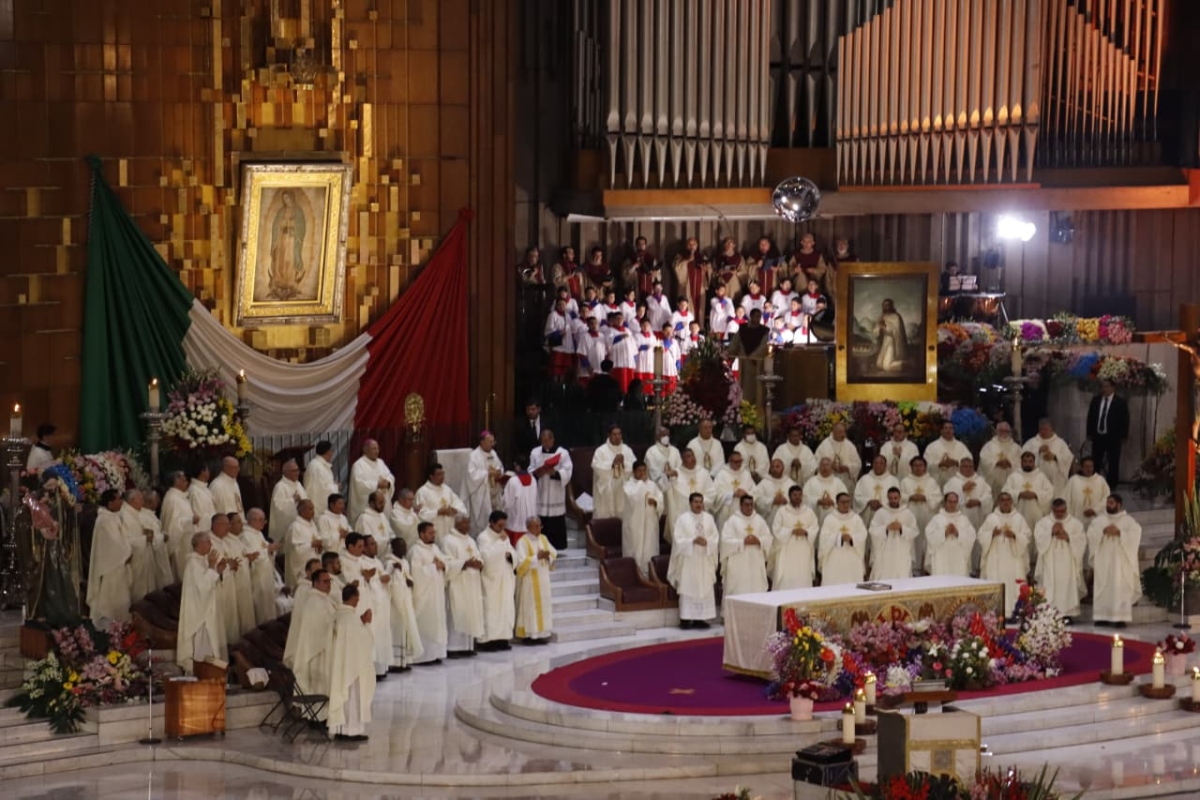
This tradition makes many Mexicans undertake an “arduous” journey of weeks to reach the basilica in the middle of the feast of the Virgin of Guadalupe, as is the case of Felix Jose Joserra, who left the state of Oaxaca (south) days ago to undertake a journey with “faith and devotion” to Mexico City.
“I ask Our Lady for health for my family and my daughters. Being here is an immense joy that fills your heart,” Joserra told EFE, surrounded by the traditional Mexican marmots, which symbolize faith and light in the world.
He is part of a group of marmoteros who have been coming for 15 years in a row to live a “very beautiful pilgrimage” experience that even he finds difficult to explain in words.
According to provisional figures from the capital’s authorities, some 13 million pilgrims attended the temple this year, surpassing last year’s 12.3 million.
However, they estimate that the final number of attendees will be even higher, as they expect even more people to arrive tomorrow, Saturday.
Traditional prayers and dances in honor of the “Virgen Morena”.
“My name is Gerardo Soriano Martínez, I am 32 years old and today I come from Puebla to La Villita to do this penance for my mother Margarita Martínez who died two years ago. I come on my knees and with these nopales to reach the altar of the Virgin of Guadalupe, because my brother… pic.twitter.com/0RsZ38Mvil
– Primate Archdiocese of Mexico (@ArquidiocesisMx) December 13, 2025
The devotion of the attendees is expressed in different ways, either praying on their knees or standing to dance in honor of the one known as “Virgen Morena” on her birthday, to whom they also sing “Las Mañanitas” at dawn.
These traditional dances, in which the dancers are dressed in Mexican identity costumes, are a way of “carrying on a legacy” that is passed down from parents to children, explained Catherine Esquivel, dressed in a costume representing the sun and the moon and with feathers on her head.
Another dancer, Lizeth Acosta, from Mexico City, was pleased with the “inexplicable” feeling she experiences on this holiday, in which every dance “has a meaning”.
In her case, she is dressed in a pre-Hispanic costume to honor “the matriarch”, in reference to the Virgin of Guadalupe.
All these artistic expressions “unite” the country’s culture and its different ethnic groups, said Luis Loza, for whom the figure of the “Guadalupana” is the “most Mexican” icon that exists.
“It is very nice the sense of belonging that this type of celebrations generates(…) Everyone here comes with a greater or lesser devotion, but here we are,” he added.
A phenomenon that crosses borders

Not only do the faithful from all over Mexico make an appearance on such a special day, but citizens from many parts of the world come to participate in a phenomenon that transcends borders.
This is what is happening to Lorena Herrera and her sister, originally from the state of Zacatecas (central Mexico), but who have been living in Colorado (United States) for more than 40 years.
On their first occasion here they felt a “different energy and a lot of emotion”, and thanked the Virgin for the possibility of being able to connect with their Mexican roots.
Faith in the Virgin of Guadalupe dates back to 1531, when, according to tradition, she appeared on December 12 to the indigenous Juan Diego on the Cerro del Tepeyac, where the Basilica is located today, in the north of Mexico City.
Photos courtesy of the Archdiocese of Mexico.
With information from EFE