





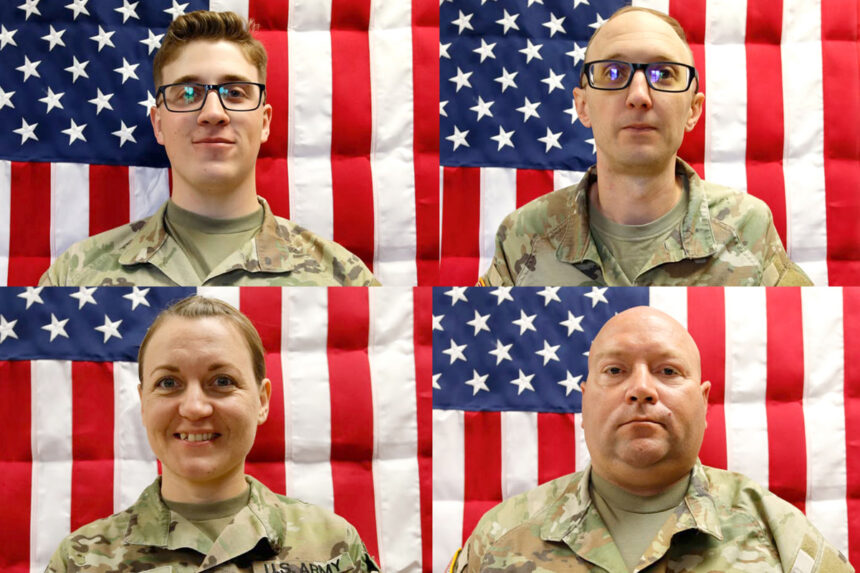
In an atmosphere of mourning and maximum alert, the U.S. Army put a face to the tragedy that occurred last Sunday in the Persian Gulf.
In an official statement, the Pentagon revealed the identities of four of the six reservists who died after an Iranian-made drone struck a tactical base in Kuwait, an attack that has left irreparable voids in communities in Florida, Nebraska, Minnesota and Iowa.
The names of the sacrifice
The victims belonged to the Sustainment Command, a logistical support unit that usually operates behind direct combat lines, but has become a vulnerable target in this conflict.
These are the U.S. soldiers killed in Kuwait:
Captain Cody Khork (35 years old): Originally from Florida, Khork was a respected officer with more than a decade of service.
Sgt. Noah Tietjens (age 42): Nebraska veteran, who was on his third overseas assignment.
Sgt. Nicole Amor (age 39): From Minnesota, noted for her work in coordinating critical supplies for troops in the region.
Sgt. Declan Coady (20 years old): The youngest of the group, originally from Iowa, who was just completing his first year of deployment outside the United States.
The Army informed that the identities of the other two deceased soldiers are being withheld, in compliance with the protocol of waiting for all their next of kin to be personally notified.
How did the defense fail at Shuaiba?
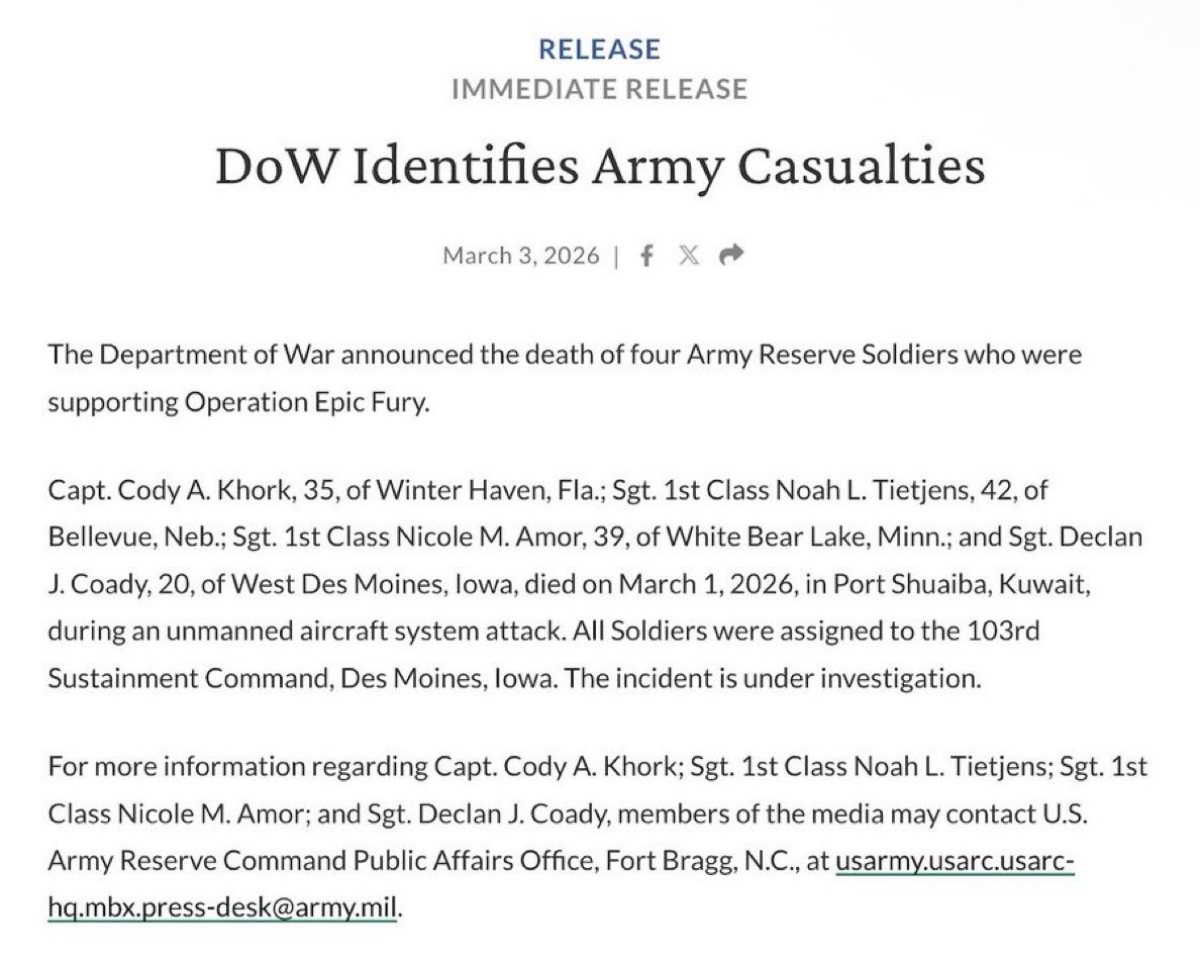
Gen. Dan Caine shares the names of four of the six fallen heroes, all from the 103rd Sustainment Command, U.S. Army Reserve, based in Des Moines, Iowa:
Capt. Cody Khork
Sgt. 1st Class Noah Tietjens
Sgt. 1st Class Nicole Amor
Sgt. Declan CoadyTo the families of our fallen, we… pic.twitter.com/Vqn4OCldQK
– The White House (@WhiteHouse) March 4, 2026
The attack occurred at the port of Shuaiba, a hub for the flow of U.S. military equipment and tactical supplies.
According to Central Command reports, the drone – a high-precision suicide model – managed to evade radars and Patriot air defense systems, directly hitting the operations center where the personnel were located.
“A thorough investigation has been launched to determine how a single device was able to penetrate an area with strict security measures,” the Army detailed.
Military experts suggest that the use of low-altitude drones is challenging traditional detection technology, turning support bases into high-risk areas.
US soldiers killed in Kuwait
This incident adds to the violent escalation that began last weekend following the US-Israeli offensive against targets in Iran.
President Donald Trump has promised that the response will be “forceful,” while on Capitol Hill the debate grows over the safety of the troops, especially considering that 20% of the armed forces are made up of men and women of Hispanic origin.
With flags at half-mast at military bases around the world, the death of these reservists underscores the high human cost of a war that, according to the Pentagon, is just entering its most aggressive phase.
Filed under: US soldiers killed Kuwait