



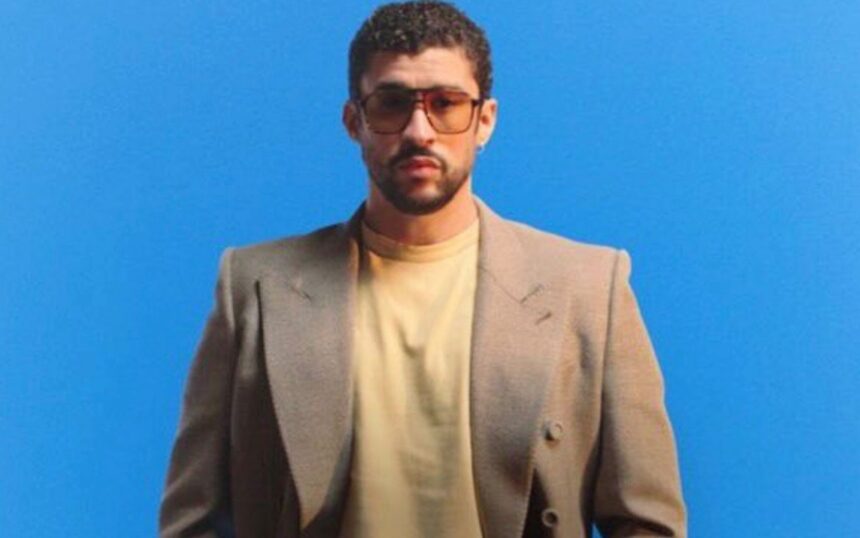
Bad Bunny’s vindictive spirit has marked the lyrics of his songs and his political stances throughout his career, from his participation in the 2019 protests in Puerto Rico to his current criticism of the raids against immigrants in the United States, which have created controversy before his performance this Sunday at the Super Bowl.
Whether or not he sends a political message during the Super Bowl halftime show, for Puerto Rican sociologist Hiram Guadalupe Bad Bunny “has already positioned himself” by being a pioneer in singing in Spanish at the most important U.S. sporting event.
“He is going to sing in Spanish and that acquires in this historical moment a transcendental political value mainly because of the xenophobic and migratory policies that the government of President Donald Trump has, in which it has mainly attacked the Latino and Hispanic communities in the United States,” the sociologist told EFE.
Bad Bunny’s defense of migrants was clear when he decided not to bring his ‘Debí Tirar Más Fotos World Tour’ to the U.S. to avoid raids, and it was evident again at the recent Grammy Awards.
“We are not savages, we are not animals, we are human and we are Americans,” cried out when picking up the Grammy for Best Album of the Year for ‘I Should Have Thrown More Pictures’ the singer, who added “out ICE (Immigration and Customs Enforcement).”
Bad Bunny: An uncomfortable artist for those in power
Following the Grammys, White House spokeswoman Karoline Leavitt lashed out at artists like Bad Bunny for their criticism of ICE during the gala and called the attempt to “demonize” federal agents “ironic.”
For his part, Trump has already said he will not attend the Super Bowl and that he is “against” Bad Bunny and the group Green Day, the artists selected for the halftime show, because all they do is “sow hate.”
His triumph at the Grammy Awards also provoked reactions among Puerto Rican politicians such as Senate President Thomas Rivera Schatz, who called the artist a “delinquent” and a “caripelao” and compared his actions to “the hypocrisy of Nicolás Maduro’s pupil”.
More diplomatic was the governor of Puerto Rico, Jenniffer González, who, despite being a Trump supporter, congratulated the singer and said that this award is “a source of pride for all Puerto Ricans”.
Both González and Rivera Schatz are from the New Progressive Party (NPP), against which Bad Bunny campaigned in the past 2024 elections by paying for billboards that read: ‘Whoever votes NPP does not love Puerto Rico’, ‘Voting NPP is voting for corruption’.
In those elections, the singer gave his support to the Alliance, formed by the Puerto Rican Independence Party (PIP) and the Citizen Victory Movement (MVC), being one of the protagonists of his campaign closing.
Stirs the political hornet’s nest
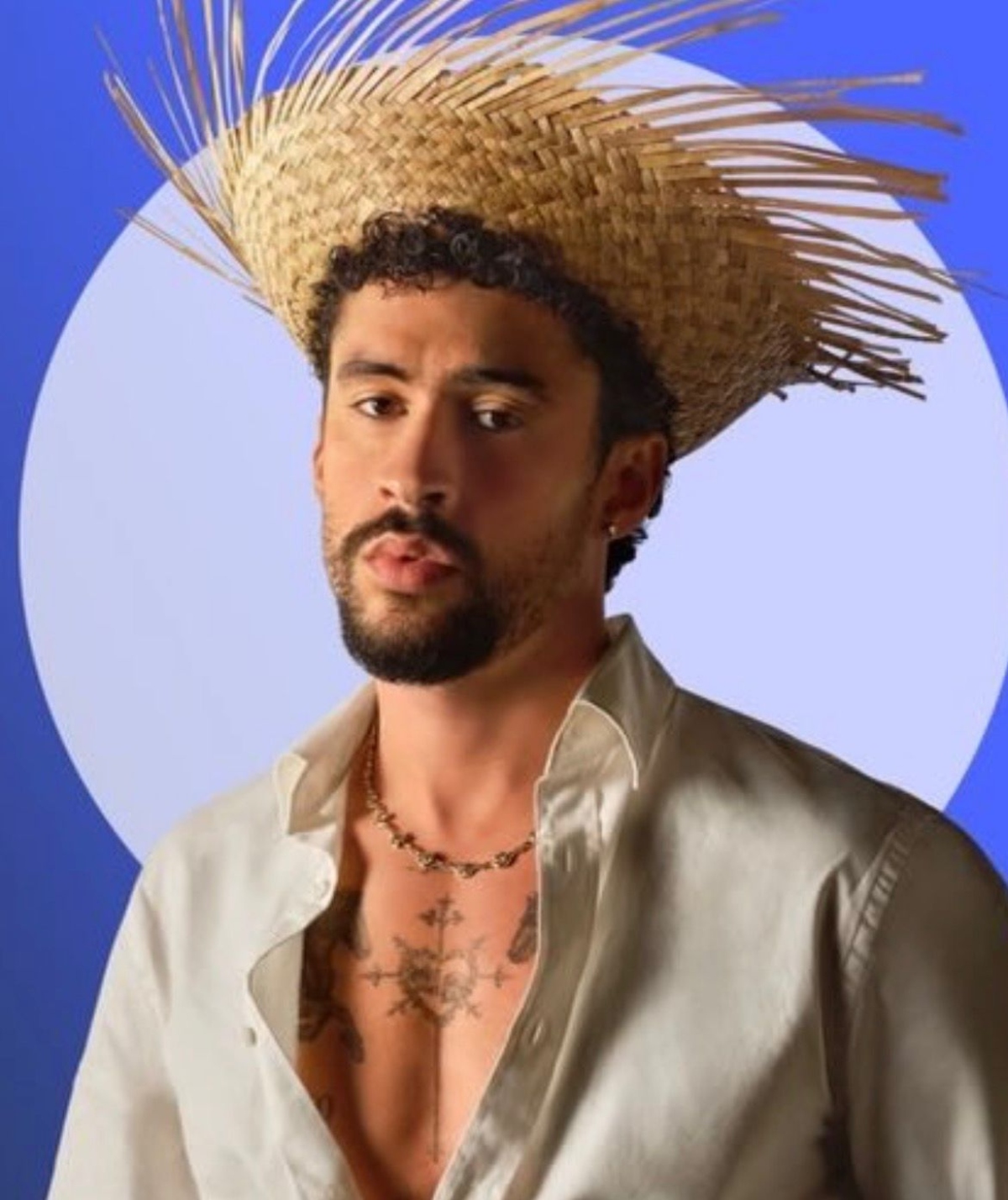
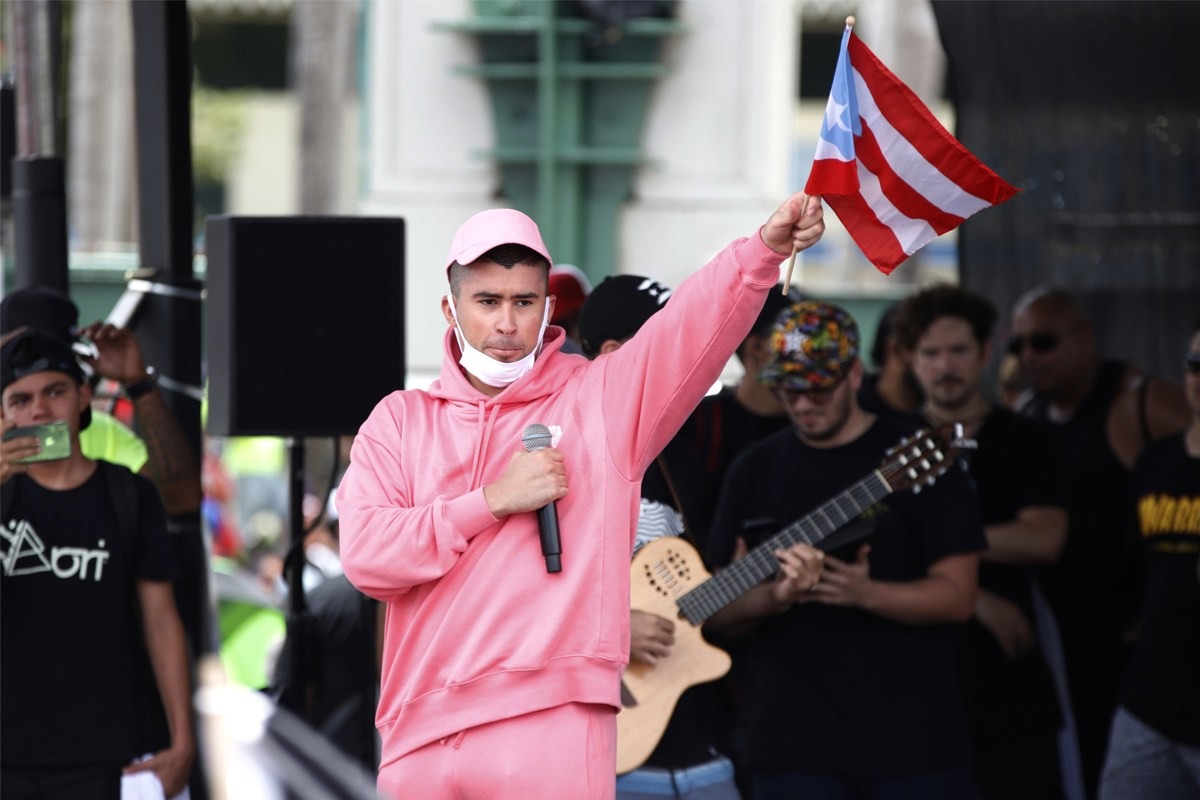
His political involvement dates back to the summer of 2019, when he participated along with other Puerto Rican artists such as Ricky Martín and Residente in the protests that led to the resignation of then governor Ricardo Rosselló, also of the NPP.
These demonstrations, which gained momentum with the involvement of artists, erupted after the revelation of a private chat with Rosselló criticizing journalists, political leaders of all stripes, social groups and well-known faces.
Bad Bunny has also been critical of the island’s rulers in his songs, expressing situations such as power grid problems in ‘El Apagón’ or gentrification in ‘Lo que le pasó a Hawai’.
His lyrics have not only impacted Puerto Rican politics. The song ‘Debí tirar más fotos’ has become a soundtrack of nostalgia, used in Palestine and Lebanon to remember what their territories were like before the conflict with Israel.
This message of universal fellowship will also be reflected in the Super Bowl with the presence of sign language interpreter Celimar Rivera, who will transmit the performance to the deaf, which in the opinion of sociologist Guadalupe defines “the sensitive fiber” of Bad Bunny to achieve that “everyone understands him”.
Guadalupe concluded that seeing Bad Bunny at the Super Bowl represents “a great merit” for him and for “everything that has been the Latin American musical movement and popular culture,” reported Agencia EFE.
Find out more at ‘QueOnnda.com’.