




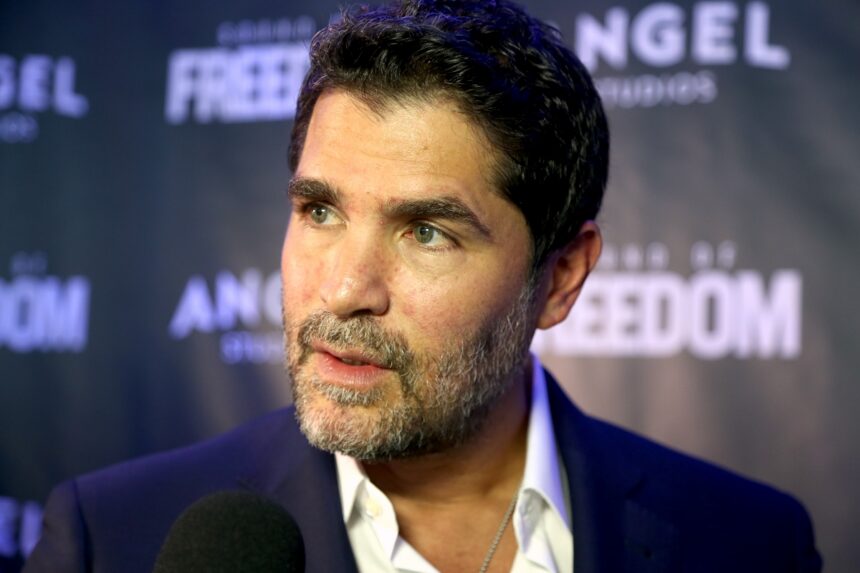
Super Bowl LIX is not only played on the field; the real ideological battle has erupted on social networks. Leading Catholic activist and producer, Eduardo Verástegui, has lit the fuse of controversy by asking his followers for an act of resistance during the most watched television event of the year: turn off the TV during the halftime show.
Through his official Facebook account, Verástegui launched a manifesto where he lashes out against Bad Bunny’s participation, calling the show a “social experiment” that seeks to impose agendas unrelated to sports.
“Don’t Indulge Them”: The call for a massive blackout
For Verástegui, the presence of the “Bad Bunny” on the Super Bowl stage is not just a musical act, but a political tool.
“I invite you to turn off the TV during the halftime show. Don’t indulge them,” he wrote sharply, urging the audience to use those 15 minutes to “pray for the conversion of the world” instead of consuming the show.
One of the central points of his critique is the displacement of the athletes as the central figures of the event.
Verástegui questioned why the players, whom he defines as those who “put the body and take the risk,” have no say in the content of the show.
“The show exists because of their effort, their discipline and their talent. The show is theirs. Not of cultural fads, not of agendas outside the sport, not of progressive agendas,” the activist said.
According to the Sound of Freedom producer, the Super Bowl should be a celebration of sports merit and unity, not a venue for what he calls the “Wokist social experiment.”
Eduardo Verástegui calls for a Super Bowl veto
The fiercest criticism was directed directly at the Puerto Rican artist. Verástegui lamented that nowadays the public is more aware of Bad Bunny’s “antics” than of the teams that make it to the finals or the names of the coaches.
“Bad Bunny has become a weapon of mass toxic destruction disguised as entertainment,” he said, asserting that his music and aesthetic are part of a narrative that many fans and families do not share.
While millions of fans around the world eagerly await the presentation of the urban genre’s greatest exponent, Verástegui’s call resonates in the most conservative sectors, opening a necessary debate: Has the halftime show become a political platform or is it simply a reflection of today’s popular culture?
For now, the coin is in the air, but Verástegui has been clear: his Super Bowl is lived with the remote control off and hands in prayer.
Filed under Eduardo Verástegui Super Bowl