






In international soccer it is increasingly common to see players with dual nationality who can represent more than one country. That is why one of the most important rules – and also one of the most asked about by fans – is the FIFA One Time Switch, the official mechanism that allows a player to change associations and play for another national team, as long as he meets certain requirements.
This concept refers to FIFA’s Association Change Program, and although it has been in existence for years, the regulations were modified and updated in 2020 to adapt to modern soccer and resolve cases that were previously much more difficult to prosecute.
What does the One Time Switch allow?

The One Time Switch is the procedure that makes it possible for a player who has already played for a national team to represent another country in the future.
However, it is not automatic nor is it granted by “personal preference”:
Approved only if the player meets the criteria.
Today, this rule is key heading into the 2026 World Cup, where teams like Mexico and the United States are closely watching players who grew up in U.S. academies but have Mexican or Latino roots.
A recent example of interest is the case of Brian Gutiérrez and Richard Ledezma.
Both are in the process of changing their association and have been authorized to participate in friendlies against Panama and Bolivia.
Main rules for changing selection
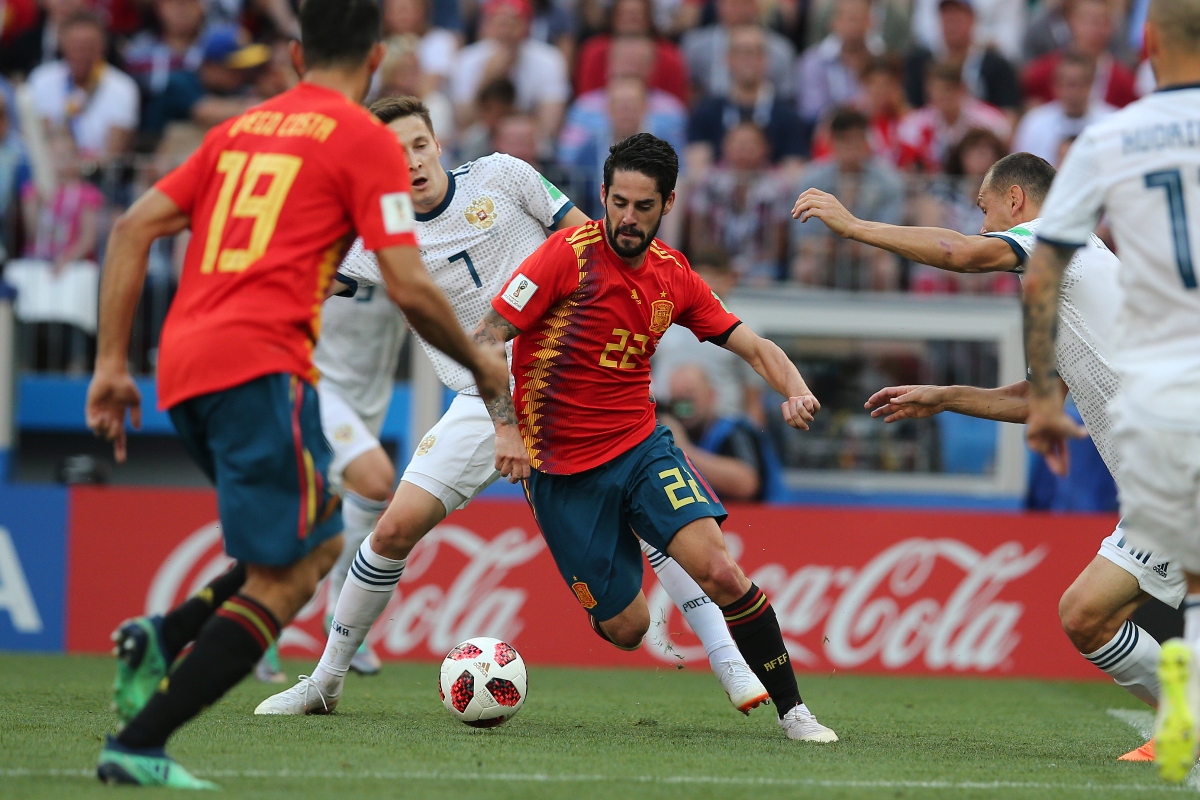
Not just any player can change federation, even if he has passports from both countries.
In accordance with the current conditions, FIFA establishes criteria such as:
Have not played more than three matches for the senior national team before the age of 21.
Have waited at least 3 years since their last participation with that selection.
Not having played in a World Cup or a continental final endorsed by FIFA.
In addition, FIFA may review other details on a case-by-case basis, but these are the central rules that set the standard.
The most important thing: it is only allowed once

One of the strongest points of the One Time Switch is that it can only be done once in a player’s entire career.
That is to say: if a player changes his selection, the decision is irreversible, and there is no “second change” at a later date.
It is approved only if the soccer player meets the criteria
QuéOnnda.com
To complete the process, the player must submit formal documentation.
1. Official request from the player, renouncing his previous selection, along with evidence that he meets the criteria (e.g., Class A match list).
2. Statement of consent, making it clear that the change is not reversible.
3. Copies of both passports, the passport of the country you are leaving and the passport of the country you will represent.
Known cases of selection changes

In recent years, several players have taken advantage of this rule or changes prior to the 2020 modification.
Julián Quiñones (Colombia to Mexico)
Rogelio Funes Mori (Argentina to Mexico)
Alejandro Garnacho (Spain to Argentina)
Iñaki Williams (Spain to Ghana)
Aymeric Laporte (France to Spain)
Brahim Díaz (Spain to Morocco)
Otávio (Brazil to Portugal)
Other historical cases such as Diego Costa, Hakim Ziyech, Kalidou Koulibaly and Jamal Musiala, among others, also appear.
In short: the FIFA One Time Switch exists to provide clarity for players with multiple nationalities, but it requires strict rules and a formal process.
For more information, visit QuéOnnda.com.