




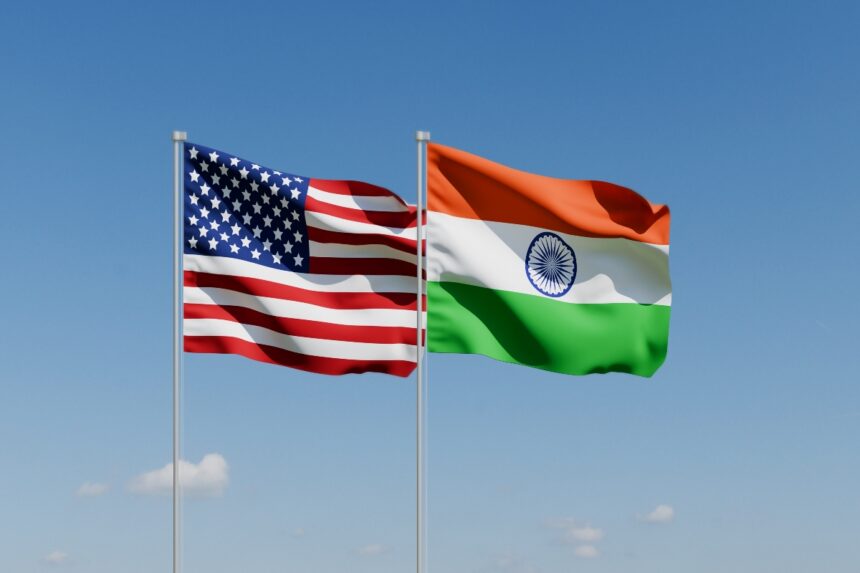
India and the United States resume the negotiation process for the proposed Bilateral Trade Agreement (BTA) from Monday, with a round of technical talks scheduled in Washington between today and Wednesday.
“A big step towards finalizing our bilateral trade agreement – a win for both nations!” wrote U.S. Ambassador Sergio Gor on his X account.
India and U.S. reactivate dialogue after tariff tensions
#20Apr | India and the US will resume the negotiation process for the proposed Bilateral Trade Agreement today, with a round of technical talks scheduled in Washington.
“A big step towards finalizing our bilateral trade agreement – a win for both… pic.twitter.com/MIyYUZSCLL
– El Diario (@eldiario) April 20, 2026
The Indian delegation, led by chief negotiator Darpan Jain, will meet for three days in Washington.
To advance the reconfiguration of the interim trade agreement announced on February 7.
The process, which totaled six technical rounds between 2025 and early 2026, had stalled.
This is due to the tariff offensive of Donald Trump’s administration.
Which imposed levies of up to 50% on Indian exports in retaliation for the purchase of Russian crude oil.
Indian Commerce Secretary Rajesh Agarwal stressed that the delegation seeks to bring trade commitments in line with the new 10 % tariff framework.
Imposed by Washington following the Supreme Court ruling, which struck down Trump’s trade policy last February 20 (Filed as: India U.S. trade deal),
Energy crisis accelerates agreement between India and US
🇺🇸🇮🇳La India and the United States resume the negotiation process for the proposed Bilateral Trade Agreement (BTA), with a round of technical talks scheduled in Washington between today and Wednesday.
🔗https://t.co/PpYH3WaZ8s– Channel 44 (@CANAL44TV) April 20, 2026
In addition, the energy crisis due to the blockade of the Strait of Hormuz prompted Treasury Secretary Scott Bessent to authorize a 30-day waiver on March 6.
This was so that India would buy Russian crude in order to “stabilize” the market, thus facilitating the resumption of diplomatic dialogue between the parties.
While the United States pushes to remove protectionist barriers in its agricultural and dairy sectors, New Delhi maintains a firm stance to protect its domestic producers.
Making any concession conditional on obtaining reciprocal tariff advantages in industrial and technological products (Filed as: India USA trade agreement),
With information from EFE
For more information, visit QuéOnnda.com