



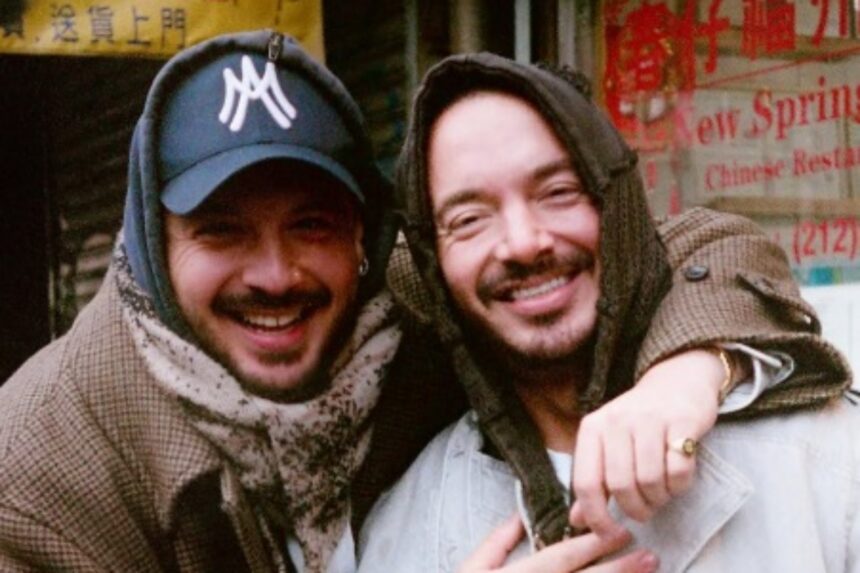
Spanish artist Marquitos continues to make his way in urban music with the release of his album “Ay, alma de cántaro”, a project where he mixes different styles and presents one of his most striking collaborations, “Orcasitas” with J Balvin.
The song stands out not only for the union between Spain and Colombia, but also for the story behind its creation, which reflects a genuine connection between the two artists.
How was “Orcasitas” born?
View this post on Instagram
As Marquitos explained, the idea for the theme was simple from the beginning.
The title refers to Orcasitas, a neighborhood in Madrid known for its strong identity and urban character.
The concept is based on the expression “having more street”, a way of describing people with experience and astuteness in everyday life.
When Marquitos presented the idea of “Orcasitas” to J Balvin, the response was immediate.
The Colombian quickly grasped the concept and agreed to participate without complications.
“He said ‘pa’lante’ without asking any questions,” said the artist from Madrid.
A relationship built over time.
View this post on Instagram
Far from being an impromptu collaboration, “Orcasitas” is the result of a relationship between Marquitos and J Balvin that developed over a period of months.
The two artists met in Medellín during a music camp in December 2024, where they began working together on other songs.
Since then, they kept in constant contact, sharing ideas, conversations and meetings that strengthened their bond.
Marquitos highlighted J Balvin’s attitude, describing him as a generous and approachable artist.
More than a collaboration, it's a song made with a friend
Marquitos
A bridge between cultures
View this post on Instagram
“Orcasitas” is not only a song, but a reflection of how music can unite different realities, that of Marquitos and J Balvin.
From Madrid to Medellin, the theme symbolizes a collaboration built on respect, friendship and shared artistic vision.
For the U.S. Hispanic community, these types of collaborations represent the global growth of Spanish-language music.
The union of European and Latin American artists demonstrates how the urban genre continues to break borders and connect cultures.
For more information, visit QuéOnnda.com.