





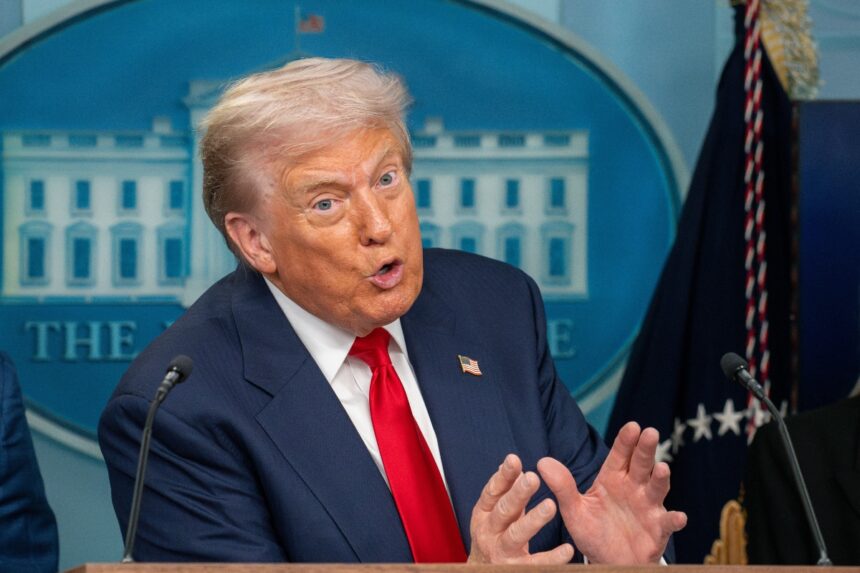
U.S. President Donald Trump’s administration proposed giving immigration officials the power to deny permanent residency to applicants they deem may be “a public charge,” reviving one of his most controversial immigration policies from his previous administration.
The proposal submitted by the U.S. Citizenship and Immigration Services (USCIS), an agency of the Department of Homeland Security (DHS), would repeal the 2022 public charge rule, which allows immigration authorities to deny entry into the U.S. or the granting of a green card to a foreign national who they believe will pose an economic burden on the country.
Trump ‘revives’ public charge rule
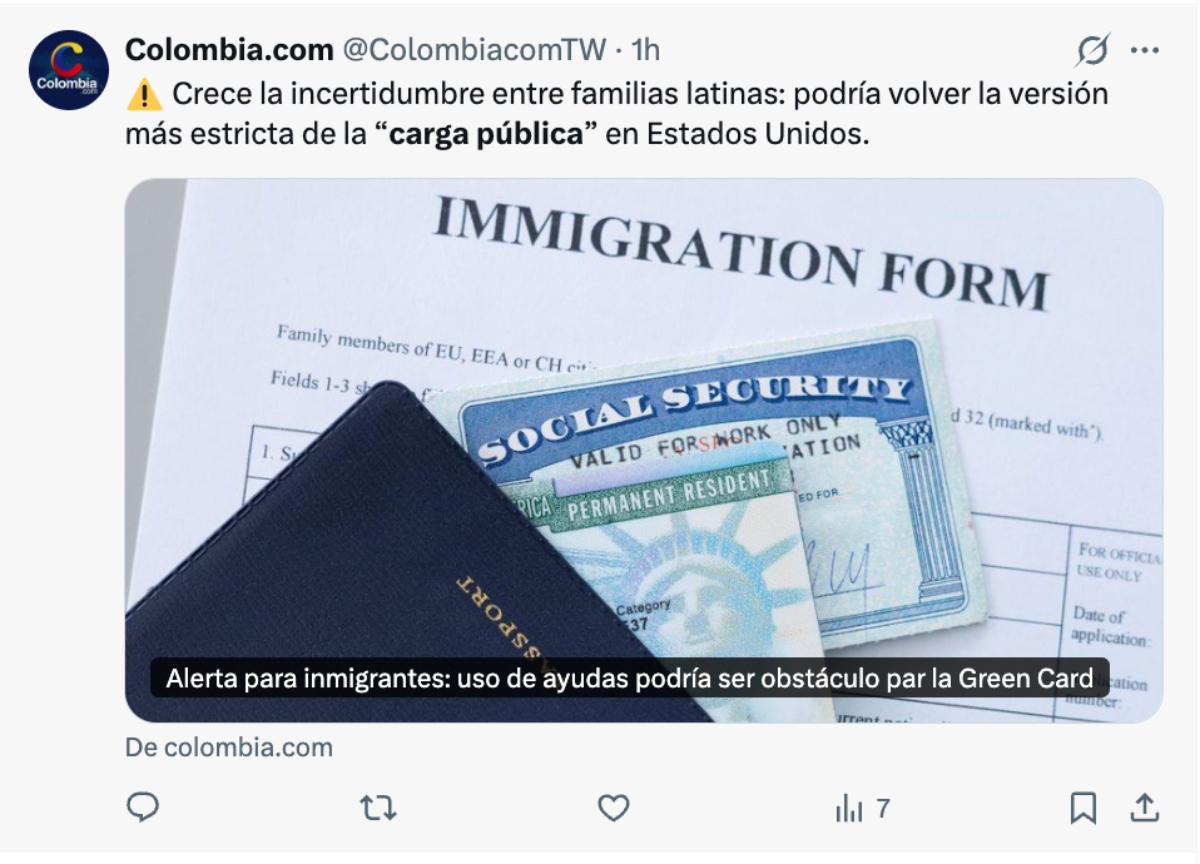
Trump expanded the regulation in 2019 to veto immigrants who had applied for welfare assistance for food, housing, or health care, such as Medicaid and the Children’s Health Insurance Program (CHIP), leaving many undocumented immigrants ineligible for permanent residency and causing many families to stop receiving aid for their U.S. children.
The Administration of former Democratic President Joe Biden (2021-2025) reversed the changes made by the Republican and relaxed the ban, but again the Trump Administration has presented changes claiming that government benefits “should not incentivize” immigration.
“The (current) provisions restrict the ability of DHS officials to make public charge inadmissibility determinations that are consistent with the expressed national policy of Congress,” says the submitted language that will be formally published in the Federal Register this Wednesday.
The new proposal would not revive the rule introduced by Trump in his first administration, which in practice would give greater power to USCIS officials to deny permanent residency to low-income applicants.
It also does not specify the programs that the government will consider as public charge, although it notes that additional guidelines will be issued at a later date.
The measure has already sparked criticism from immigrant advocates, such as Adriana Cadena, director of the Protecting Immigrant Families Coalition, who called it “dangerous” and warned that it puts the health and economic well-being of millions in the country at risk.
“By creating chaos and confusion, it deters immigrants with legal status and U.S. citizens from seeking the medical care and assistance they need and are entitled to under federal law,” the activist said in a statement
Cadena warned that the impact of the new rule could be even greater than the first proposal implemented by the Republican administration.
For her part, Renee M. Willis, president of the National Low Income Housing Coalition, urged the Republican-dominated Congress to reject the proposed public charge rule, given the problems and legal challenges that have faced similar anti-immigrant regulations in recent years.
The move comes on top of a recent restriction imposed by the White House to deny immigrant visas to foreign nationals with chronic illnesses, such as cancer and obesity, on the premise that such individuals could later rely on public health care.
A Kaiser Family Foundation (KFF) analysis estimated that the 2019 changes to public charge policy could have led to a decrease in coverage for between 2 million and 4.7 million Medicaid or CHIP enrollees, including some Americans who are children of undocumented immigrants.
In a 2023 KFF survey, most immigrant adults said they were “not sure” about public charge rules.
Also, one in four (27%) of adult immigrants said they had avoided applying for assistance due to immigration-related fears, despite the Buzzy Administration’s easing of requirements. EFE