





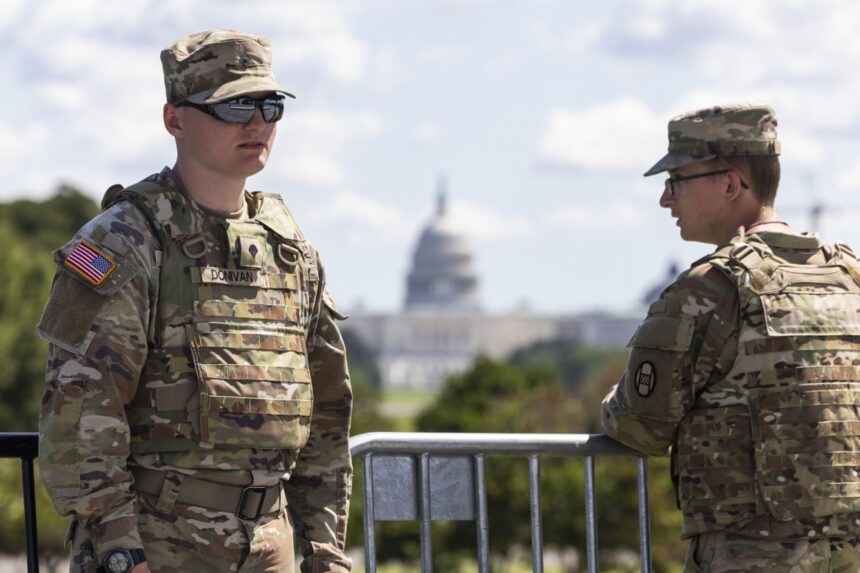
A Tennessee state judge temporarily blocked the deployment of the National Guard in Memphis, directly challenging Republican Governor Bill Lee’s authority to send armed troops into a city without local consent.
The decision, issued by Judge Patricia Head Moskal, represents a significant halt to the security measures pushed in recent months in different cities across the country under the administration of President Donald Trump.
The ruling points out that, although the governor is commander in chief of the state National Guard, his powers are not unlimited.
Moskal emphasized that the case raises essential questions about when and how a governor can use state military forces for law enforcement purposes, especially when the decision is made without a request from the local government.
“The power vested in the governor as commander-in-chief of the Army and militia is not unlimited,” the judge wrote in her ruling.
National Guard take-off blocked in Memphis
⚡️ BREAKING… just now… judge blocks MEMPHIS National guard deployment … https://t.co/3Tiv3x4js4 pic.twitter.com/fqHbbUneWw
– The Tennessee Holler (@TheTNHoller) November 18, 2025
The deployment to Memphis is part of a broader strategy promoted by the White House since August, when President Trump ordered federal and military forces to several Democratic-majority cities.
The public justification has been to combat what he describes as “out-of-control crime,” although many local leaders maintain that these operations have been aimed primarily at apprehending undocumented immigrants, with the support of Border Patrol agents.
In cities such as Los Angeles, Chicago, Charlotte and Washington D.C., these deployments have generated protests, allegations of excessive use of force and questions about the legality of federal forces acting in local policing duties without municipal authorization.
Memphis, a city with a growing Latino population and African-American communities historically affected by aggressive police interventions, has been especially sensitive to military operations.
The reaction of the city of Memphis
Tennessee judge blocks use of National Guard in Memphis, but gives government time to appeal.https://t.co/uqaTdy1Hck
– Telemundo News (@TelemundoNews) November 18, 2025
Mayor Paul Young, although not involved in the lawsuit that led to the ruling, reiterated his concern about the deployment of troops within the city.
Speaking to local media, he insisted that Memphis must maintain “influence in how the military relates to this community,” reminding them that the presence of armed forces can disrupt trust between local police and residents.
Young has repeatedly called for the state to consult with the city before sending the military to bolster operations, especially since Memphis already faces social tensions, economic challenges and security issues stemming from inequality and lack of resources.
What does temporary blocking mean?
The suspension of the deployment will take effect in five days, a period given by the judge to allow the state to file an appeal if it deems it necessary.
During that time, National Guard units may not be actively mobilized within Memphis for public safety purposes.
Legal experts point out that this case could set an important precedent, as it is not common for state courts to limit executive authority in military matters, especially when security reasons are invoked.
However, the ruling is consistent with previous decisions restricting the use of the military in civilian duties, a historically sensitive issue in the United States due to the principle of separating police and military functions.
National context: deployments, immigration and politics
This episode comes in the midst of a series of federal operations that have generated concern among immigrant communities, especially Latinos.
The presence of Border Patrol agents in cities far from the border has become one of the most controversial points of the government’s security approach.
Civil rights organizations have warned that the use of military or quasi-military forces in urban areas may increase the risk of arbitrary detentions, especially for undocumented or Latino individuals.
The Tennessee ruling adds to a growing national debate over the constitutional limits of executive power on issues of security, migration and domestic military deployment.
Filed under: National Guard in Memphis