






If you spend time scrolling through TikTok or Instagram, you’re sure to have come across the trending term: “Cortisol Face” or “Cortisol Face”. Hundreds of videos show impressive “before and afters” where people claim their face went from round and puffy to defined, simply by controlling their stress levels.
But is this real science or is it another internet myth to sell us supplements? Spoiler: It’s a bit of both.
What is cortisol and what does it do to your face?
Cortisol is not the enemy
This hormone is essential to life: it keeps us alert, focused and able to respond to challenges.
It only becomes harmful when it remains high for too long.
Chronic stress transforms an ally into a burnout factor. pic.twitter.com/aXc0VEYYkRL– Dr. Verónica Morin (@Vm0rin) January 22, 2026
Cortisol is known as the “stress hormone”.
It is vital for survival (it helps you react to danger), but when you live stressed 24/7 from work, debt or modern life, your levels remain chronically high.
And here comes the uncomfortable truth: Yes, chronic stress can change your face.
When cortisol is sky high for too long, it causes two things that affect your appearance:
Fluid retention: Your body starts to accumulate water and sodium, and one of the first places where you notice this “swelling” is in the cheeks, jowls and under the eyes.
Generalized inflammation: Constant stress inflames the body, resulting in more reactive skin, acne breakouts and a puffy appearance.
Do not panic
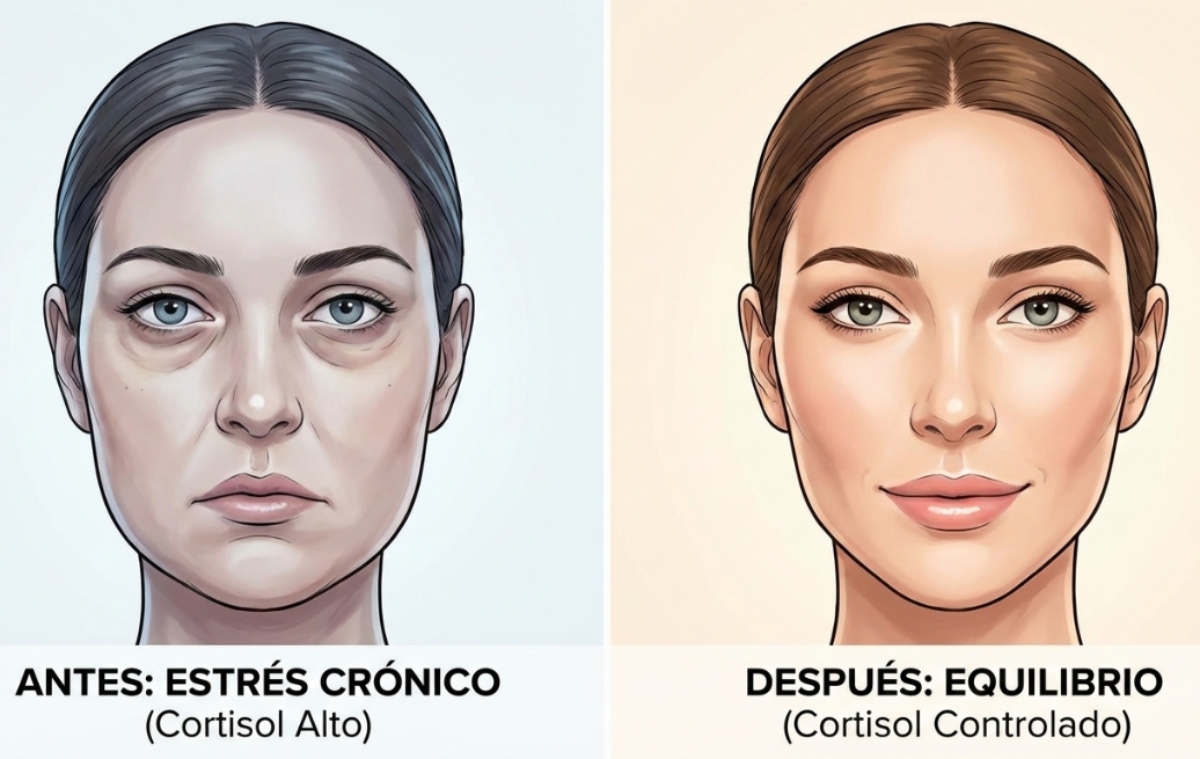
An important distinction must be made.
On social media, daily stress is sometimes confused with Cushing’s Syndrome, a serious medical condition where extreme excess cortisol causes a very noticeable “full moon face”.
For most of us, the “cortisol face” is not a disease, but a warning signal from our body asking for a break.
It’s that swelling you wake up with after a terrible week at the office.
How to “deflate” the mind and face?
Foods that naturally balance cortisol level: pic.twitter.com/QfY2QWWYo3v
– Healthy Food (@food_health_joy) January 22, 2026
If you feel that your face is not the same and you live accelerated, the solution is not a magic cream, it is to lower the pace of life by a couple of notches:
Sleep is sacred: Poor sleep is the fastest way to trigger cortisol.
Prioritize your 7-8 hours.
Watch out for salt and sugar: When we are stressed, we crave salty and sweet foods, which worsens fluid retention.
Gentle exercise: Ironically, overly intense exercise (daily HIIT) can raise cortisol more if you are already burned out. Try walking, yoga or weights at a moderate pace.
Conclusion: Your face is often the mirror of your mental health. Lowering your stress is not only to feel good on the inside, it’s also the best beauty trick to de-stress on the outside.