



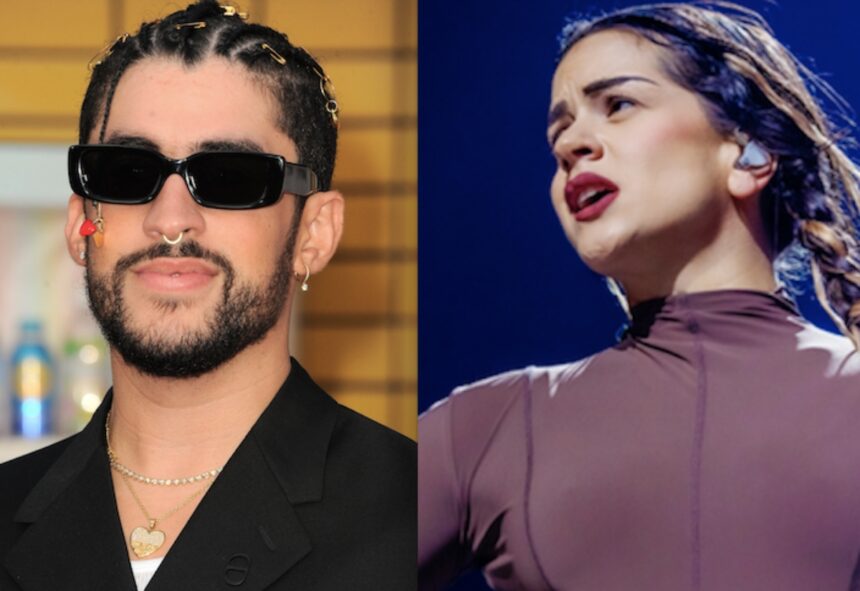
In the midst of promoting her long-awaited album Lux, Rosalía faced a wave of controversy after statements went viral in which she seemed to contrast herself with Bad Bunny’s style.
The Spanish singer, however, has come out to clarify that her words were “taken out of context” and that she never intended to belittle the Puerto Rican artist or his decision to sing exclusively in Spanish.
The controversy arose after the broadcast of an episode of the New York Times Popcast, published last October 30, where Rosalía talked about her creative process and the multilingual approach of her new work.
During the interview, Rosalía explained her decision to include thirteen languages in Lux, including English, French, Catalan, Latin, Arabic and Portuguese. In this context, she compared her artistic quest with that of Bad Bunny: “I think I am the opposite of Benito. I do care. I care so much that I will definitely make the effort to sing in a language that is not mine, that is not my comfort zone”, said the interpreter.
The phrase was quickly viralized on social networks, interpreted by some users as a criticism of the reggaeton singer’s approach, who has repeatedly defended his decision to sing only in Spanish.
Rosalía, however, wanted to clarify the meaning of her words. In a later publication, she explained that her intention was not to oppose Bad Bunny’s message, but to underline her own artistic process: “I never meant to say anything negative about him. I was simply explaining how I approach creation and how much it motivates me to learn from other cultures through their languages”.
Rosalía: A defense of art as a cultural bridge
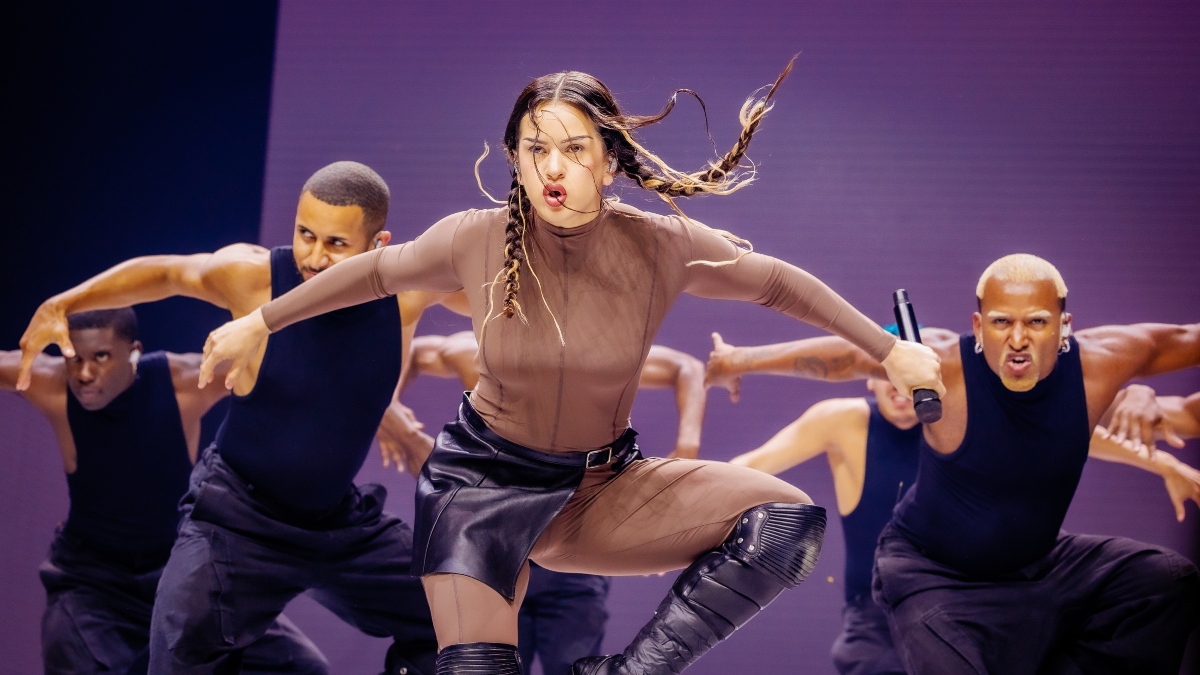
In conversation with the New York Times, Rosalía detailed that her work with different languages stems from a mixture of curiosity, respect and love for the world’s cultures. “It’s all very human. It’s a lot of trying to understand how another language works. I translate, consult with translators and make sure the words make emotional sense,” she explained about her method.
The Grammy and Latin Grammy award-winning singer acknowledged that singing outside her native language represents a challenge, but also an opportunity to break cultural barriers and connect with a wider audience.
His statements were released just after Bad Bunny expressed that he feels “no obligation” to sing in other languages to reach international audiences, noting that his language and identity are part of his artistic statement.
Following the podcast’s release, a TikTok user went viral with a video in which she harshly criticized Rosalía, accusing her of not understanding the cultural background of Latin music. “He is making a political statement by choosing to sing only in Spanish. That’s something you can’t identify with, because you’re not Latina, you’re Spanish,” the content creator expressed, receiving thousands of reactions.
Faced with the growing controversy, Rosalía decided to respond calmly: “Listen, I understand your point of view, but I think it’s being taken out of context. I have nothing but love and respect for Benito, he is a great colleague whom I admire and with whom I have had the good fortune to collaborate”.
The reference alludes to “La Noche de Anoche”, the successful collaboration that both artists released in 2021 within the album El Último Tour del Mundo.
To close the controversy, Rosalía reiterated her affection for the region and the Latin American public, stressing that her career would not be the same without that support: “I have always been grateful to Latin America because, although I come from somewhere else, Latin people have always supported me throughout my career and I empathize with what they are saying. I am sad that this has been misinterpreted, because that was not the intention”.
The artist insisted that her creative differences with Bad Bunny do not imply disrespect, but rather reflect different paths within the same global industry. At a time when Spanish-language music dominates the world scene, Rosalía reaffirmed her commitment to using art as a way to unite cultures.
Find out more at ‘QueOnnda.com’.