



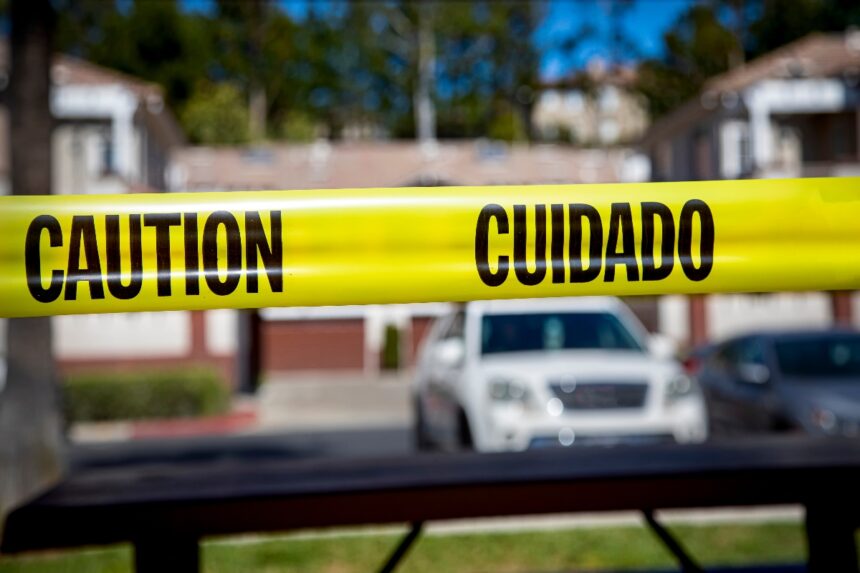
Early this Wednesday morning, September 24, 2025, a shooting occurred at an Immigration and Customs Enforcement (ICE) office in Dallas, Texas, that left at least two dead, an immigrant who was detained there and the attacker, and several wounded, according to U.S. authorities. The local FBI office and the Dallas police rectified in a press conference the current death toll in the attack and indicated that “no agents were injured” and that they are investigating the incident as an act of “selective violence”.
According to official reports, the incident unfolded around 6:40 a.m. near Interstate 35E in the area of Love Field Airport. Preliminary investigation indicates that the attacker opened fire from an adjacent building at the ICE structure.
Attacks against ICE in Texas escalate
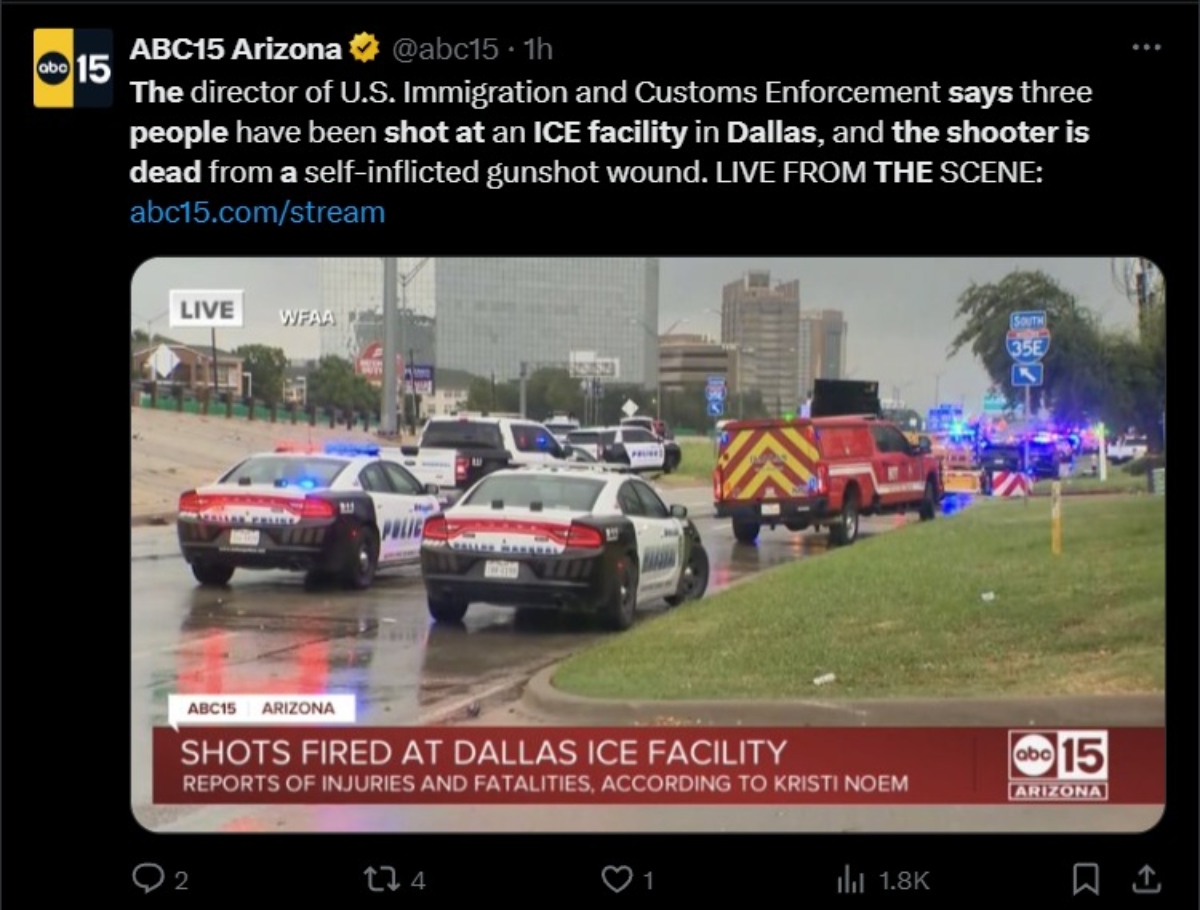
Acting ICE Director Todd Lyons confirmed that those affected included people in custody, but that no ICE agents were injured.
Two injured were transported to Parkland Hospital; one died at the scene.
At the time of writing, the motive for the attack remains unclear.
This event takes place in a context of increasing violence and threats directed towards migration facilities and agents.
Just a month earlier, on August 25, 2025, an individual was arrested for making bomb threats against the same ICE office in Dallas.
In addition, in July 2025, there was a coordinated attack (“ambush”) against an ICE facility in Alvarado, Texas, where 10 people were charged with attempted murder against federal agents.
That episode left a police officer wounded and an operation planned with explosives, motorcycles and fire from wooded areas.
What the Hispanic community should know
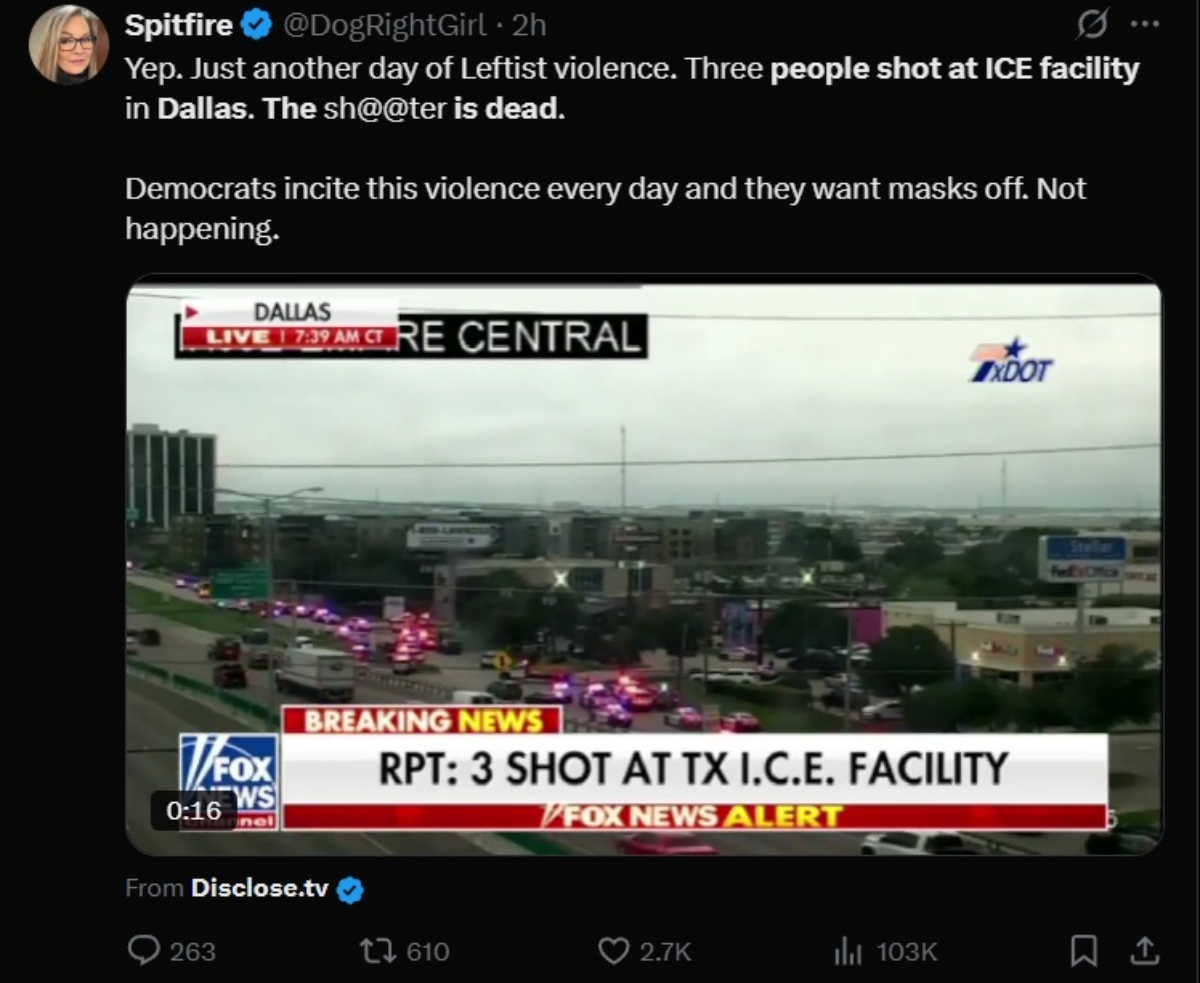
The incident ocurred around 6.30 a.m.
QuéOnnda.com
For the Hispanic community living in the U.S., especially in Texas and border states, the implications are clear:
Security and surveillance: these facilities (ICE) may attract attacks or threats, so reinforcing local protocols is essential.
Verified information: in the face of rumors or contradictory versions in social networks, it is urgent to consult reliable sources to avoid misinformation.
Status of rights: victims or witnesses may have access to legal resources; civil organizations and specialized lawyers can help.
For more information, visit QuéOnnda.com.