





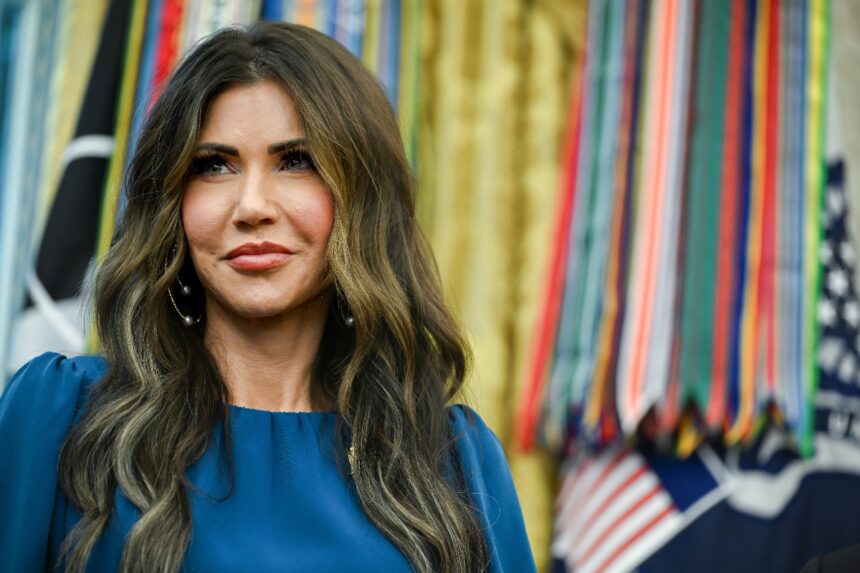
U.S. Secretary of Homeland Security Kristi Noem said Friday that visa applications from tourists interested in traveling to the United States to attend the 2026 World Cup, which Mexico and Canada are also co-hosting.
“We have a process in place that we will implement for visa approvals. Everyone will be thoroughly vetted, but they will be welcome to this country,” Noem said from the Oval Office alongside U.S. President Donald Trump and FIFA President Gianni Infantino.
“I hope that around the world, people know that America is excited to bring their families here to enjoy this event,” he added.
Minutes earlier, Trump himself had assured that some countries would have it “very easy” to enter, while for citizens of other countries it would be “a little more difficult.”
The statement came during an event in which Trump announced that the draw to determine the composition of the 2026 World Cup groups will take place next December 5 at the Kennedy Center in Washington D.C.
The tournament, in which the Argentine national team will defend the title won in Qatar, will be held between June 11 and July 19, 2026 in Canada, the United States and Mexico. The final will take place at MetLife Stadium in the outskirts of New York.
However, the 2026 World Cup comes at a time of great tension in the United States regarding immigration policy, where undocumented migrants are detained daily in massive raids for deportation to other countries.
The U.S. government has also revoked temporary residency permits of citizens of several nationalities, and on Thursday announced that it is checking more than 55 million people with valid visas for possible violations that could result in cancellation of the documents and deportation from the United States.
This has raised doubts about the possible impact of these measures on foreigners who want to travel to the 2026 World Cup in the United States, and on the attendance of the tournament by immigrants living in the country, given the fear that they may be arrested by immigration authorities when they go to the stadiums.
FIFA had already played down the impact of U.S. immigration policy on its tournaments last June during the Club World Cup, which was also held in the United States, according to EFE.
For more information, visit QuéOnnda.com.