





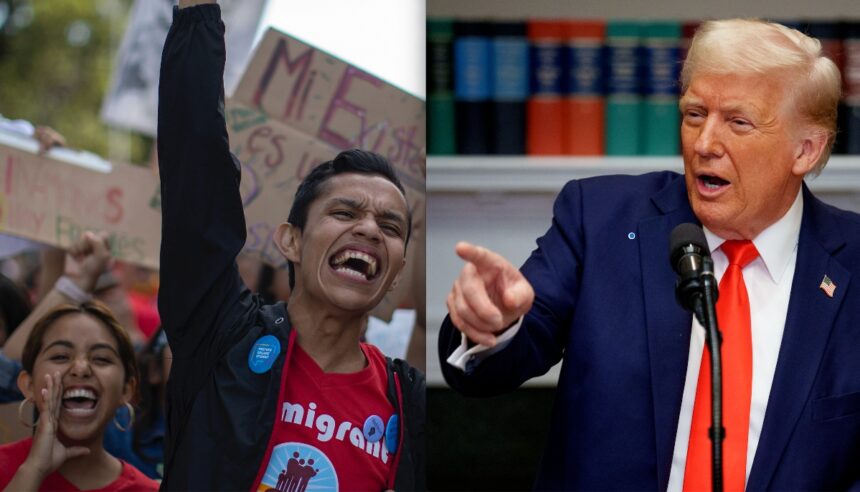
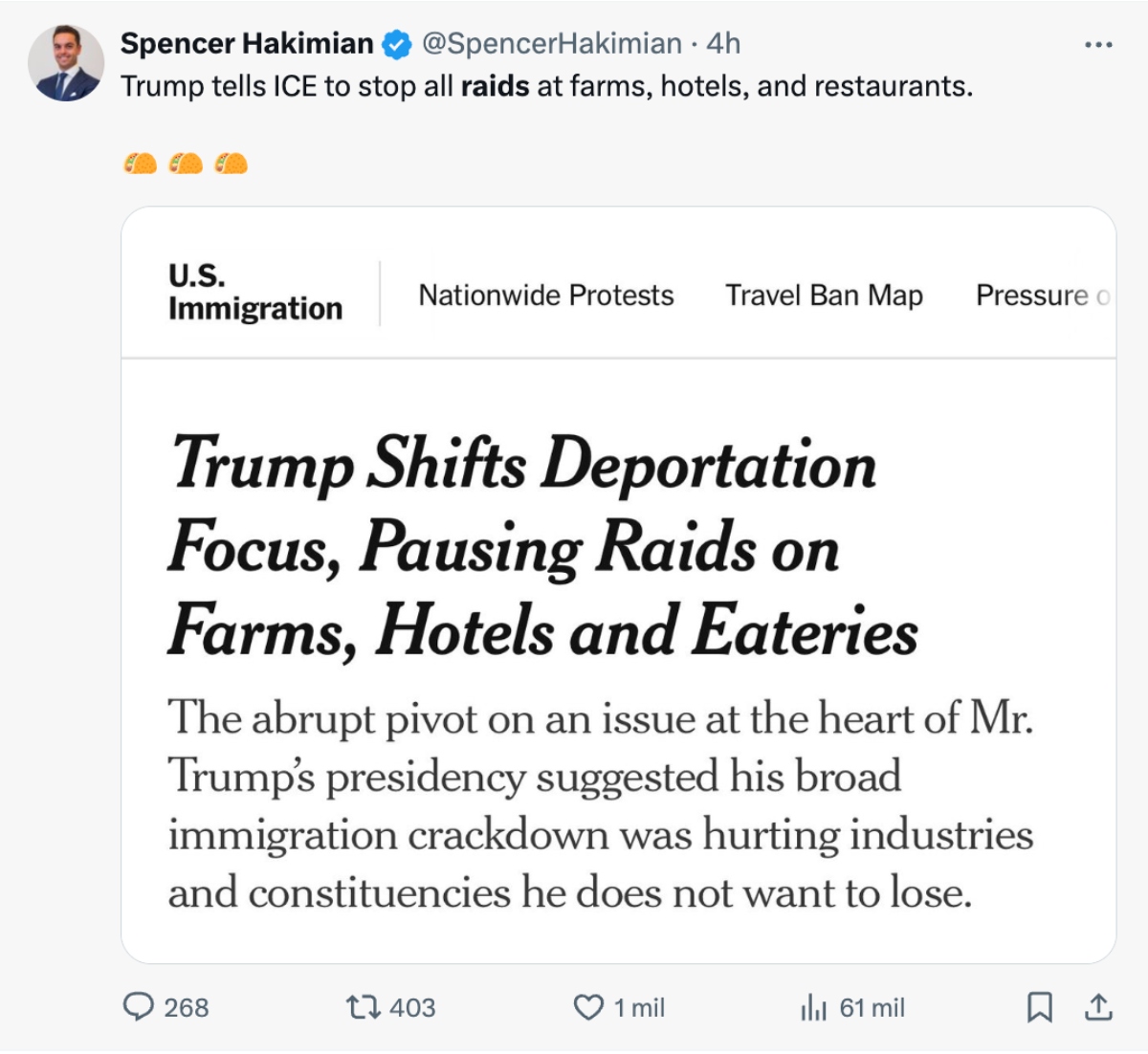
President Donald Trump has ordered a temporary pause in his controversial immigration raid program, specifically in key sectors such as agriculture and hospitality, amid growing public criticism and warnings of the negative economic impact these actions could generate.
The move, revealed by The New York Times, marks a tactical shift in the Republican administration’s immigration policy, which until now has been characterized by a hard-line stance.
Farm and restaurant persecution slows down
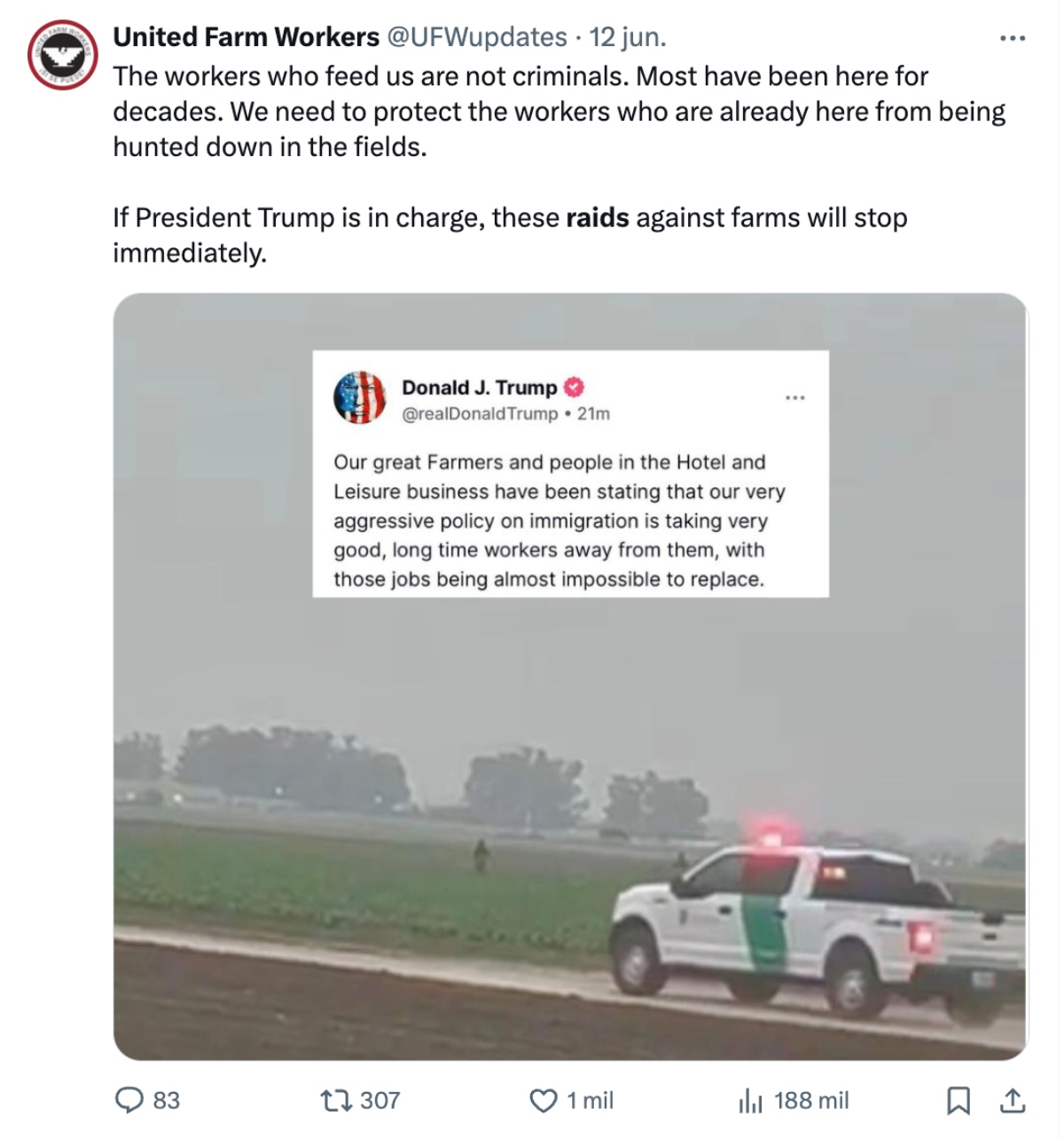
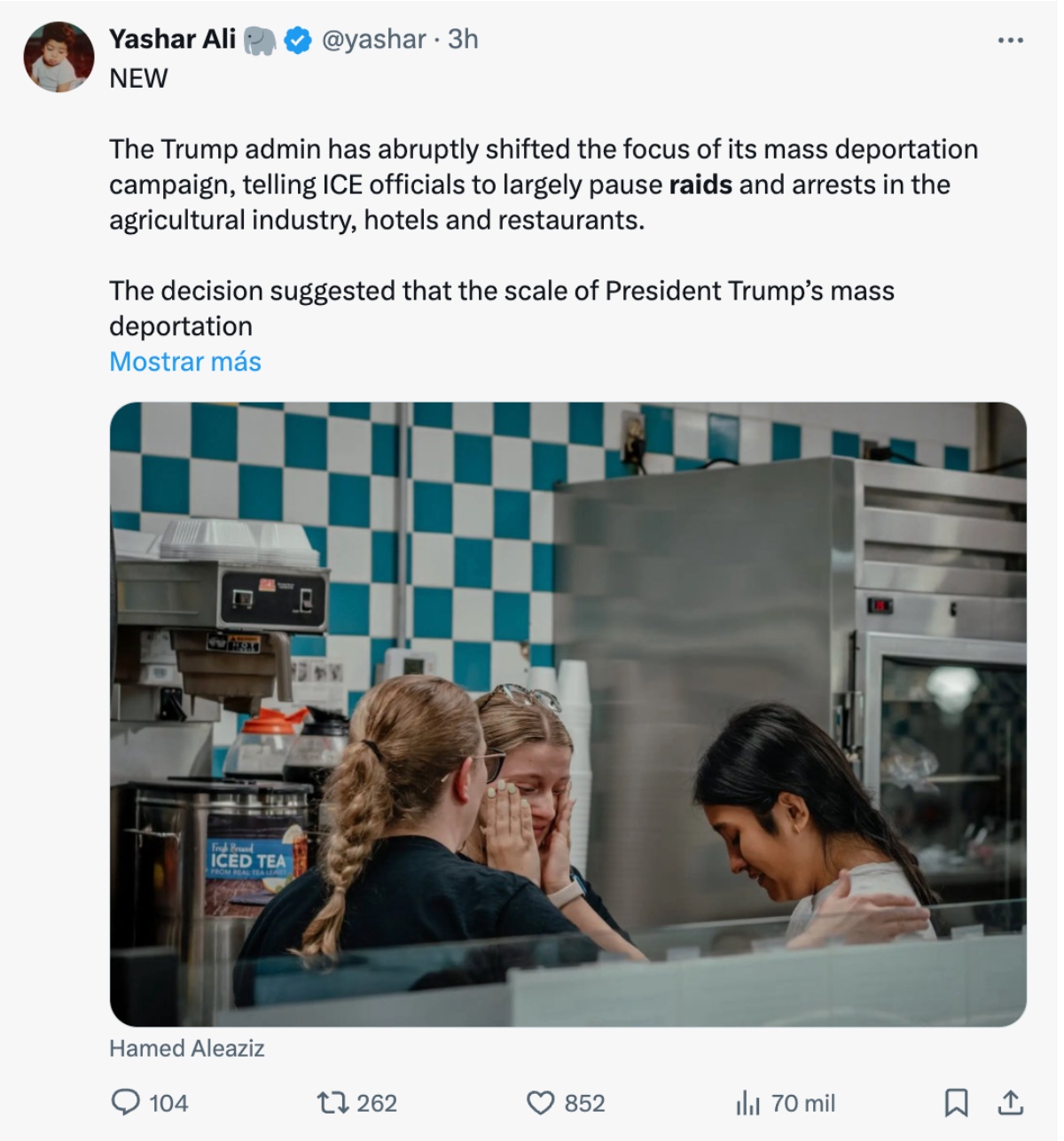
According to an internal email accessed by the Times, Immigration and Customs Enforcement (ICE) received clear instructions to temporarily suspend all operations and raids at agriculture-related workplaces (including aquaculture and meatpacking plants), as well as restaurants and hotels.
These areas, heavily dependent on immigrant labor – mostly Hispanic – have been the epicenter of numerous ICE actions in recent weeks.
Department of Homeland Security (DHS) spokeswoman Tricia McLaughlin confirmed the decision, stressing that they will continue to “comply with the President’s instructions” and that the priority remains “taking the worst illegal alien criminals off the streets.”
However, the pause represents a clear recognition that the massive raids could be negatively affecting key sectors of the economy and straining the relationship with conservative constituencies.
Economic pressure and citizen protests
The announcement comes after a week of intense protests in Los Angeles and other cities across the country, where thousands of people have taken to the streets to reject mass raids and the increasing militarization of Latino communities.
Civil rights organizations, agricultural unions and immigrant advocates had charged that these actions were generating widespread fear among essential workers, including many with decades of U.S. residency and no criminal history.
In addition, President Trump himself recently acknowledged in a meeting with advisors that the raids were affecting the productivity of the agricultural sector in California, Texas and Florida.
These states are critical to both the national economy and the Republican Party’s political strategy in the upcoming 2026 congressional elections.
3,000 arrests per day goal on hold
Since returning to the White House in January 2025, Trump has pushed a much more aggressive immigration policy.
In previous meetings, top administration officials instructed ICE to make 3,000 arrests per day, which led to a marked increase in raids in urban, rural and even plantation areas.
However, this ambitious figure and its implementation have generated controversy within the federal structure itself, as ICE agents have denounced a lack of resources, excessive pressure and the risk of violating civil rights by acting without formal arrest warrants.
Impact for immigrants in the U.S.
Although the suspension is temporary and does not represent a reversal of immigration policy, for many Hispanic families it is a small respite.
Thousands of undocumented workers in farms, kitchens and hotels had been forced to go into hiding or abandon their jobs for fear of arrest.
However, immigration activists warn that the pause should not be read as a structural change of position, but as a temporary strategy driven by political calculations. Vigilance, they say, must continue.
The pause represents a clear recognition that mass raids could be negatively affecting key sectors of the economy