





The lights and shadows, “a little bit of the history of everything that has been happening and how he has been responding to those moments as he could”, is what ‘Cuando nadie me ve’, the documentary about the life and work of Alejandro Sanz that this Tuesday premieres in Spain after his biggest existential crisis.
“As in almost everyone’s life, there are ups and downs. In an artist’s life, what happens is that things like depending a lot on success come together and that sometimes creates extra stress,” the musician reflected in a talk with EFE in Madrid.
Sánz speaks this way after overcoming a depression a couple of years ago that made him fall out of love with music, winning his 24th Latin Grammy with his album ‘¿Y ahora qué?’ and smiling again.
At one point in the documentary, early in his career, he states that he doesn’t know how to say “no” and receives a spontaneous “puff” from the interviewer as a foreshadowing of what’s to come. “I’ve learned how to say it. That’s one of the big problems we have and that hurts us the most. We have to practice saying no,” he responds from this present, more conscious of his mental health.
“Now people can recognize it sooner and take action, because society has changed a lot. When something like this happened to me in 1992, I didn’t even say it. Those were the first signs that something wasn’t right, but you went ahead however you could, and a lot of people would fall by the wayside,” he says.
When asked about very young colleagues such as Aitana or Shawn Mendes, who have also made public their mental breakdowns, he adds that “the industry has to listen a little to the artists and above all think that there are human beings behind them”.
What can be seen in the Alejandro Sanz documentary?
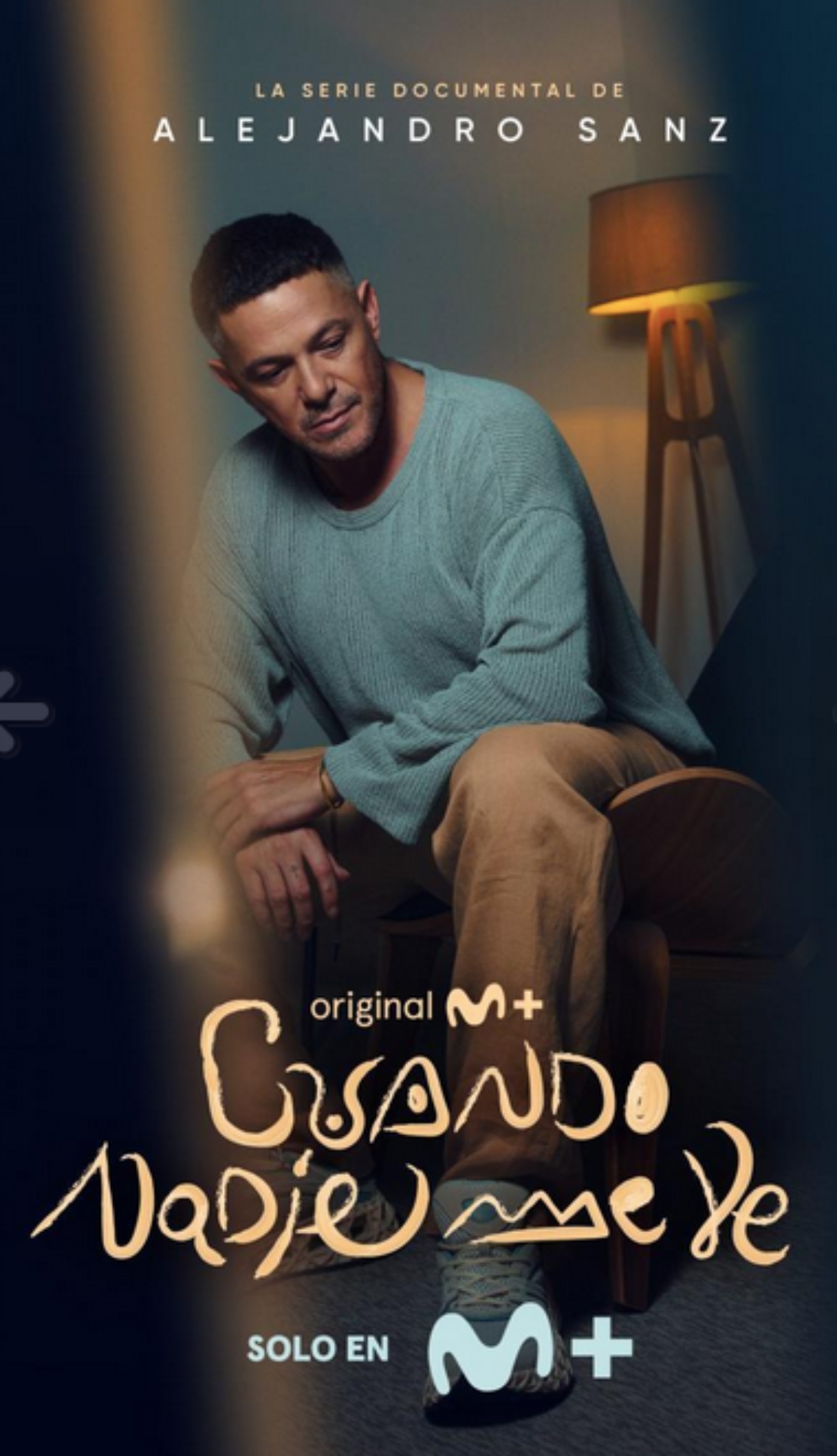
In ‘Cuando nadie me ve’, titled after one of his most famous songs, his private life has as much weight as his artistic life, as a continuous intertwining (…), hence the interventions of his ex-wife Raquel Perera or the honest story about his second son, Alexander, who was born in 2003 as a result of an extramarital affair and whose existence he made known three years later.
In that sense, he affirms that he has not felt “modesty” when recording this work that has required two years and that changed hands from Netflix to Movistar Plus+ because of the initial orientation.
“I didn’t like the idea of doing a ‘reality show’ or that we had to fake things,” he argued in a previous interview with EFE.
Sanz is exposed here as never before, from his beginnings with his carded hair in the “heavy” group of his neighborhood, his flamenco apprenticeship or his flirtations with the Movida madrileña of the 80s of the last century.
Among testimonies of such relevant figures as Shakira (with rumors of a possible romance between the two), Juan Luis Guerra, Laura Pausini or Rosalía, the painful death of his father or the breakup with his lifelong manager, Rosa Lagarrigue, is also addressed.
One of the great narratives of his career is his conquest of credibility as a creator, undervalued at first, until ‘Corazón partío’ arrived, a song that his label wanted to release in a flatter pop version, without its more folkloric features.
After winning the award for recording of the year at the last Latin Grammy ceremony, one of the last shots shows her placing the gramophone on a wall of her house, which is striking for the number of awards that adorn it.
“(The awards) is something I learned to appreciate (…). Now that I see everything that has happened in my career, I decided to have them there to see them and to be reminded of the work behind them”, reported Agencia EFE, said Sanz, who apparently no longer hides anything.
Find out more at‘QueOnnda.com’.