




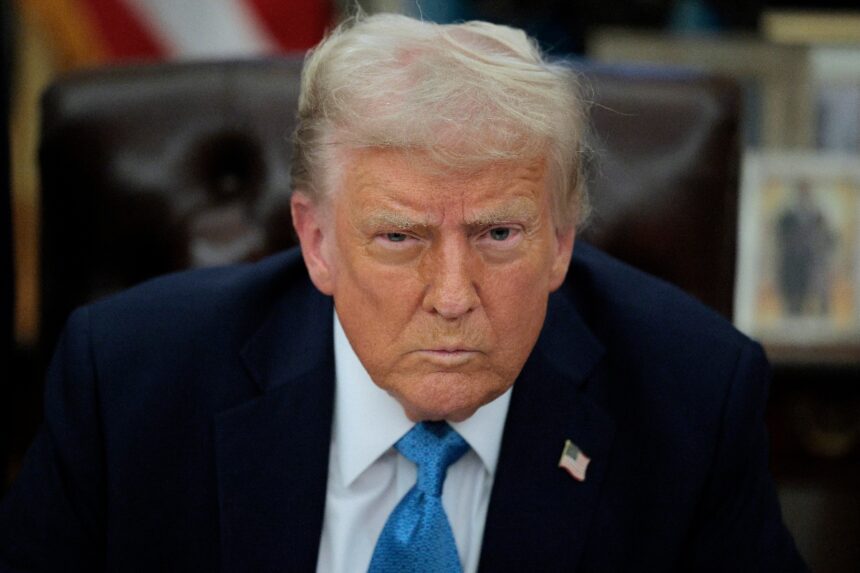
President Donald Trump suffered a new judicial setback this 2025 after the New York Second Circuit Court of Appeals rejected his attempt to overturn a $5 million payment to journalist and author E. Jean Carroll, who accused him of sexual abuse and defamation.
This payment had been ordered in May 2023 following a civil trial, where a jury found that Trump sexually abused Carroll in a dressing room of the Bergdorf Goodman store in the 1990s, and subsequently damaged her reputation by publicly denying the facts and mocking her in social media and official statements.
Unanimous judicial decision, except for one judge
The appeals court ruling was unanimous among three judges.
They concluded that there were no legal errors in the original trial that warranted further review.
The only dissent came from Judge Steven Menashi, Trump’s own appointee.
He argued that the defense should have been allowed to present evidence that the president genuinely believed that Carroll was part of a political conspiracy against him.
And therefore his statements were not made with “actual malice”.
However, the other judges dismissed this position.
They pointed out that the arguments had already been considered previously and did not modify the facts established in the civil lawsuit.
Trump continues to appeal other cases

Carroll’s attorney, Roberta Kaplan, celebrated the decision, stating:
“Although Trump continues to try all sorts of legal maneuvers to dodge his responsibility, his efforts have failed.”
The rulings remain clear: he is responsible for sexual assault and defamation
In addition to this case, Trump is appealing another defamation judgment, issued in January 2024, requiring him to pay an additional $83 million to Carroll.
Both trials have become symbols of public accountability vis-à-vis power figures, especially in a polarized political context and with Trump seeking to position himself once again in the national political sphere.
The law also reaches power
The case represents a clear signal that no public figure, like Trump, is above the law.
A powerful message in a country where immigrant communities often feel that justice works only for the few.
It also illustrates the crucial role of the U.S. civil justice system.
It can offer compensation and hold leaders accountable for acts of aggression or defamation, even years after the fact.
For more information, visit QuéOnnda.com.