





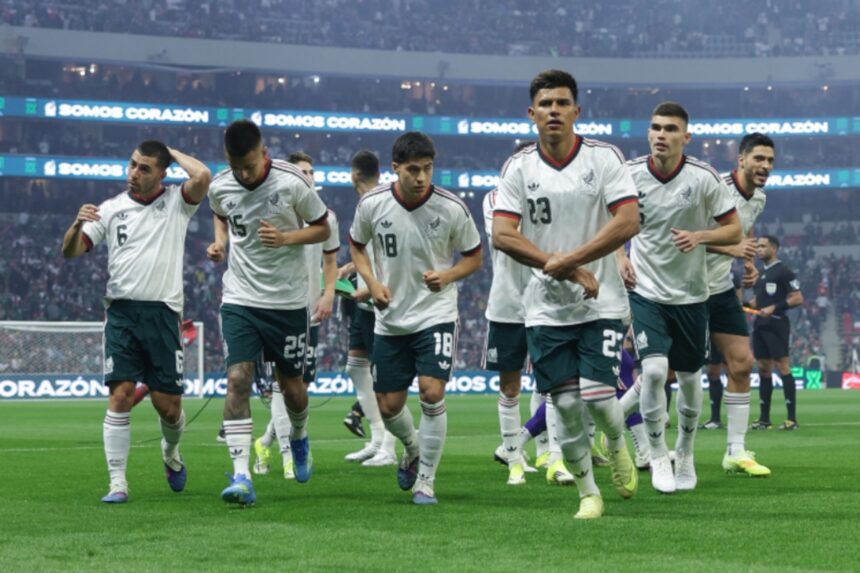
In the world of soccer, there is a lot of talk about tactics, goals and “pants” on the field, but off the field, there is a machine that never fails: the financial one. El Tri is not just everyone’s team; it is, above all, one of the most profitable and powerful sports brands on the planet.
While sports results may have ups and downs, the flow of greenbacks seems to have no ceiling. But what about the income of the Mexican National Team? Here’s a breakdown of how the cash register of the Mexican Football Federation (FMF) is filled.
The $300 million giant
THE GAP IS ABYSMAL! 🇲🇽🆚🇵🇹
Did you know that just two players from Portugal are worth more than the entire Mexican National Team combined? 😱 While the total value of El Tri is around 176 MDD, Portuguese stars like Vitinha and Joao Neves (valued at around 110 MDE each) alone surpass the… pic.twitter.com/JV0zU3Q07G
– Indigo FAN (@IndigoFAN_) March 28, 2026
This is not an exaggeration.
According to financial reports and estimates by sports marketing specialists, the Mexican National Team can generate between 200 and 300 million dollars annually during the World Cup cycles.
To give you an idea, this figure exceeds the annual budget of several state ministries and competes with European powers.
Where does so much money come from?
The business model is based on four pillars of steel: broadcasting rights, sponsorship, box office and merchandising.
1. The war of the screens (TV Rights)
Television stations pay fortunes for the right to broadcast the national team’s sighs.
Whether it’s official Nations League matches or the famous “friendly matches,” the Mexican audience on both sides of the border guarantees ratings that brands don’t want to miss out on.
This is undoubtedly the heaviest and most constant income in the budget.
2. The “Dollar Effect”: The golden goose that lays the golden eggs in the U.S.
Mexico is the only team in the world that plays “home” games in two countries.
The U.S. market is critical.
The Mexican community in the United States doesn’t just fill stadiums; it consumes with nostalgia.
Promoters pay astronomical amounts to take El Tri to cities such as Dallas, Los Angeles or Chicago, where the average ticket is three times more expensive than at the Azteca Stadium, now renamed Banorte Stadium.
Every time Mexico crosses the border, profitability skyrockets.
3. Sponsorships: The armor of the brands
From soft drink brands and banks to airlines and breweries.
Being in the green jersey or appearing on training billboards costs millions.
Companies see in Tri an unrivaled emotional vehicle to connect with consumers.
Even in a performance crisis, fan loyalty ensures that sponsorship remains a safe investment.
4. Merchandising: The skin everyone wants
The sale of official products – especially the T-shirt – brings in a considerable amount.
Each new Adidas design cycle breaks sales records.
It doesn’t matter if the team is doing poorly, Mexicans always want to wear their colors with pride, which makes merchandising an unstoppable source of passive income.
The momentum of the 2026 World Cup
With the 2026 World Cup at home (shared with the U.S. and Canada), the commercial value of the Mexican National Team has reached historic levels.
Qualifying guarantees FIFA awards, but hosting the event multiplies media exposure and tourism, generating indirect benefits that permeate the local economy.
In the end, the Mexican National Team demonstrates that financial success does not always go hand in hand with the trophy in the trophy case, but with a structured commercial strategy that understands that, for the fans, El Tri is an identity, but for the market, it is the perfect business.
Do you think the Federation should invest more of those millions in basic forces or do you think it’s okay how the money is managed?
Filed under: Mexican National Team Revenues 2026