





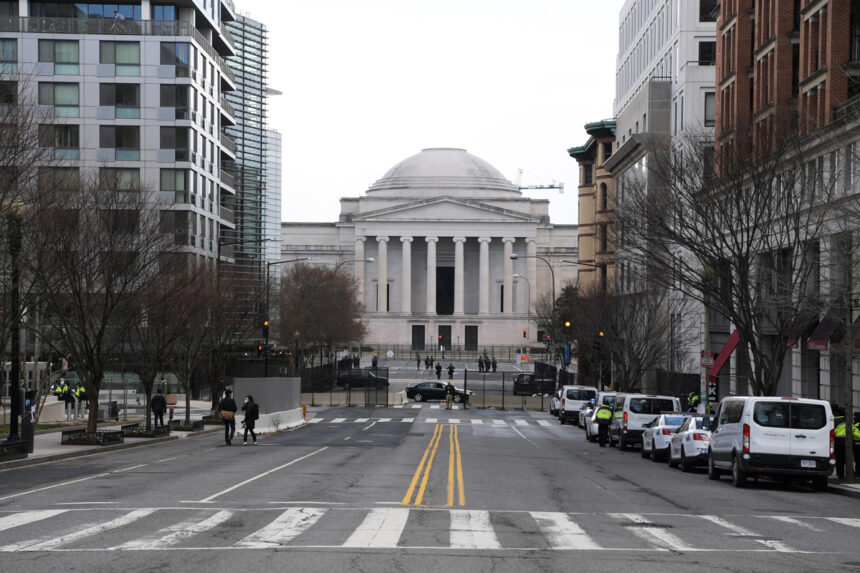
The Senate failed Monday for the eleventh consecutive time to pass a stopgap funding bill to end the 20-day government shutdown, with no visible agreement between Republicans and Democrats.
The vote for the proposal presented by the Republicans obtained 50 votes in favor and 43 against, falling 10 votes short of the 60 needed to be approved.
No agreement to end government shutdown
This Trump government shutdown is not like his last one.
That was about building a wall that Mexico was supposed to pay for.
This is about raising health care costs for millions of Americans.
It’s time to end the shutdown and fix the Republican-made health care crisis.
– Adam Schiff (@SenAdamSchiff) October 20, 2025
Monday’s legislative session was marked by the absence of seven senators and the stalemate continues as Democrats demand the inclusion of an extension of Obamacare subsidies, which Republicans oppose claiming, without evidence, that this program benefits undocumented persons.
Two senators from the Democratic bloc voted with the Republican majority: Catherine Cortez Masto and Angus King, an independent senator who participates in the Democratic bloc.
Democratic Senator John Fetterman, who previously voted with the Republicans, did not vote on Monday.
The 20-day government shutdown has affected more than 1.3 million state employees who are working without pay or are furloughed.
President Donald Trump’s administration has fired more than 4,000 employees from various agencies and the case is being resolved in court.
Senators will reconvene this Tuesday to try, once again, to end the federal government shutdown that has been dragging on for nearly three weeks.
If no agreement is reached, the shutdown could become the second longest in modern U.S. history, surpassing the 21-day shutdown that occurred between December 1995 and January 1996, during the administration of then-President Bill Clinton and the budget showdown with Republican leader Newt Gingrich.
That shutdown affected more than 800,000 federal employees and cost the country about $1.4 billion, according to Congressional Budget Office (CBO) estimates.
In the current context, the administrative paralysis is already causing delays in essential services, partial agency shutdowns and concern in the financial markets, while the Senate seeks a bipartisan consensus to unblock funds and reactivate government operations.
With information from EFE