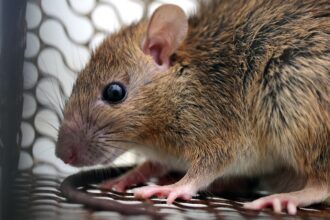





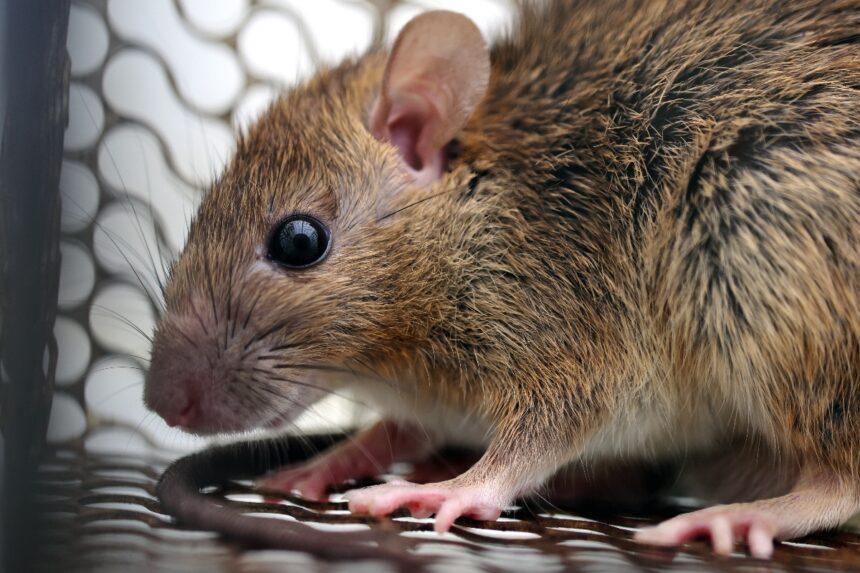
At first glance, it seems harmless. Weighing just 30 grams, with large eyes and small ears, the long-tailed mouse (Oligoryzomys longicaudatus) could pass for any field rodent. However, this native inhabitant of the forests of Chile and southern Argentina is the natural reservoir of the Andes strain, the most dangerous variant of hantavirus and the only one capable of human-to-human transmission.
After the recent outbreak on the cruise ship MV Hondius, all eyes have been on this small animal. But who is it really and why does it pose a risk to human health?
The hantavirus culprit, the colilargo mouse
⚠️ This is the colilargo mouse, the main reservoir of the Andes hantavirus, one of the most dangerous variants detected in South America and the only one known with proven capacity for human-to-human transmission.
The Andes strain can not only be transmitted by contact with urine, but also… pic.twitter.com/whylG4ZN1G
– Guajiro Digital (@GuajiroDigital) May 6, 2026
As its name indicates, its most distinctive feature is its tail, which can measure up to 14 centimeters, doubling the size of its body.
Unlike the common rats we see in cities, the colilargo is an acrobat: it has very long hind legs that allow it to move by jumping, similar to a kangaroo rat.
Although it is a protected species that plays a vital role in the ecosystem (dispersing seeds and serving as food for predators), the danger lies in what it leaves in its wake.
The Andes Strain reservoir
In fact that same image I use every time I have to identify whether my cats brought in a pug or a long-tailed mouse, on March 1 they brought us a colilargo and I saw life flash before my eyes, we put on masks and cleaned the whole floor with bleach https://t.co/19yC4DKhSn pic.twitter.com/o/oPoUUl2X8p
– Claudi (@CloudyNox) May 7, 2026
According to experts such as André Rubio of the University of Chile, between 5% and 10% of these rodents carry the virus.
Transmission to humans does not occur through bites, but through an invisible oversight: the inhalation of particles of saliva, urine or feces of the animal.
Key Fact: Their feces are black and are the size and shape of a grain of rice.
When dried, these particles can float in the air and be inhaled by humans, especially indoors.
Why do infections increase in summer?
🦠 Hantavirus is a serious disease transmitted mainly by the colilargo mouse, with a lethality that can exceed 30-40% in some South American strains.
🐭 Carrier rodents do not get sick, but shed the virus through saliva, urine and feces, and only a… pic.twitter.com/lCc3Cn33jD
– Urgent24.com (@U24news) May 4, 2026
Although the case of the cruise ship was an exceptional situation of lack of ventilation, outbreaks usually occur in summer.
This is due to people moving closer to natural habitats to camp or open cabins that have been closed year-round.
When there is an explosive increase in rodents (a phenomenon known as “ratting”), the infection rate among rodents can rise up to 20%.
Prevention Guide: How to stay safe
WHAT IS THE COLILARGO MOUSE? IT IS THE TRANSMITTER OF THE ANDES STRAIN OF #HANTAVIRUS DETECTED ON THE MV HONDIUS
This species is the natural reservoir and main transmitter of the Andes strain of #hantavirus, the variant of the virus detected on the MV Hondius cruise, a fact that has generated… pic.twitter.com/2Nd49vPYmS– Radio Contacto 1080 AM (@ContactoRa10288) May 8, 2026
The science is clear: the virus is fragile to sunlight and fresh air. If you live or travel to rural areas in the Southern Cone, follow these steps:
Ventilate before entering: Open doors and windows of cellars or cabins for at least 30 minutes before entering.
Disinfect with bleach: Do not dry sweep feces (this raises infected dust); spray with a mixture of water and bleach before cleaning.
Camp safely: Camp only in authorized places and keep food in airtight containers.
The colilargo is not the enemy, but a neighbor with whom we must learn to coexist while keeping our distance.
Information and hygiene are, so far, our only and best vaccine.
What about you Onnda, did you know this small rodent or were you surprised by its jumping ability and tail length?
Filed under: Mouse colilargo hantavirus